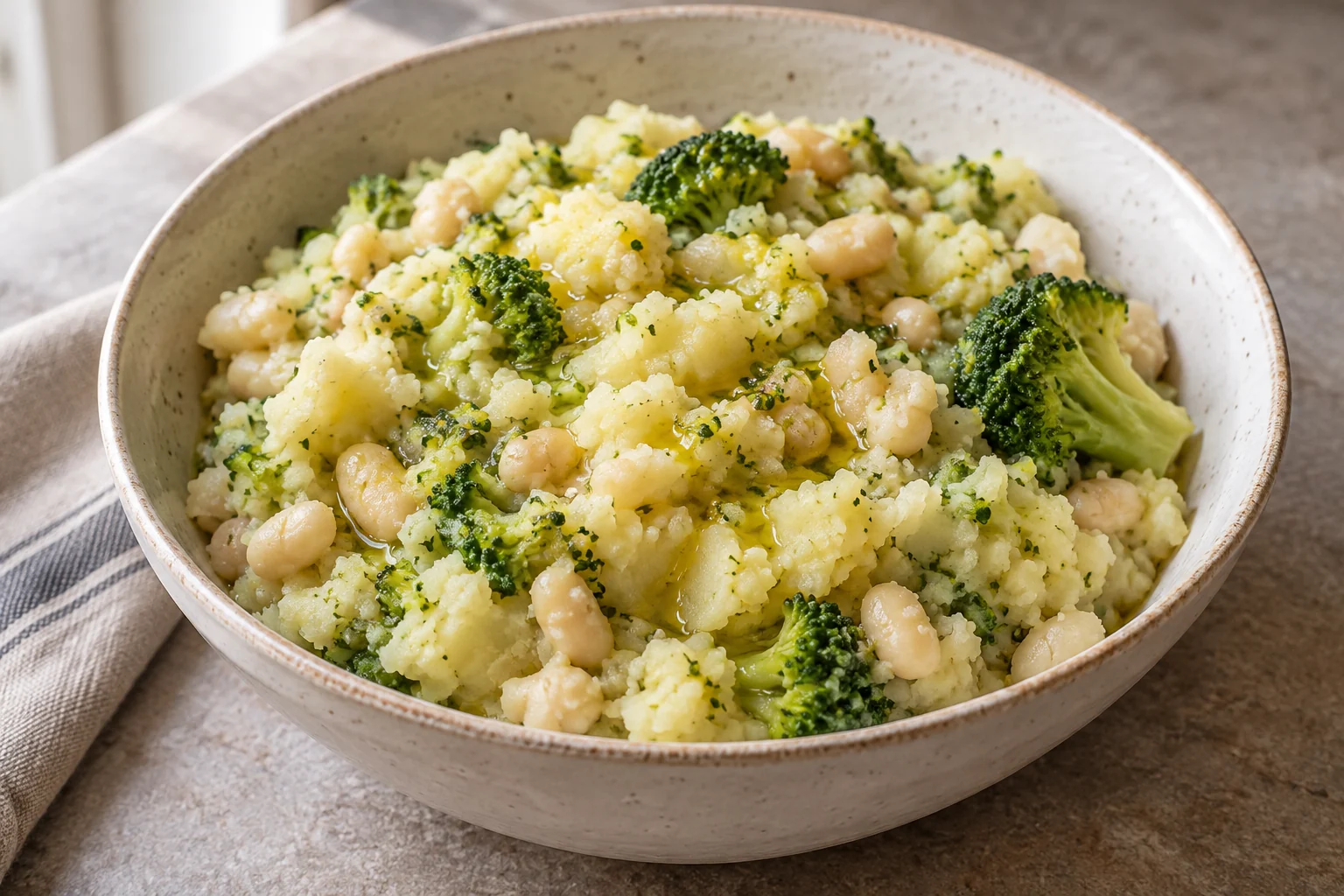
This mash is intentionally rustic: soft potato binds small broccoli pieces and white beans, while olive oil and lemon finish it without milk or butter. The vegetables share a saucepan, but they enter at different times. Getting the potato nearly tender before adding broccoli prevents the green vegetable from spending the whole cooking period in simmering water.
Broccoli, white bean & potato mash makes 4 servings, with 40 min estimated total time. View the standalone recipe page.
Prepare potato pieces of similar size
Cut the peeled potatoes into roughly one-inch pieces so the centers soften at a similar rate. Large chunks mixed with tiny fragments make it harder to know when the batch is ready. Start them in cold water with the peeled garlic, then bring the pan up to a gentle simmer. The water should cover the potatoes without filling the saucepan so high that it will overflow when broccoli is added. Salt is measured into the finished mash rather than guessed from a large pot of cooking water.
Give the broccoli a shorter cook
Use both florets and peeled tender stems, chopping them fairly small. Large woody stem sections will remain awkwardly firm while delicate florets soften. Add the broccoli only when the potato is nearly tender. The drained beans need less time still; they enter at the end to heat through. Check a potato piece with a fork before draining. A firm center makes a lumpy mash for a different reason than the deliberate broccoli texture, and extra force from the masher will not make it properly cooked.
Drain and release the trapped steam
Drain the saucepan thoroughly, then return its contents to the warm pan off the heat for the brief steam-off period. Water can hide in the spaces between florets and beans even after the obvious stream has stopped. Removing that excess gives a thicker mash without needing extra potato or an unlisted thickener. Do not leave the drained ingredients over a strong burner to dry aggressively: beans and small potato fragments can stick and scorch before the larger pieces lose much more moisture.
Mash gently instead of blending
Use a hand masher to break down the potatoes and beans, working in the measured olive oil and lemon juice. Stop while the mixture still has small green pieces and some bean texture. A blender or processor subjects the potato to far more mechanical action and can turn it sticky. This dish is not meant to resemble a perfectly smooth restaurant puree. If an occasional broccoli piece is too large, break it with the edge of the masher rather than processing the whole batch to eliminate every visible fragment.
Season and serve within the stated recipe
Stir the measured salt and pepper through the entire pan so one serving is not more heavily seasoned than another. Divide into four equal portions. Added butter, cheese or milk would change both the dairy-free ingredient screen and the nutrition estimate, so they are not implied finishing steps. The calculation counts the listed raw potato and broccoli quantities and all the oil; it does not invent measured nutrient losses from discarded water. Chill leftovers promptly and reheat with stirring so the middle becomes as hot as the edges.
Common questions
Can I make it completely smooth?
A smooth version would need a different method and may become gluey if blended. The intended result is a hand-mashed mixture with visible broccoli.
Why does the mash look watery?
Broccoli can retain cooking water. Drain carefully and allow steam to escape before mashing; adding more oil does not remove trapped water.
Technique & food-safety references
These primary references support the technique, safety and storage guidance. The recipe and cooking explanations are original Recipe Pinboard content.