A burrata plate comes together quickly, but a few small decisions determine whether it feels deliberate or watery. The tomatoes need a brief dressing interval, the cheese needs gentle handling, and the plate must hold the juices released when the center opens. This fifteen-minute recipe serves two, using one 125 g burrata ball and half the dressed tomatoes for each person.
Burrata with Cherry Tomatoes and Basil makes 2 servings, with 15 min estimated total time. View the standalone recipe page.
Set up before opening the cheese
Choose two shallow plates with enough of a rim to retain dressing. A flat board may look appealing, but it cannot catch the tomato juice and creamy filling once they mingle. Wash the cherry tomatoes and basil, dry them gently and set out the oil, vinegar, salt and pepper before draining the burrata.
The recipe specifies cheese made with vegetarian rennet; check the actual product rather than assuming every burrata has the same ingredients. Keep it refrigerated until this short preparation begins and follow its package storage guidance. No long room-temperature warming period is part of the method. The finished plate is intended to be assembled and eaten promptly.
Halve the tomatoes for useful dressing contact
Cut the 400 g cherry tomatoes into halves with a sharp knife that passes through the skins without crushing them. Similar-sized pieces are easier to distribute and eat beside the cheese. If some tomatoes are especially delicate, handle them with a spoon rather than compressing them while cutting or tossing.
Combine the halves with 20 g olive oil, 10 ml red wine vinegar, 2 g salt and the pepper. Toss just enough to coat the surfaces, then leave for five minutes. The exposed flesh releases some juice into the dressing. There is no need to squeeze the tomatoes, strain away their seeds or extend this brief wait into a marinade.
Drain burrata without breaking its outer layer
Lift each ball carefully from its packing liquid and let excess liquid fall away before setting it on a clean plate. Support the soft cheese from underneath with a broad spoon. Pulling it by a small folded edge can tear the outer mozzarella layer and release the creamy center before it reaches its serving plate.
Keep the drained cheese cool while the tomatoes finish their five-minute pause. Do not press it in a towel or treat it like a firm block that needs drying under weight. The purpose of draining is simply to avoid diluting the measured dressing with packing liquid. Burrata's soft interior is part of the dish, not moisture to remove.
Distribute tomatoes and dressing together
Stir the tomato bowl gently once more because oil and juice can settle into separate layers. Divide both the tomatoes and their liquid between the two shallow plates, leaving space at the center for the cheese. A spoon is useful for making the second plate as juicy as the first rather than giving it only dry tomato pieces.
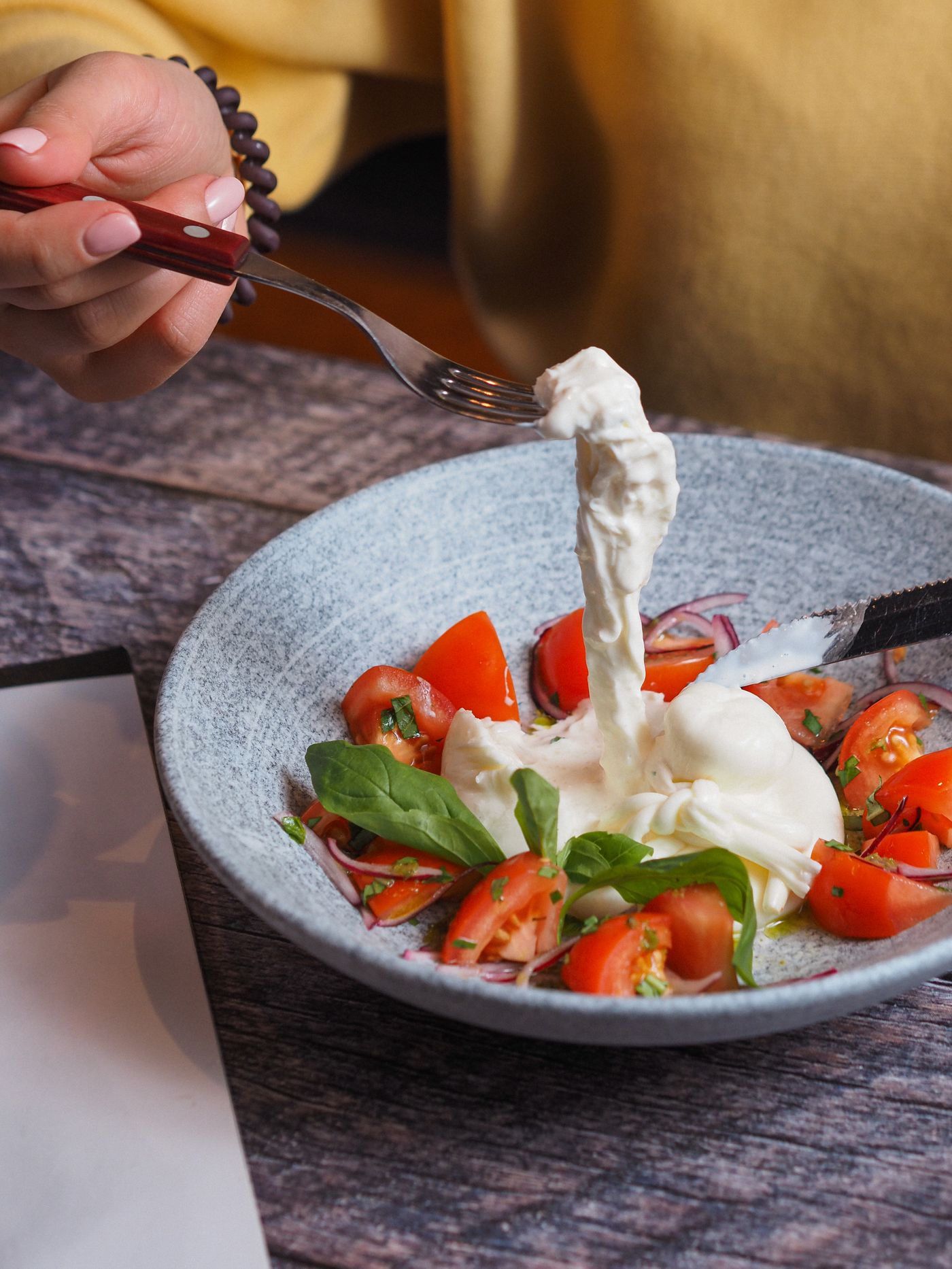
Set one whole burrata ball in the middle of each plate. Arrange any tomatoes displaced during the transfer around its sides without pushing down on the cheese. This keeps the contrast between the intact white ball and the red tomatoes until eating begins. The quantity of dressing is modest; it should collect lightly rather than submerge the plate.
Add basil and open the cheese at the table
Scatter the 10 g basil leaves across the tomatoes just before serving. Small leaves can stay whole; larger leaves can be torn gently into manageable pieces. Adding them late avoids repeatedly bruising them during the tomato tossing. Divide the herbs across both plates rather than hiding most of them underneath one burrata ball.
Open the cheese with a fork immediately before eating and draw a little of the creamy center through the tomato dressing. This lets each bite combine cheese, tomato and basil without turning the whole plate into a uniform mixture. Serve promptly and return any unused cheese to refrigeration according to its label; acidity in the tomatoes does not make fresh cheese suitable for prolonged counter storage.
Common questions
Should burrata sit out for an hour first?
That is not part of this recipe. Keep the cheese cool, drain it during the short tomato preparation and serve promptly. A lengthy warming hold is unnecessary to assemble the plate.
Why is there too much liquid on my plate?
Packing liquid from poorly drained cheese can dilute the dressing, while crushed tomatoes release more juice. Drain gently, halve cleanly and use a shallow plate that contains the intended small pool of tomato dressing.
Technique & food-safety references
These primary references support the technique, safety and storage guidance. The recipe and cooking explanations are original Recipe Pinboard content.