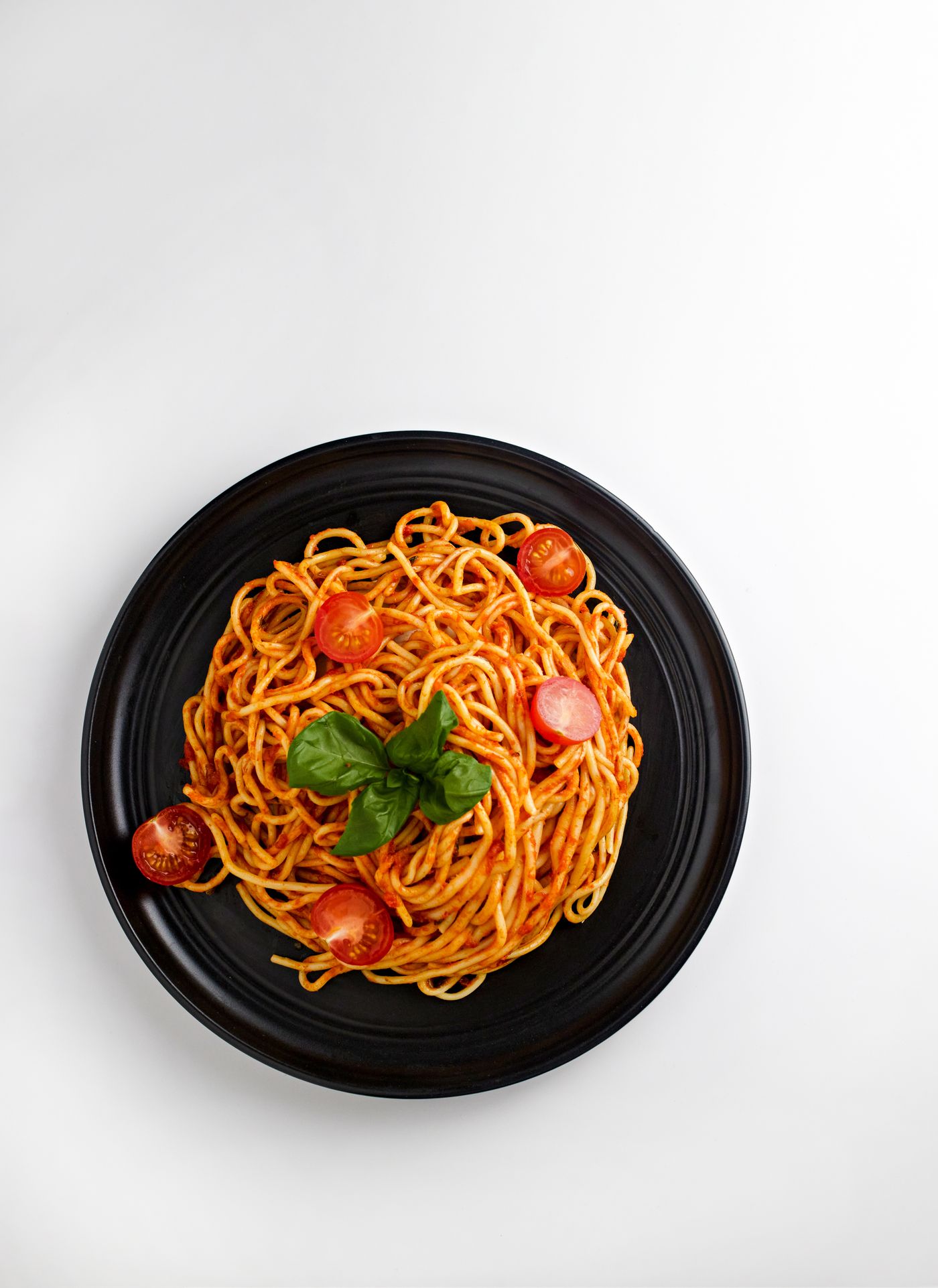
This 25-minute pasta serves four with 12 oz dry spaghetti and two pints of cherry tomatoes. Its sauce is made in the skillet rather than poured from a jar. The essential handoff is between the boiling pasta and the tomatoes: save the cooking water, bring the two together, and finish with basil and cheese away from direct heat.
Burst tomato & basil pasta makes 4 servings, with 25 min estimated total time. Open the complete ingredient list and method.
Start with the pasta water and a roomy skillet
Bring a large pot of salted water to a boil and cook the spaghetti according to its package. The recipe leaves the amount of water and its salt unspecified, so do not invent a fixed ratio or treat the sauce’s ½ tsp salt as the pasta-water allowance. They are separate instructions.
Set a measuring cup near the pot as a reminder to reserve 1 cup of cooking water before draining. Meanwhile, use a skillet large enough to hold both the two pints of tomatoes and the cooked spaghetti later. A small saucepan makes the final tossing stage awkward and encourages uneven coating.
Let the tomatoes burst before adding garlic
Heat the 3 tbsp olive oil in the skillet. Add the tomatoes and cook over medium-high heat for 8–10 minutes, stirring, until some split and release juice. They do not all need to collapse. A mixture of softened whole tomatoes and broken ones gives this sauce texture.
The four thinly sliced garlic cloves go in only after this stage, once you reduce the heat. That sequence protects the garlic from spending the full tomato-cooking time in hot oil. Add it with ½ tsp kosher salt and ¼ tsp pepper and cook for 1 minute, stirring it through the moist tomatoes.
Reserve more water than you initially add
Before draining the spaghetti, scoop out the full 1 cup cooking water. The recipe starts the sauce with only ½ cup; the remainder is insurance against a dry skillet or pasta that absorbs more liquid than expected. Pouring away every drop removes your easiest tool for adjusting consistency.
Add the drained spaghetti and that initial ½ cup to the tomatoes. Toss and stir for 1–2 minutes. The water loosens the tomato juices and helps the oil and starch form a coating. The objective is sauce attached to the strands, not a pool that remains behind when you lift a forkful.
Troubleshoot while the pasta is still in the pan
If the strands look dry or cling together, add a little more of the reserved water and toss again. Small additions give better control than immediately pouring in the remaining half cup. If there is already loose liquid beneath the pasta, keep tossing briefly so it can distribute and reduce.
Tomatoes vary in juiciness and sweetness, which makes the pan’s appearance more useful than a rigid demand to use all the water. If the sauce tastes flat, first taste it with a strand of pasta. The Parmesan will contribute salt at the finish, so heavy extra seasoning before adding cheese can overshoot.
Finish with herbs and cheese off the heat
Remove the skillet from the heat before folding in ½ cup torn basil and ¼ cup grated Parmesan. Tear the leaves shortly before using them. The residual warmth is enough to soften the basil and combine the cheese with the sauce without deliberately boiling either ingredient.
Finely grated cheese disperses more readily than thick shavings in this particular finishing step. Add it across the pasta rather than as one compact clump. This is a quick tomato sauce with recognizable pieces, so there is no need to blend it smooth or strain out the skins.
Choose variations that preserve the method
Grape tomatoes can be used as a variation, but firmer skins may take a little longer to split. Keep their amount comparable and assess softness. Another pasta shape is possible if you follow its package timing and retain the same 12 oz dry quantity; its ability to catch tomato pieces will differ.
For a vegetarian version, use an Italian-style hard cheese labeled vegetarian, since Parmesan is not automatically made with vegetarian rennet. This is an ingredient substitution, not a claim that the original cheese specification is vegetarian. Optional accompaniments should be planned separately from the four-serving pasta.
Save leftovers with realistic texture expectations
Refrigerate leftovers within two hours, or one hour above 90°F, and use within 3–4 days. Reheat to 165°F with a splash of water, stirring gently. The basil will lose some freshness and the spaghetti will soften further, so reserve a fresh leaf or two for serving only if you want an optional extra finish.
Common questions
Can I drain the pasta first and make the sauce later?
It is more efficient to cook the tomatoes while the spaghetti boils. If timing slips, keep the reserved water and avoid leaving drained pasta sitting long enough to dry into a clump.
Does every tomato need to burst?
No. The method specifically calls for some to burst. Released juice forms the sauce while the remaining softened tomatoes keep a distinct bite.
Food-safety references
These official references support the safety and storage guidance. The recipe and cooking explanations are original Recipe Pinboard content.