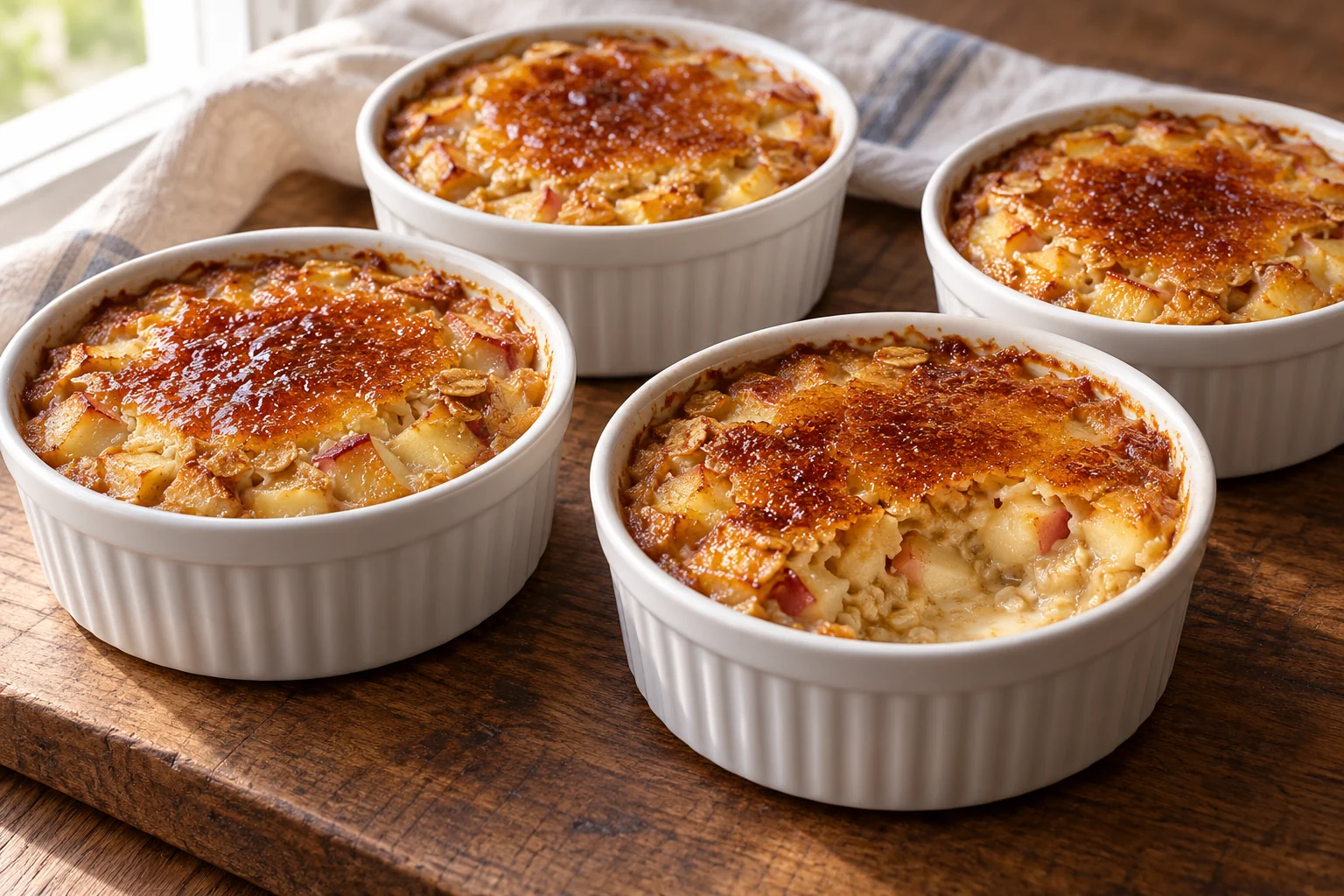
These breakfast cups combine softened rolled oats, small apple pieces and an egg-and-milk custard. A thin layer of caramelized sugar adds contrast after the centers have fully cooked. The process has three distinct heating stages: soften the fruit and oats, bake the custards gently, then briefly broil their tops. Keeping those stages separate prevents a browned surface from hiding an undercooked center.
Caramelized apple and oat breakfast custards makes 4 servings, with 1 hr 40 min estimated total time. View the standalone recipe page.
Choose vessels for both oven and broiler
Use four ramekins explicitly rated for broiling, not merely described as oven-safe. Their twelve-fluid-ounce capacity provides headroom; it is not a measured finished serving volume. Divide the mixture evenly rather than filling each to the rim. A roasting pan holds the water bath during baking, and a dry metal tray supports the ramekins under the broiler later. Prepare both before starting. Never move a vessel into intense direct heat if its manufacturer does not permit that use, even when it survived the gentler water-bath bake.
Soften small apple pieces and rolled oats
Dice the cored skin-on apple finely so the pieces soften without overwhelming a spoonful of custard. Cook them in the measured butter and retain every bit of fruit and juice. Meanwhile, simmer the oats in milk while stirring along the saucepan bottom to prevent sticking. This preliminary cooking hydrates the flakes before they meet the egg. It also avoids relying on a package's suitability for uncooked use. Let the oat mixture cool for the scheduled interval; very hot porridge poured directly over egg can create small scrambled pieces.
Temper the eggs and divide evenly
Whisk the eggs with the custard's portion of sugar, vanilla, cinnamon and salt. Gradually whisk in a little warm oat mixture before combining the rest. Fold in the apples and their juices, scraping the bowls so all measured ingredients reach the ramekins. Remember that only half the sugar belongs inside: the remaining twenty grams is reserved for four caramel tops. The raw mixture contains egg and should not be tasted. For the gluten-free tag, use verified gluten-free oats and check other packaged ingredients for incompatible additives.
Bake until the center reaches its endpoint
Place the filled ramekins in the roasting pan and carefully add hot water halfway up their sides. Avoid splashing water into the custard. The bath moderates heating around the edges while the centers set. Near the end, look for a slight wobble rather than a liquid slosh, then use a thermometer to confirm at least 160°F in the center. Do not depend on appearance alone. Lift the ramekins out carefully and allow the scheduled rest before moving them to the dry broiling tray.
Caramelize a thin layer and watch continuously
Scatter five grams of sugar evenly over each surface. A thick mound melts unevenly and may burn in spots while remaining grainy elsewhere. Keep the ramekins about six inches below the broiler and watch throughout the short interval. Remove them when the sugar melts and turns amber, then wait five minutes before eating because molten sugar can burn. The crust firms as it cools. Refrigerate leftovers within two hours, use within three to four days and reheat to 165°F; expect the caramel layer to soften during storage.
Common questions
Why did my custard become grainy?
Egg can form small curds if the oat mixture is too hot when added or if the baking heat is excessive. Cool and temper as directed, use the water bath and check the center before extending the bake.
Can I caramelize the tops hours ahead?
The sugar absorbs moisture from the custard and loses its crispness over time. Broil close to serving for the intended contrast. Leftovers remain usable within the stated storage guidance, but their surface texture will change.
Technique & food-safety references
These primary references support the technique, safety and storage guidance. The recipe and cooking explanations are original Recipe Pinboard content.


