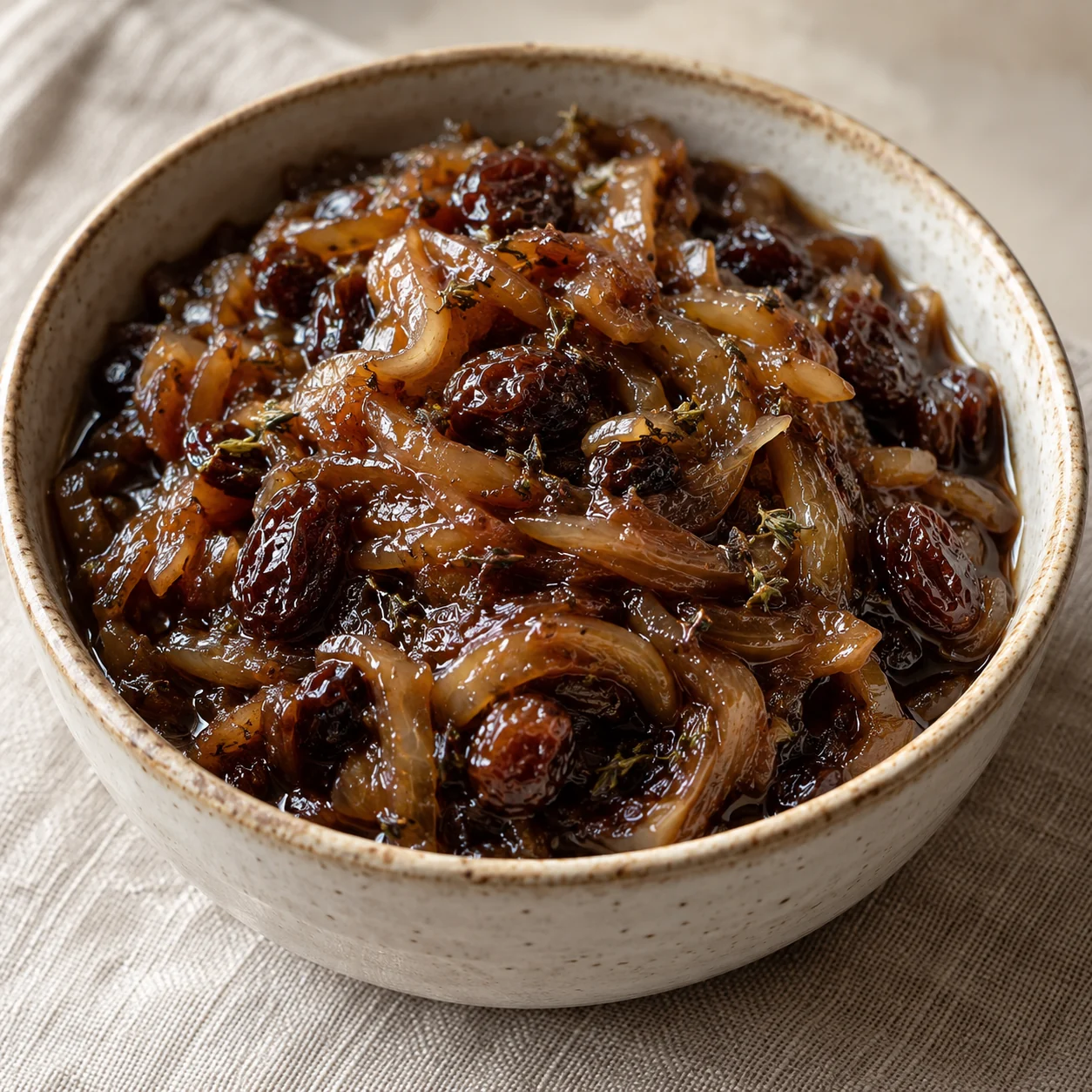
This spread depends on softened onion strands rather than a blended puree. Raisins supply concentrated fruit sweetness and balsamic vinegar gives the finished mixture a tangy edge. The recipe above makes eight equal portions and allows ninety-five minutes, including preparation and cooling. The long onion stage is the important part: adding the raisins and vinegar early would make it harder to judge how the onions themselves are browning.
Caramelized onion & raisin spread makes 8 servings, with 1 hr 35 min estimated total time. View the standalone recipe page.
Slice for a consistent strand texture
Peel the onions before weighing six hundred grams. Cut into thin, fairly even slices; very thick wedges take longer to soften, while paper-thin edges can darken ahead of the rest. Separate tightly nested pieces as they enter the pan. A wide heavy skillet gives this quantity useful contact with the hot surface. It may look full at first, but the onions shrink as moisture escapes. Measure the water into two portions before starting: one for loosening browned residue during the onion stage, and one for the final simmer with the raisins.
Let the onions soften before expecting color
Warm the oil over medium-low heat, add onions and salt, then stir frequently during the first ten minutes. At this point, expect the slices to become flexible and lose volume rather than turn deeply brown. Move pieces from the outer edge toward the center and lift the bottom layer as you stir. The onion pile should settle into the pan rather than fry into crisp threads. Stay nearby even when the heat is low. A burner hotspot can still create one dark patch while most of the onions remain pale and firm.
Brown patiently and reclaim the pan residue
Continue for thirty-five to forty-five minutes, checking every few minutes. Look for deep gold throughout the softened strands rather than black edges. Serious Eats' primary technique discussion supports slow browning, a broad pan and small additions of water to loosen browned residue. Use the reserved fifty grams a little at a time, scraping the loosened color back into the onions. Let each addition evaporate before adding more. If the onions are still pale at the end of the planning range, allow longer; if dark spots are burning, lower the heat immediately rather than masking them with vinegar.
Finish with plump raisins and a thick glaze
Only after the onions are golden should the raisins, vinegar, thyme and remaining water go in. Add any unused portion of the deglazing water too, so the measured total stays consistent. Simmer gently for ten to fifteen minutes, stirring often as the liquid thickens. A raisin should become plump and tender rather than remain a hard little pebble. Draw the spoon through the mixture: the spread should gather into a soft mound without a watery puddle racing into the gap. Keep the onion strands intact enough to remain recognizable instead of mashing them into a paste.
Cool briefly, divide and refrigerate
The ten-minute cooling period makes the texture easier to judge and the spread more comfortable to handle. Stir thoroughly before dividing into eight portions so raisins do not all land in one container. Weighing the finished batch and dividing by eight is more consistent than assigning a fixed tablespoon volume to a variable reduction. All measured oil, fruit and vinegar remain in the nutrition calculation. Refrigerate promptly in a shallow covered container and use within three to four days. This is a refrigerated cooked spread, not a validated canning recipe; vinegar and raisins do not make it shelf-stable.
Common questions
Can I leave out the raisins?
That would produce a different flavor balance and nutrient estimate. For the recipe as written, distribute all sixty grams evenly. If raisins seem firm, give the finishing simmer a little more time before reducing it dry.
Why is the spread bitter?
Inspect the onions during cooking for blackened edges or burnt pan residue. Lower heat and attentive stirring prevent scorching. Check that the balsamic is plain vinegar rather than a heavily reduced glaze with a different sweetness.
Technique & food-safety references
These primary references support the technique, safety and storage guidance. The recipe and cooking explanations are original Recipe Pinboard content.


