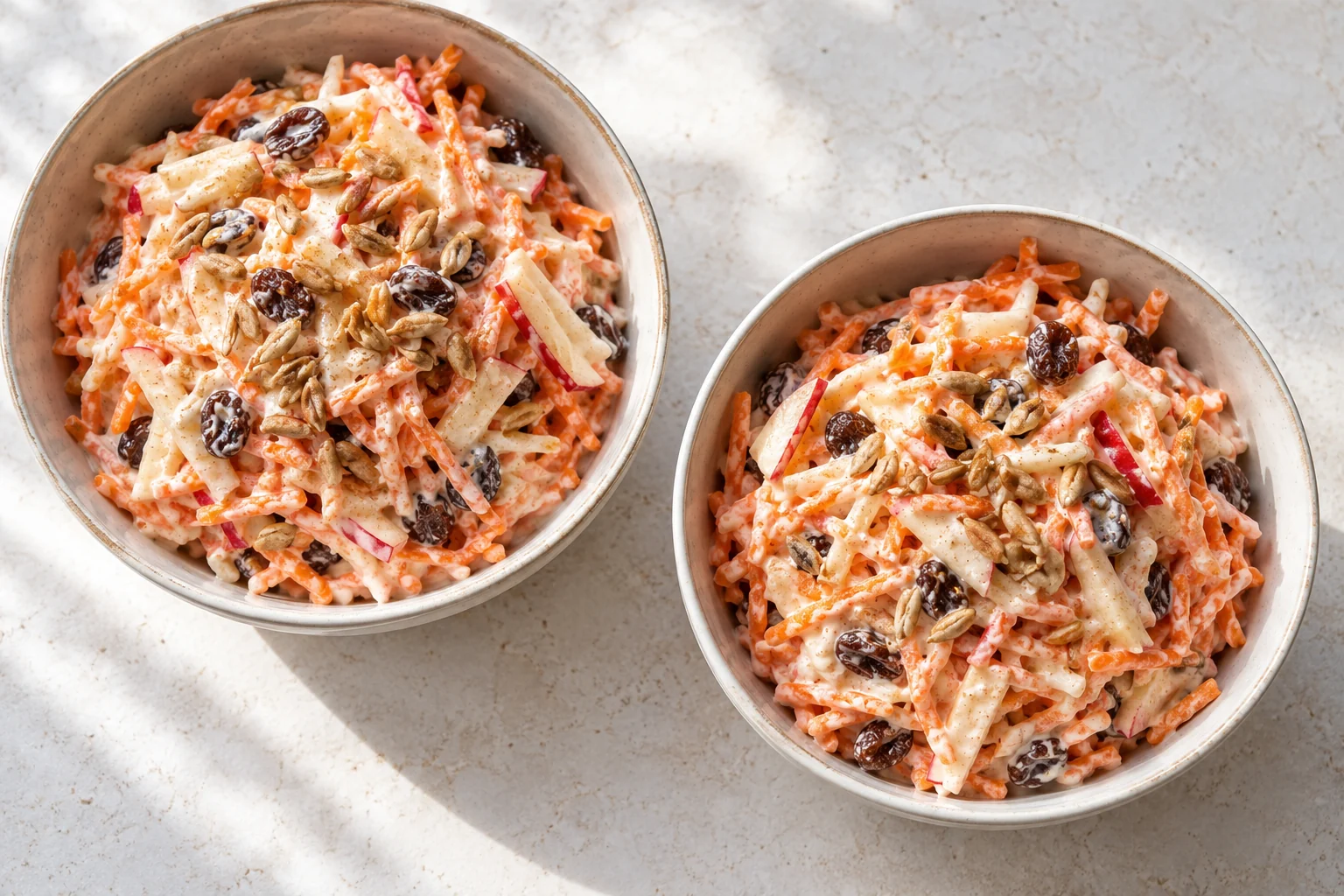
This breakfast bowl relies on contrasting textures: crisp carrot and apple shreds, thick yogurt, softened raisins and freshly toasted sunflower kernels. There is no cooked cereal hidden underneath. The recipe makes two generous bowls from the complete measured mixture, including the fruit juices. Its 40-minute allowance includes toasting and cooling the kernels and a short refrigerated rest. Prepare the yogurt dressing before grating the apple so the cut fruit can be coated immediately rather than sitting exposed on the board.
Carrot and apple breakfast slaw makes 2 servings, with 40 min estimated total time. View the standalone recipe page.
Start with clean produce and dry kernels
Scrub the carrots and wash the apple before cutting. Remove the apple core, then weigh the edible skin-on portion; the peel remains part of the recipe. Keep your grater stable and use its larger holes for distinct shreds rather than a wet purée. Toast plain sunflower kernels in a dry pan, moving them frequently because the small pieces brown quickly. Transfer them to a plate as soon as they are lightly golden. Leaving them in the hot pan continues cooking them even after the burner is off.
Make the yogurt mixture first
Stir the lemon juice and cinnamon evenly into the thick whole-milk Greek yogurt. This avoids small pockets of concentrated cinnamon and gives the apple a ready coating. The recipe uses a specific yogurt style because its thickness helps hold the shredded produce together. A pourable yogurt can leave a much looser bowl, while sweetened yogurt changes the sugar estimate. Check the package rather than assuming every product called Greek yogurt has the same composition. The listed quantities need no extra honey, syrup or sugar to follow this formulation.
Grate for a consistent bite
Grate the carrot first, then grate the apple directly into the dressing and stir promptly. Larger shreds keep some bite after resting, while very fine pieces release more liquid and become soft quickly. Include the apple skin and all the juice collecting in the bowl. Squeezing the shreds would remove part of the measured ingredient input and produce a drier slaw. Mix in the raisins thoroughly so each serving gets a similar share. A flexible spatula helps lift yogurt from the bottom without crushing the grated fruit into a paste.
Use a short cold rest
The fifteen-minute refrigerated rest lets raisins take up some moisture and gives the dressing time to coat the shreds. It is a texture step, not a reason to leave a dairy mixture on the counter. Stir again before portioning because a little liquid may settle beneath the vegetables. Keep that liquid in the serving bowls rather than draining it away. The slaw will continue softening as it sits, so the same-day version will be crisper than one stored overnight. Longer storage does not turn it into a shelf-stable fruit salad.
Add crunch at the last moment
Divide all the slaw between two bowls and scatter half the cooled kernels over each. Seeds mixed in hours ahead lose some of their contrast against the yogurt. For a packed breakfast, carry them separately and add just before eating; keep the slaw refrigerated or appropriately chilled during transport. The nutrition calculation includes the full 30 g kernel allowance, not an unspecified sprinkle. The gluten-free tag depends on suitable packaged ingredients and individual cross-contact requirements. Milk remains present, and the tag should never be treated as a promise of allergen safety.
Common questions
Why has liquid collected under my slaw?
Grated produce naturally releases juice, and yogurt can also separate slightly. Stir the mixture rather than automatically pouring liquid away. Very fine grating and long storage make the effect more noticeable; coarser shreds and a shorter rest preserve a firmer texture.
Can I make both bowls the night before?
Yes, with continuous refrigeration at 40°F or below, but expect softer apple and carrot. Keep toasted kernels separate and use the slaw within two days. Discard perishable portions left at room temperature beyond two hours instead of returning them to the refrigerator.
Technique & food-safety references
These primary references support the technique, safety and storage guidance. The recipe and cooking explanations are original Recipe Pinboard content.


