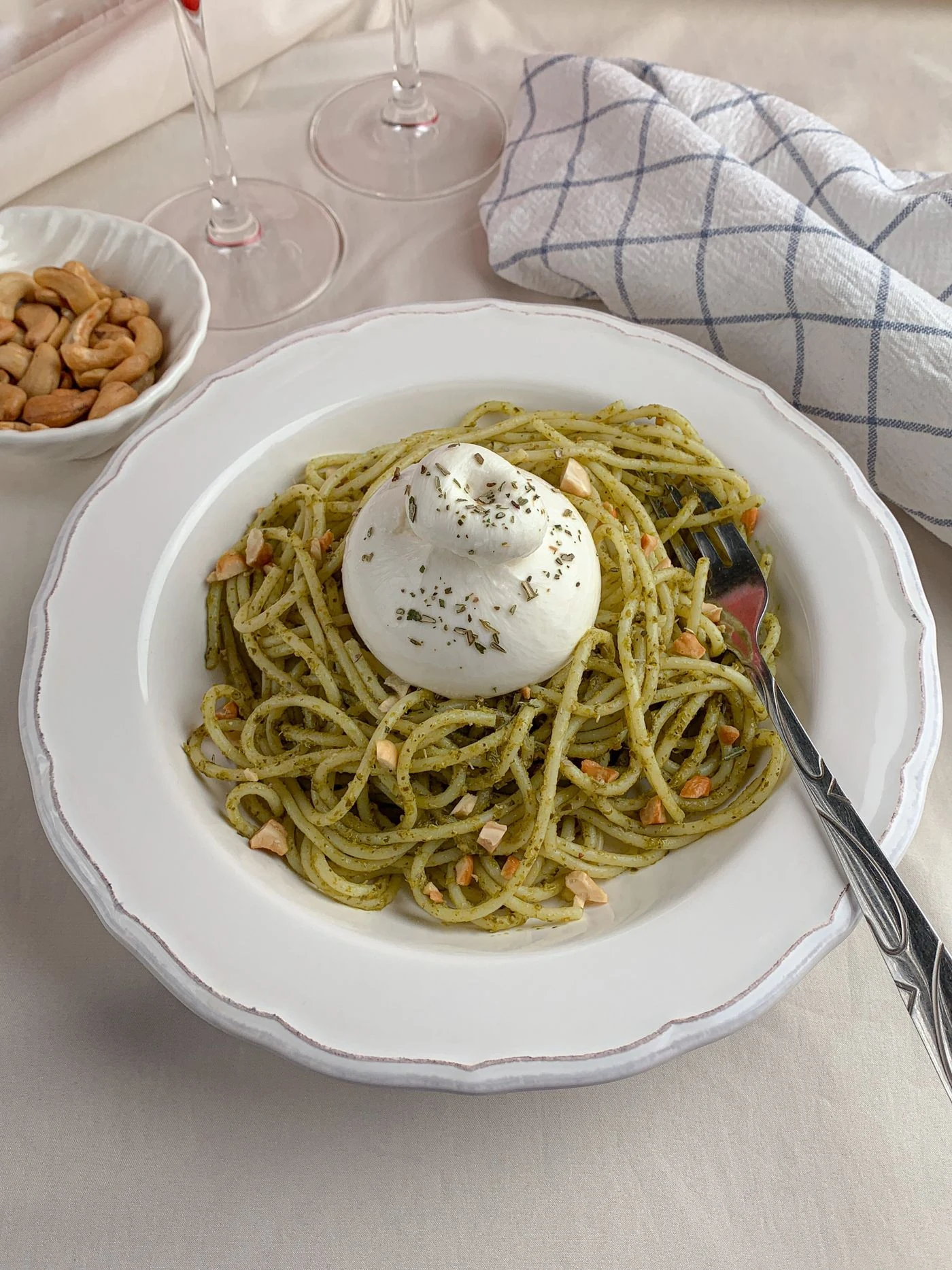
Cashew pesto works as a coating when it has enough moisture to spread along the spaghetti. In this recipe, a little reserved cooking water does that work; an extra pour of oil is not the first adjustment. The burrata is added whole at serving, keeping its creamy center separate until the table. Allow thirty minutes for two portions built from 200 g dry spaghetti.
Cashew pesto spaghetti with burrata makes 2 servings, with 30 min estimated total time. View the standalone recipe page.
Set aside the ingredients that finish the plates
Measure 40 g roasted cashews, then separate 25 g for the pesto and 15 g for chopping over the finished pasta. Keeping the garnish aside prevents the processor from consuming the entire nut allocation. Have the two burrata balls, oregano and black pepper ready, with the cheese kept cool until it is time to plate.
Wash and dry the basil before measuring the processor ingredients. Clinging water changes the initial pesto consistency, and wet leaves are harder to handle neatly. Finely grate the listed hard cheese rather than adding large chunks. The recipe specifies microbial-rennet hard cheese; follow that ingredient detail without assuming any unrelated cheese label provides the same composition.
Cook spaghetti and reserve water before draining
Bring two liters water and 6 g salt to a boil, then add the spaghetti. Follow its package timing to reach an al dente texture, stirring so the strands separate. Set a heatproof measuring vessel beside the stove at the start. That simple preparation makes it less likely you will pour away all the useful cooking water.
Scoop out 120 ml before draining. This amount is an allowance, not a command to add it all at once. Do not rinse the drained spaghetti for this warm dish. Have the pesto ready as the pasta finishes so the strands can be tossed promptly instead of sitting in a colander while you begin measuring basil and garlic.
Pulse a coarse pesto instead of a smooth paste
Put basil, the 25 g cashew portion, grated cheese and garlic into a small food processor. Pulse to chop and combine, stopping to scrape the sides with the motor off. Add the oil and lemon juice, then pulse again until the mixture is coarse but cohesive. A small work bowl handles this quantity better than a large bowl with ingredients stranded below the blades.
Look for visible fine pieces distributed through the mixture. There is no need to process continuously until it becomes perfectly smooth. Chop the remaining cashews separately for a more distinct topping. They are already roasted, so the recipe does not require another toasting stage while the cooked pasta waits.
Toss off the heat and loosen gradually
Return the drained spaghetti to its warm pan with the burner off. Add the pesto and the initial 60 ml cooking water, then lift and turn the strands with tongs. Work from the bottom to distribute the pesto through the whole pan. The added water should help the coating reach between strands rather than collect beneath an untouched mound.
If the pasta remains tight or clumpy, add more of the reserved water a tablespoon at a time. Stop when the sauce coats and the strands move easily. Do not boil the pesto to force it onto the pasta. Residual heat is sufficient for this mixing stage, and a hard cook would change the intended fresh basil finish.
Plate promptly and open the burrata while eating
Divide the spaghetti between two plates before positioning the cheese. Drain the burrata carefully and support each ball from underneath as you transfer it. Put one 100 g ball on each serving, then distribute the chopped cashews, dried oregano and pepper. Keep this assembly brief; there is no added long warming hold for the cheese.
Serve immediately and cut the burrata into the pasta at the table. Its center can then mingle with the green coating in individual bites. If the noodles tighten during the brief plating interval, use a little remaining measured pasta water before adding the cheese. Do not return the fully assembled burrata-topped plates to a burner or oven as an unplanned finishing step.
Common questions
Why does pesto collect in clumps on my spaghetti?
It usually needs more even tossing or a little reserved pasta water. Start with the prescribed 60 ml, then add the remaining allowance by tablespoons while lifting the strands off the heat.
Should I cook the burrata into the pesto?
No. Drain and place one whole ball on each finished portion, then serve immediately. Opening it at the table keeps the creamy center distinct until you combine it with the pasta.
Technique & food-safety references
These primary references support the technique, safety and storage guidance. The recipe and cooking explanations are original Recipe Pinboard content.