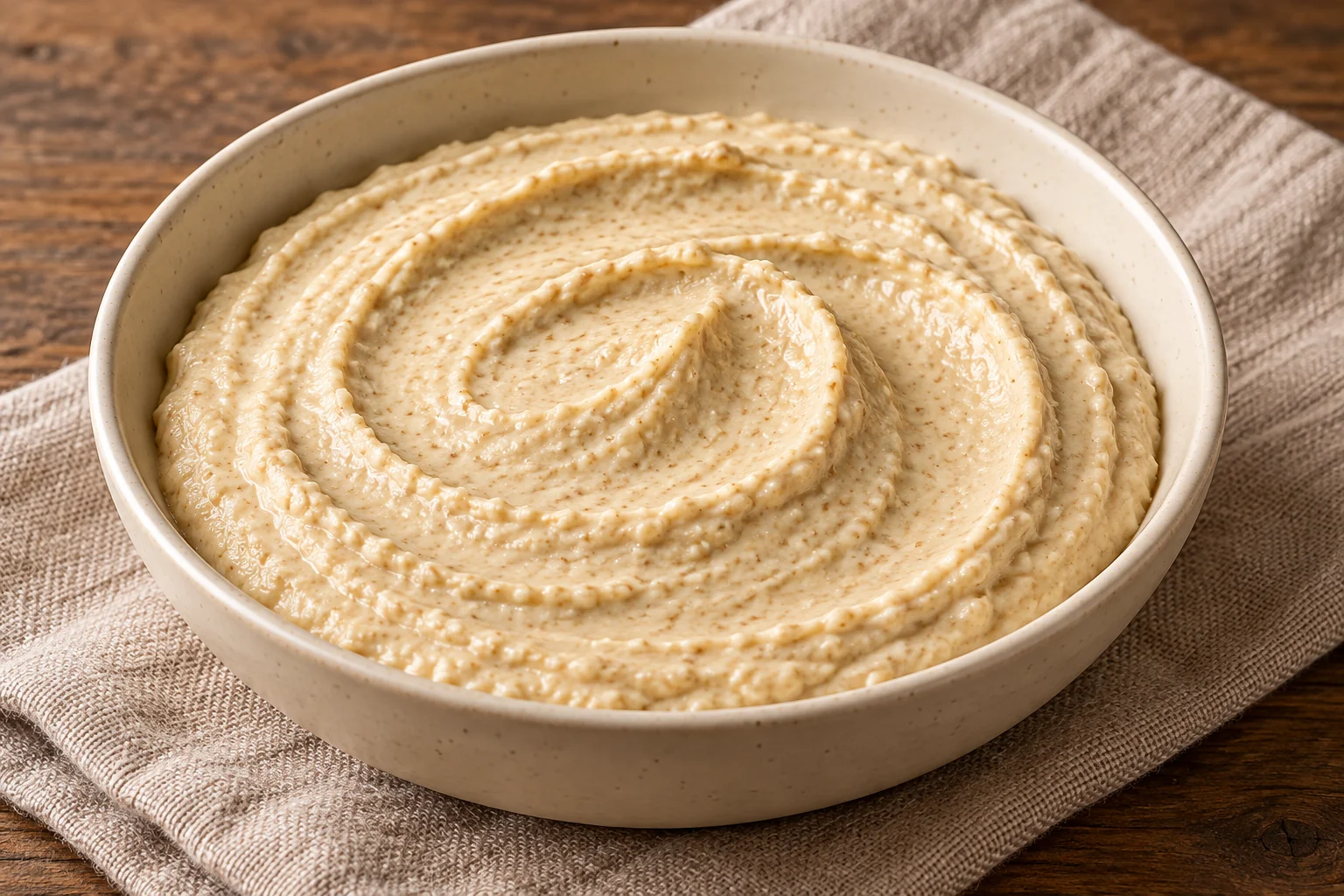
Cashews give this spread its body, while roasted garlic supplies a mellow savory flavor. The texture depends on softened nuts, a small enough processor bowl and measured liquid added in stages. It is a nut spread with fine texture, not a dairy cheese substitute that melts or behaves like cream cheese in baking.
Roasted garlic & cashew spread makes 8 servings, with 1 hr 5 min estimated total time. View the standalone recipe page.
Start with the specified nuts
The recipe uses dry-roasted unsalted cashews because that is the ingredient state used in the retained nutrition calculation. Salted snack nuts bring different seasoning, and flavored nuts may contain sugar, milk or other additions. Weigh the nuts before soaking. Cover them with freshly boiled water in a heatproof bowl and leave for thirty minutes while the garlic cooks. This is a short softening step, not a plan to leave nuts soaking on the counter overnight.
Roast peeled cloves in a covered dish
Using peeled cloves makes the edible garlic weight explicit and avoids guessing how much garlic remains inside a whole roasted head. Choose a small ovenproof dish that holds the cloves close together, add all the measured oil and cover. Tender cloves should yield when pressed with a fork. Light gold is welcome; very dark edges taste sharper and can tint the spread. Larger cloves may need the upper end of the timing range, so check their centers rather than relying only on color.
Drain before adding blending water
Discard the soaking water and let the cashews drain thoroughly. The separate one hundred grams of blending water is the controlled liquid in the recipe. Pouring the soaking water into the processor would produce a much looser mixture and an uncertain yield. Scrape all the garlic roasting oil into the processor: it is part of the formula and the nutrition calculation. Add lemon, salt and half the blending water first, keeping the rest ready for the next stage.
Work with the processor capacity
A compact processor bowl is helpful for this small batch. Pulse initially, then process in short runs, stopping the motor before scraping food from the walls. Add the remaining water once the nuts are finely broken down. If the blade spins under a stationary mound, scraping is more useful than running the motor longer. The finished spread should hold a soft spoon ridge and feel creamy with very small nut particles. A household processor may not produce the completely silky texture of commercial equipment.
Cool, portion and keep refrigerated
The warm garlic and soaked nuts can make the finished mixture warm. Spread it into a shallow container for prompt cooling rather than leaving a tall closed processor bowl on the counter. Eight equal portions refer to the complete finished batch; crackers and vegetables are not included. The estimate counts the original nut mass, with soaking losses acknowledged as unmeasured. Garlic, water and nuts make a moist perishable mixture. Refrigerate within two hours and use within three to four days; an oil layer is not a preservation method.
Common questions
Why is my spread gritty?
The nuts may need more thorough softening or the batch may be riding above the blade. Drain after the full soak, scrape the processor repeatedly and use the measured water in stages. Do not expect extra oil alone to remove nut particles.
Can I replace cashews with almonds?
Almond skins, firmness and composition make that a different spread. They need a separately developed soaking and blending method, and the cashew-based nutrition panel would no longer describe the ingredients.
Technique & food-safety references
These primary references support the technique, safety and storage guidance. The recipe and cooking explanations are original Recipe Pinboard content.


