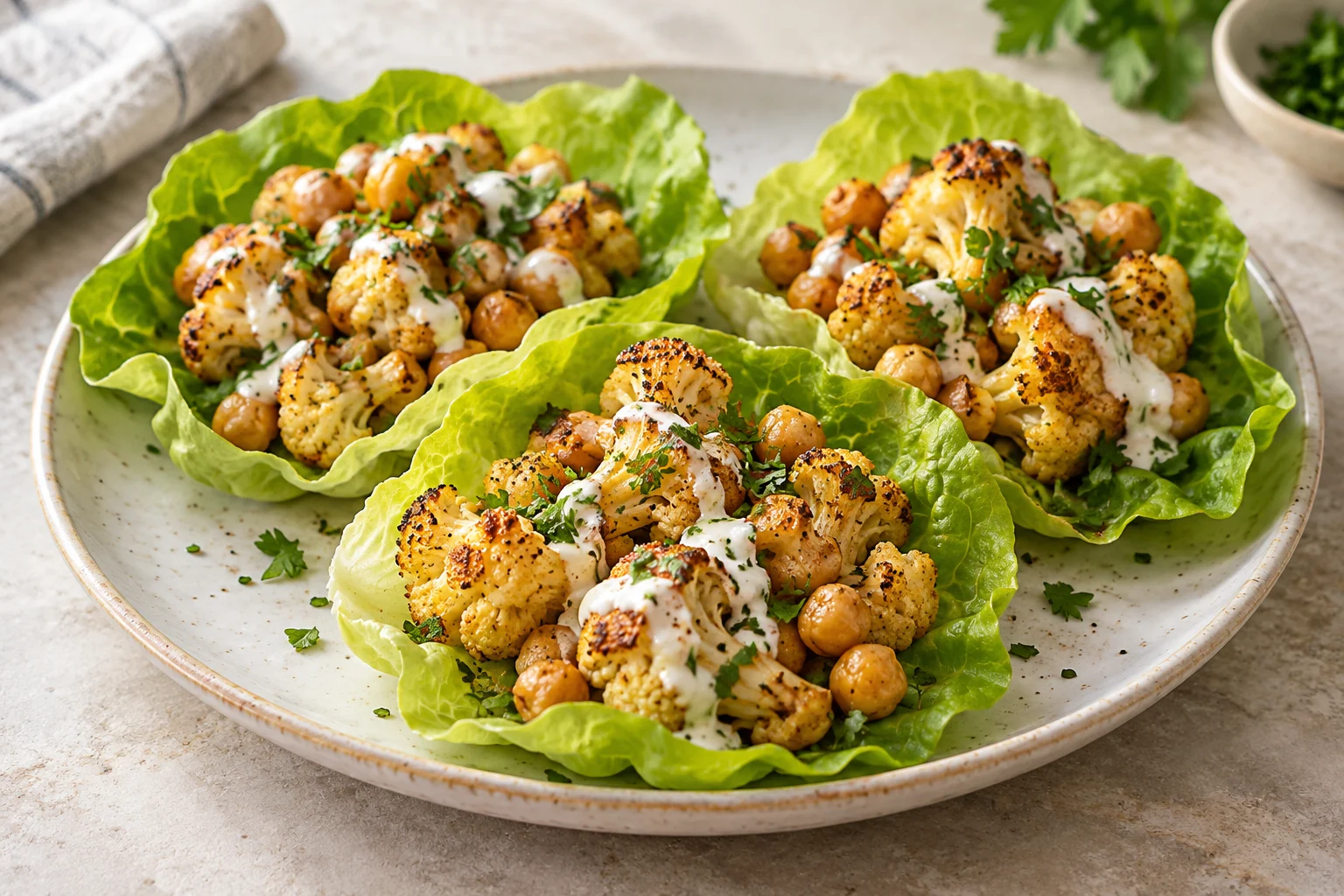
The contrast in these four portions comes from warm, spiced cauliflower and chickpeas against cool lettuce and lemon yogurt. Two baking sheets give the substantial filling enough space to roast. The other useful choice is to assemble at the last moment: hot filling left inside delicate leaves quickly turns a crisp wrap into a soft salad.
Roasted cauliflower & chickpea lettuce wraps makes 4 servings, with 50 min estimated total time. View the standalone recipe page.
Prepare the vegetables for both roasting and wrapping
Cut 600 g cauliflower into roughly 2 cm florets, including similarly sized tender stem pieces. Oversized florets are awkward to bite inside a lettuce leaf and cook more slowly than the smaller pieces around them. Rinse and drain the canned chickpeas, then weigh the required 480 g; the liquid printed as part of a can’s net weight is not part of this amount.
Pat the chickpeas and cauliflower dry before coating. Wash the lettuce leaves under running water and dry them separately. Water trapped in a folded leaf dilutes the sauce and can drip when the wrap is lifted. Choose broad intact leaves where possible, and keep a few smaller leaves for reinforcing a tear.
Spread the filling across two trays
Toss the cauliflower and chickpeas together with the measured oil, cumin, paprika, 2 g salt and pepper. Use a large bowl so the spices reach the chickpeas beneath the florets. Scrape the coating onto the trays rather than leaving most of the seasoning behind in the mixing bowl.
A single crowded tray would hold more than a kilogram of wet ingredients before roasting. Dividing between two rimmed sheets gives steam a route to escape. Keep the pieces in loose single layers, stir halfway through, and swap the tray positions so one rack does not do all the browning.
Look for tender cauliflower rather than crunchy snack chickpeas
At 425°F (220°C), start checking within the written 25–30-minute window. A floret should yield readily to a knife while showing browned edges. The chickpeas should be hot and lightly golden, but this recipe does not aim for the dry, crisp texture of separately roasted snack chickpeas.
If the cauliflower is pale but already tender, check whether the trays were crowded or the oven had fully preheated. Leaving everything in indefinitely can harden the chickpeas while drying the cauliflower. If individual small pieces brown early, move them toward a cooler area of the tray rather than waiting for them to char.
Make a sauce that stays on the filling
Stir the 200 g thick Greek yogurt with lemon juice, grated garlic, parsley and the remaining 1 g salt. Greek yogurt gives the sauce enough body to cling instead of immediately soaking into the lettuce. Keep it refrigerated while the trays finish, and stir once more before portioning.
The garlic is raw in this sauce, so grate it finely for even distribution. Plain pouring yogurt would make a thinner result; it is not the same ingredient in this measured formula. The sauce is already part of the four portions, so distribute the entire batch rather than treating it as an uncounted extra.
Assemble immediately and pack components separately
Give the roasted mixture five minutes off the trays before filling the leaves. Divide among about twelve large leaves and finish with sauce, allowing three wraps per serving. Leaf count is approximate: if the leaves are small, make more wraps and divide the total filling, lettuce and sauce into four equal shares.
Store any remaining filling, sauce and lettuce separately at 40°F (4°C) or colder. Refrigerate within two hours, or one hour above 90°F (32°C), and use within three to four days. Reheat filling to 165°F (74°C), then add it to cold leaves with cold sauce. Already assembled wraps are better eaten promptly because reheating lettuce will wilt it.
Common questions
Can I pack these for lunch?
Pack the roasted filling, yogurt sauce and dry lettuce separately, keeping them refrigerated or properly chilled during transport. Assemble just before eating.
Why do my wraps split?
Large hard florets, overfilled leaves and torn stems make splitting more likely. Keep florets bite-size, choose broad leaves and divide the filling evenly instead of forcing a whole serving into one leaf.
Technique & food-safety references
These primary references support the technique, safety and storage guidance. The recipe and cooking explanations are original Recipe Pinboard content.