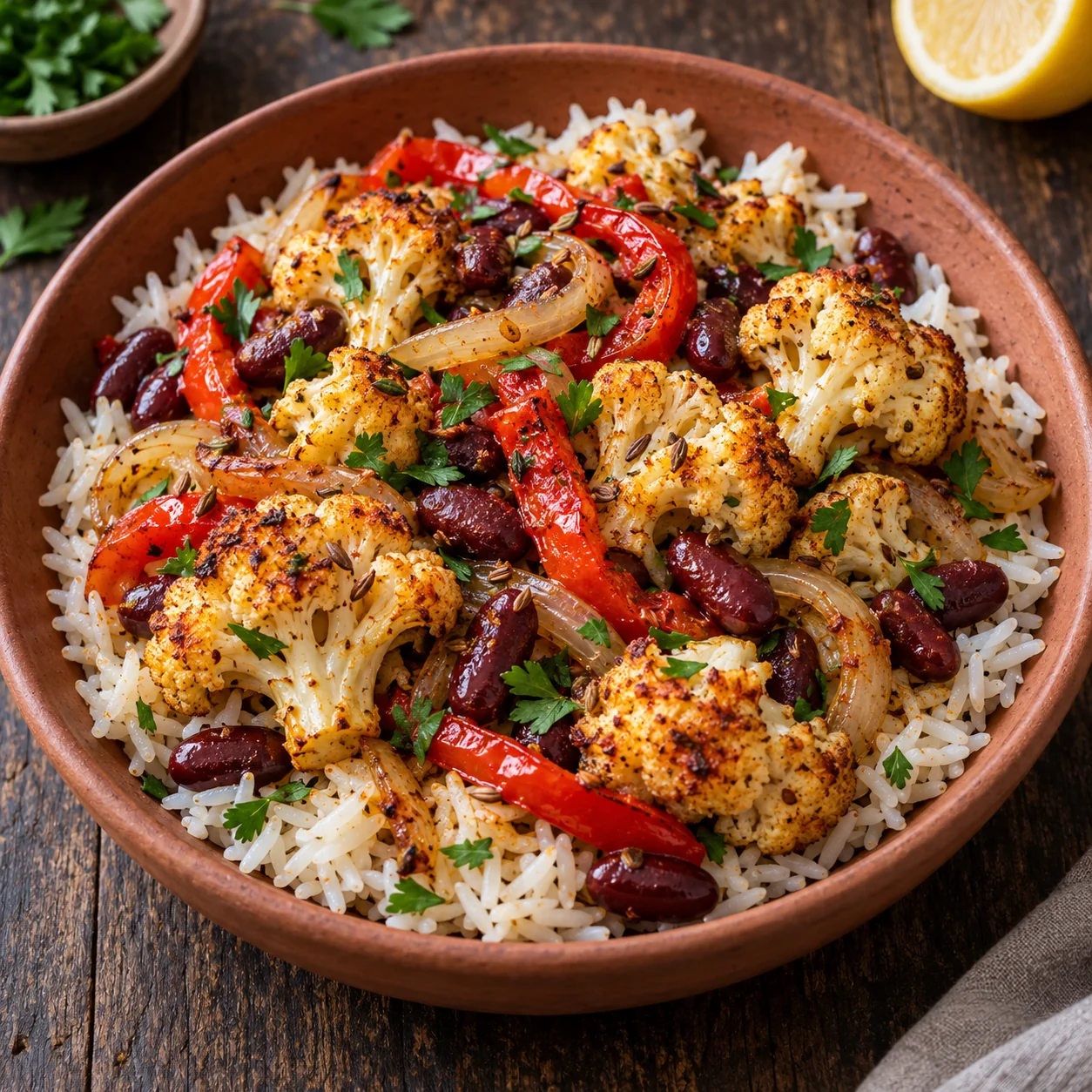
These bowls contrast soft kidney beans and fluffy rice with browned cauliflower edges. Cooking everything from the start on one crowded sheet would leave the vegetables damp and the beans wrinkled. The full recipe card separates the roasting into two stages and lets the rice cook alongside it. Follow those amounts, then use the size, spacing and moisture checks below to bring the components together while they are still warm.
Cauliflower & kidney bean rice bowls makes 4 servings, with 55 min estimated total time. View the standalone recipe page.
Cut the vegetables for the same roasting window
Make cauliflower florets roughly one inch across, keeping some stem attached so they do not crumble. Split thick stems lengthwise; they take longer to soften than the branching tops. Pepper strips and onion slices should be substantial enough not to scorch before the cauliflower becomes tender. Dry washed vegetables before tossing them with oil. Extra surface water encourages steaming at the beginning of the roast and delays browning, even when the oven is fully heated.
Give the cauliflower contact with the sheet
A large rimmed sheet is useful because it lets the vegetables spread out with visible gaps. Position a cut face of each larger floret against the metal when practical. Turn once during the first roasting stage, rather than moving the vegetables every few minutes. The cumin is lightly crushed seed, so you should see small aromatic seed fragments rather than a uniformly powdery coating. Toss well to distribute these and the paprika through the measured oil; little dry piles of spice can scorch on the exposed sheet.
Cook the rice with its own lid
Keep the rice in a separate saucepan so the liquid ratio remains manageable. Bring the measured water and rice to a boil, then immediately reduce to low and cover. Do not continually stir or lift the lid; the rice needs steady trapped steam. Check near the end of the stated range. If the center is still firm and the pan is dry, add a little water and continue covered. After cooking, rest the pan off heat before gently lifting the grains with a fork.
Add fully cooked canned beans near the end
The kidney beans in this recipe are canned, already cooked, then drained and rinsed before weighing. They are not dry kidney beans and should not be replaced with soaked but uncooked beans. Add them only after the vegetables have completed their first roast. Stir gently so the skins stay mostly intact, then return the sheet to the oven until the beans are hot and the cauliflower stems are tender. Some beans may split slightly; extensive drying suggests they roasted for too long or were spread too thinly.
Dress after roasting and portion the whole bowl
Whisk the final oil and lemon juice, then toss through the hot vegetables and beans with chopped parsley. This preserves the fresh finish and avoids reducing the lemon on the sheet. Divide all the rice and topping among four bowls, including the measured dressing. The estimate covers that complete combination. Refrigerate leftovers promptly in shallow containers within two hours, rather than leaving a large warm rice bowl on the counter to cool completely. Use within three to four days and reheat thoroughly to 165°F (74°C).
Common questions
Why is my cauliflower pale and soft?
Check crowding, surface moisture and oven temperature. Vegetables piled together release steam into one another. Use a larger sheet or two sheets with space between pieces, and allow the oven to preheat fully before roasting.
Can brown rice replace the white rice?
Brown rice needs a different liquid allowance and a longer cooking window. It also changes the nutrient profile. Cook it according to its own package as a separate variation; do not use the white-rice timing and claim the original estimated panel still applies.
Technique & food-safety references
These primary references support the technique, safety and storage guidance. The recipe and cooking explanations are original Recipe Pinboard content.


