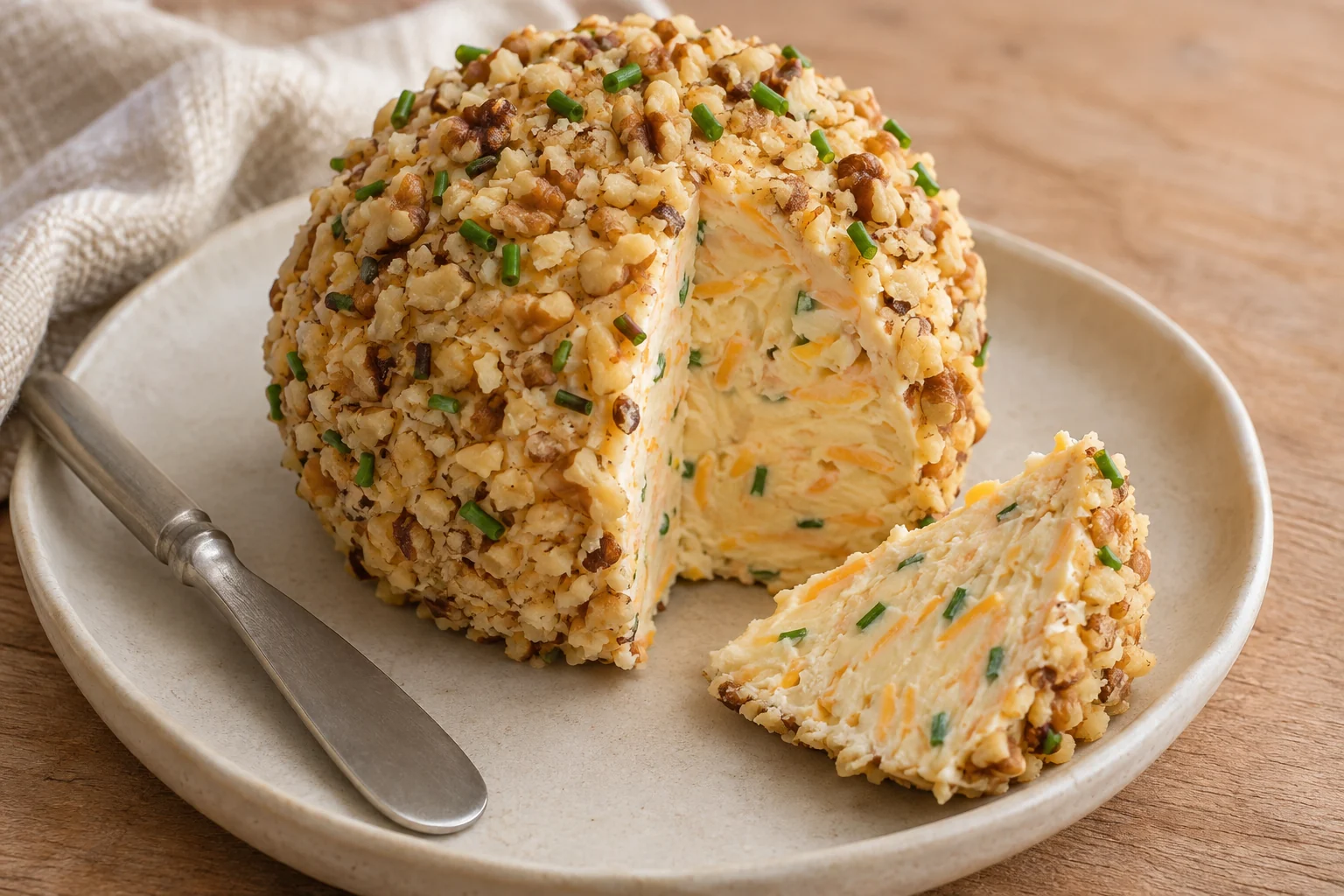
This spread is shaped while cold enough to hold together, then coated with chopped walnuts and chives. The filling remains dense and creamy, with small cheddar strands distributed through it. It is an original savory combination without dried fruit or a sweetened filling. The three-hour schedule includes softening the cream cheese and two chilling stages; those pauses make the ball easier to shape and serve without repeatedly handling a warm, sticky mixture.
Cheddar, chive & walnut cheese ball makes 12 servings, with 3 hr estimated total time. View the standalone recipe page.
Soften the cream cheese just enough to mash
Use full-fat block cream cheese and cut it into small cubes before its short softening period. The cubes should yield to a spatula, but they do not need to become loose or glossy. Keep track of the time out of refrigeration while you grate the cheddar and prepare the chives. Whipped cream-cheese spread contains a different structure and can produce a softer ball. A warm kitchen may soften the cubes sooner than expected, so check them rather than treating thirty minutes as a mandatory minimum. Return the cheese to the refrigerator if preparations are interrupted.
Grate finely and mix without adding extra liquid
Grate the cheddar yourself using the finer side of a grater. Smaller strands distribute through the cream cheese and make a neater cut surface than long, coarse shreds. Mash the cream cheese smooth first, then fold in the cheddar, filling portion of chives, measured lemon juice and pepper. Scrape the bowl thoroughly to find unmixed pockets. The mixture will be stiff, and that is useful for shaping. Do not add milk to make it resemble a soft dip. If it is difficult to stir, pause briefly and work with a firm spatula rather than forcing a small hand mixer.
Use the wrap to form a rounded shape
Transfer the mixture onto food-safe wrap, gather the edges upward and use the wrap to guide it into a ball. This keeps warm hands from continually softening the surface. The first shape does not need to be perfectly spherical; the ninety-minute chill gives you a firmer base to refine later. Put it on a small plate in the refrigerator rather than balancing the wrapped ball against other packages. Check that it feels firm enough to lift before unwrapping. If your refrigerator is crowded or the mixture started unusually warm, allow extra chilling time.
Chop the walnuts small enough to adhere
Use raw shelled English walnuts and chop them into small pieces with some finer crumbs. Large halves will fall off and leave the filling exposed between them. Combine the chopped nuts with the remaining chives on a clean plate, then roll the chilled cheese ball gently through the coating. Turn it onto its sides and base, pressing loose pieces onto bare patches without crushing the shape. The measured coating belongs on the ball, not as a decorative pile left behind. Give the coated ball its final thirty-minute chill so the surface settles before serving.
Portion with a knife and manage the serving time
Set the ball on a plate with a spreading knife and divide it into twelve portions. A brief five-minute pause can make a very cold ball easier to cut, but it should not sit out throughout a long gathering. Keep the storage portion covered at 40°F or colder and use within three to four days. Count the earlier softening and later serving periods when limiting time outside refrigeration. Discard after more than two hours out, or one hour above 90°F. Bread, crackers or vegetables served alongside are separate from this cheese-ball recipe.
Common questions
Why is the ball too soft to coat?
It may need longer refrigeration, or a whipped cheese spread may have been used instead of block cream cheese. Chill the mixture until it can be lifted without slumping. Adding a large amount of extra grated cheese changes the formulation rather than solving the temperature issue.
Can I leave out the walnuts for an allergy?
This recipe contains walnuts and is not suitable for someone who must avoid them. A separate nut-free formulation and appropriate cross-contact precautions would be needed; simply brushing visible nuts off the finished ball is not an adequate change.
Technique & food-safety references
These primary references support the technique, safety and storage guidance. The recipe and cooking explanations are original Recipe Pinboard content.


