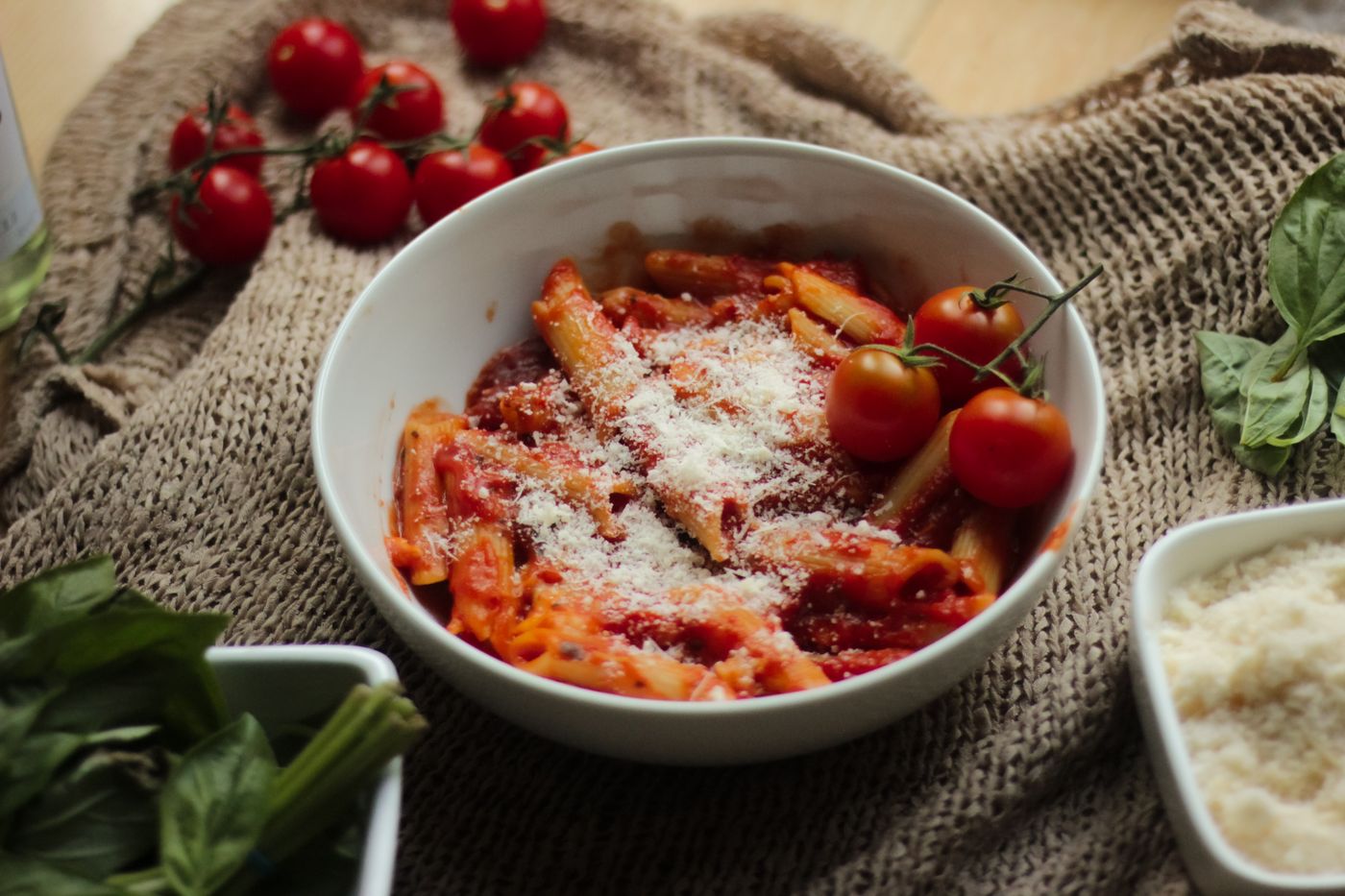
The cheese in this penne is Parmesan, split between the sauce and the finished bowls. There is no cream or mozzarella hidden in the method. Crushed tomatoes provide body, halved cherry tomatoes add softer pieces, and pasta water helps the coating spread. Keeping those roles clear makes it easier to troubleshoot a dry-looking skillet without adding ingredients beyond the recipe.
Cheesy tomato penne makes 4 servings, with 25 min estimated total time. View the standalone recipe page.
Organize the divided ingredients
Weigh the 70 g Parmesan and divide it into two portions of 35 g. One goes through the pasta and sauce; the other is for serving. Keep the half teaspoon of dried basil near the saucepan, and the 10 g fresh basil separate for the final finish.
Wash and halve the 200 g cherry tomatoes before starting the garlic. Their cut faces let juices enter the sauce during its twelve-minute simmer. Open the 400 g can of crushed tomatoes and mince the three garlic cloves. Preparing both tomato components first prevents the garlic from waiting too long in hot oil.
Use a gentle simmer to develop the coating
Warm the two tablespoons of olive oil in a large skillet and cook the garlic for thirty seconds, stirring so it does not sit against a hot spot. Add crushed tomatoes, halved cherry tomatoes, dried basil, salt and pepper promptly.
Simmer for twelve minutes, stirring occasionally across the bottom. The cherry pieces should soften while the crushed tomatoes remain loose enough to move through the pasta. This is a quick sauce, so do not reduce it until almost dry in pursuit of thickness. The Parmesan will also influence the consistency when added later.
Cook the penne according to its own package
Use the stated 340 g dry penne and salted boiling water. Follow its package time, stirring as needed so the tubes do not settle together at the bottom. Because the sauce and pasta cook alongside each other, read the timing before you begin and coordinate the two pans.
Reserve 200 ml cooking water before draining. Keeping the water in a heat-safe cup next to the skillet makes the finishing stage much easier. Do not rinse the pasta for this hot dish; transfer it promptly so it meets the sauce while warm and separated.
Add cheese with movement and enough moisture
Toss the drained penne with the tomato sauce and the first half of the Parmesan. Distribute the cheese across the skillet rather than dropping a compact mound into one spot. Keep the heat gentle while combining; a hard boil is not needed to bring everything together.
Use the reserved water in small additions when the sauce grips the pasta too tightly or leaves bare patches. Lift and turn the tubes to coat both their ridges and open ends. Stop before liquid pools deeply beneath them. The full 200 ml is available for adjustment, not an amount that must be used.
Finish with the second cheese portion
Divide the pasta among four servings and add the remaining Parmesan and fresh basil. This preserves some cheese flavor and herbal aroma at the surface rather than cooking all of it into the tomatoes. Scoop up the sauce and cherry pieces left beneath the pasta when filling the bowls.
Refrigerate leftovers promptly in shallow covered containers within two hours, or one hour above 90°F. Use within three to four days, reheating to 165°F. Add a little water as needed because the pasta absorbs sauce during storage. Heat only the portion required rather than repeatedly warming and cooling the whole batch.
Common questions
Why did my penne become dry after adding Parmesan?
Cheese and pasta can tighten the coating. Add reserved cooking water gradually while tossing, and keep the heat gentle rather than boiling away the moisture.
Is the full 70 g Parmesan stirred into the sauce?
No. Half, or 35 g, is tossed through the pasta. The other half finishes the bowls, along with the fresh basil.
Technique & food-safety references
These primary references support the technique, safety and storage guidance. The recipe and cooking explanations are original Recipe Pinboard content.