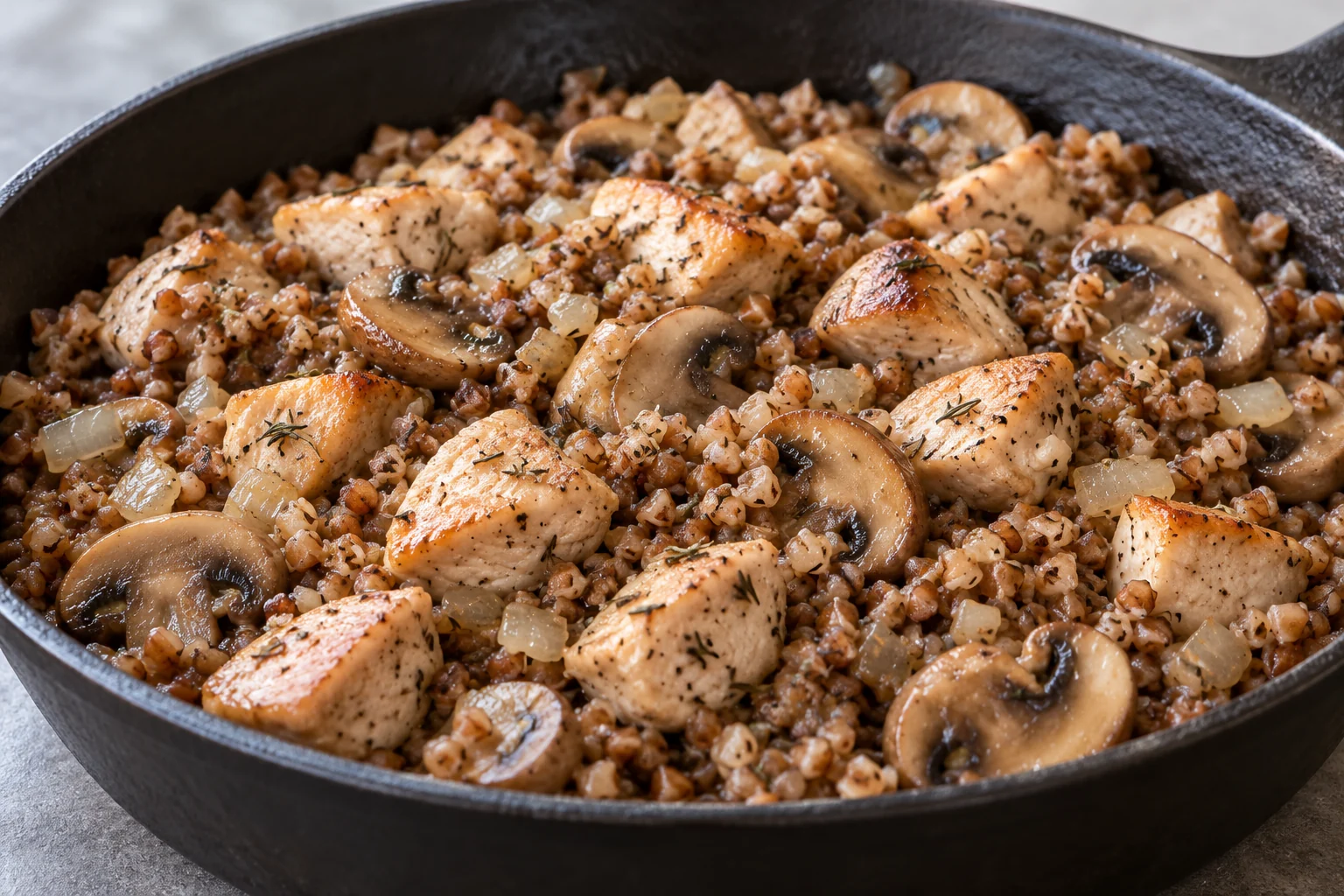
The challenge in this skillet is finishing tender buckwheat and safely cooked chicken together. Mushrooms add flavor but also release water, so the recipe separates browning from the covered simmer. Read the full ingredient card first. The following checks explain why the early stages matter and how to respond if the groats are still firm after the chicken is cooked.
Chicken, mushroom & buckwheat skillet makes 4 servings, with 1 hr 5 min estimated total time. View the standalone recipe page.
Use the intended form of buckwheat
Choose dry whole buckwheat groats rather than flour, flakes or a precooked pouch. Those products absorb liquid differently and cannot follow the same simmer. Weigh the chicken after removing skin and bones, then cut pieces of similar size. Very small pieces may dry out while the larger ones remain underdone. Pat visible surface moisture away before browning. Keep the raw chicken preparation area separate from vegetables and utensils that will touch finished food.
Treat browning as an unfinished stage
The short first cook gives chicken surfaces some color; it is not a doneness test. Transfer the pieces and juices to a clean plate and keep them for the later simmer. Do not use the raw packaging or a contaminated cutting board as a holding surface. A single uncrowded layer helps browning. If the pan is too small, use batches within the measured oil allowance. Browned outside and white-looking edges do not establish a safe internal temperature.
Cook off the mushroom liquid
Add the remaining oil and mushrooms before the onion. Let the mushrooms release their liquid and continue until the pan looks mostly dry. Stir often enough to prevent sticking, but allow some contact with the hot surface. If the mushroom liquid remains as a puddle when the measured water goes in, the finished grain mixture may be wetter than intended. Add onion once this stage is complete, then garlic and thyme briefly so the minced garlic does not burn.
Simmer gently with a close-fitting lid
Stir the groats into the vegetable base, add measured water and seasonings, and return all chicken and juices. Bring the pan to a simmer before covering and reducing the heat. A vigorous boil can damage the grain texture and evaporate liquid through the lid too quickly. Check near the end of the range: taste a groat for tenderness and measure several thick chicken pieces with a food thermometer. Both checks must pass before the dish is ready.
Correct dryness without flooding the pan
If chicken is safely cooked but the groats have a firm center and the skillet is dry, use the small measured hot-water correction in the card. Cover for the short additional interval, then check again. Do not pour in a large unmeasured amount that turns the skillet into soup. Rest off heat with the lid on before folding gently. Divide the full pan into four portions, distributing chicken and grains evenly, and refrigerate leftovers promptly in shallow containers.
Common questions
Can I judge chicken by its color?
Use a thermometer and reach 165°F (74°C) in the thickest pieces. Color and clear-looking juices do not replace that check. Clean the thermometer probe between contact with undercooked and finished food.
Why did the groats become mushy?
They may have been a different product, simmered too vigorously or stirred repeatedly while soft. Use whole groats, gentle heat and the resting step. If the texture is already soft, do not add the optional water correction merely because the timer has elapsed.
Technique & food-safety references
These primary references support the technique, safety and storage guidance. The recipe and cooking explanations are original Recipe Pinboard content.


