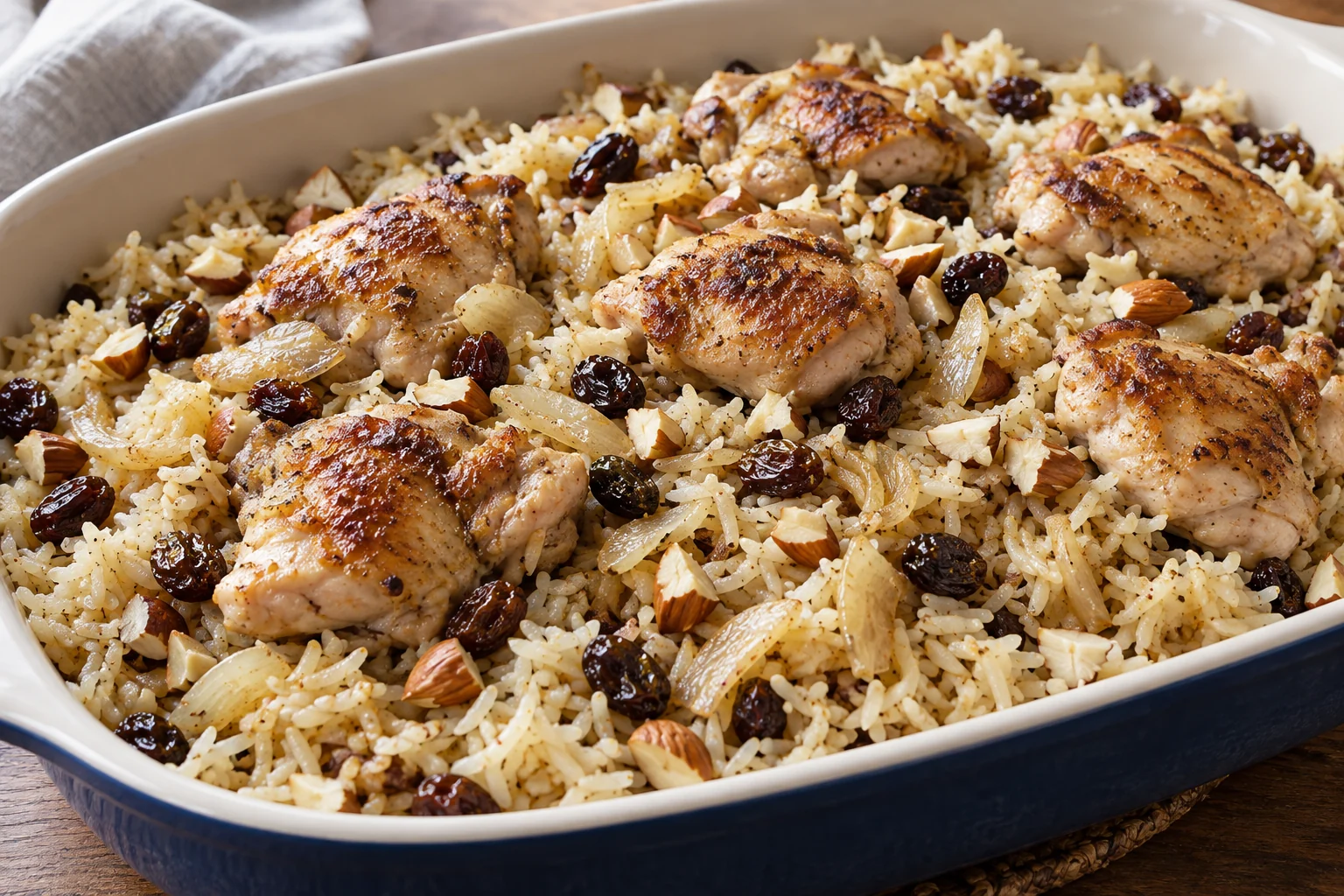
This pilaf cooks regular long-grain white rice in a covered casserole beneath browned chicken thigh pieces. Raisins soften in the cooking liquid while chopped almonds remain distinct. The method depends on measured dry rice, hot water and a tight lid, followed by a covered rest. Four portions include the whole casserole. Chicken doneness and rice tenderness are separate checks, and both must be satisfied before serving.
Chicken, raisin & almond rice pilaf makes 4 servings, with 1 hr 20 min estimated total time. View the standalone recipe page.
Choose the stated rice and meat
Use dry regular long-grain white rice, not instant, brown or already cooked rice. Those products absorb liquid and cook on different schedules. The chicken quantity is raw boneless skinless thigh meat, cut into similar pieces. Dry the surface without rinsing and keep raw-poultry utensils separate from serving equipment. This recipe does not rinse or drain the rice, so there is no unmeasured water clinging to it before cooking. Weigh the raisins and almonds as well; a free handful can change the balance noticeably.
Build flavor before adding water
Brown the chicken in two batches so the pieces have room around them. They are not fully cooked at this point. Transfer them to a plate and soften the onion in the same oil, retaining the browned bits. Stir in the dry rice and ground cumin briefly so the grains are coated. Add raisins, chopped almonds and salt before the water. The cumin is ground, not a scattering of whole seeds. No broth or extra garnish is needed for the measured version.
Seal the casserole for absorption
Pour in the boiling water and scrape the base before returning the chicken and all plate juices. Bring the liquid back to a simmer so the oven stage begins with a hot casserole. Cover tightly and avoid repeatedly opening the lid, which releases steam and changes the cooking environment. Arrange the chicken evenly rather than piling it in one corner. Use the specified pan capacity so the rice layer is not excessively deep. The oven and casserole lid must both be suitable for the stated temperature.
Check rice and chicken independently
At the end of the initial baking window, test the rice and measure the thickest chicken pieces with a clean thermometer. Every portion of chicken must reach 165°F / 74°C. Firm rice with visible liquid needs more covered time. If the grains are firm but the pan is dry, add the small measured amounts of boiling water described in the recipe and record the addition. Water changes the final mass but contributes no nutrients. Do not serve hard rice simply because the chicken has reached its safe endpoint.
Rest and cool leftovers promptly
Once both components are done, leave the casserole covered for ten minutes before gently fluffing. This pause helps distribute moisture without breaking the grains through vigorous stirring. Divide all chicken, rice, fruit, nuts and juices among four portions. For leftovers, transfer food to shallow containers promptly and refrigerate within one hour rather than leaving the heavy pan to cool slowly. Use within twenty-four hours and reheat only once to 165°F / 74°C throughout. Safe reheating does not compensate for rice that was stored improperly beforehand.
Common questions
Why is the rice sticky instead of separate?
Repeated stirring after water is added can damage the grains and release more starch. Use the single initial stir, keep the lid closed and fluff gently after the rest. Also verify that you used regular long-grain rice.
Can I leave the cooked pan out until later?
No. Rice leftovers need prompt cooling and refrigeration. Portion them into shallow containers within the stated window, and reheat only what you will eat. A covered warm casserole is not a safe storage method.
Technique & food-safety references
These primary references support the technique, safety and storage guidance. The recipe and cooking explanations are original Recipe Pinboard content.


