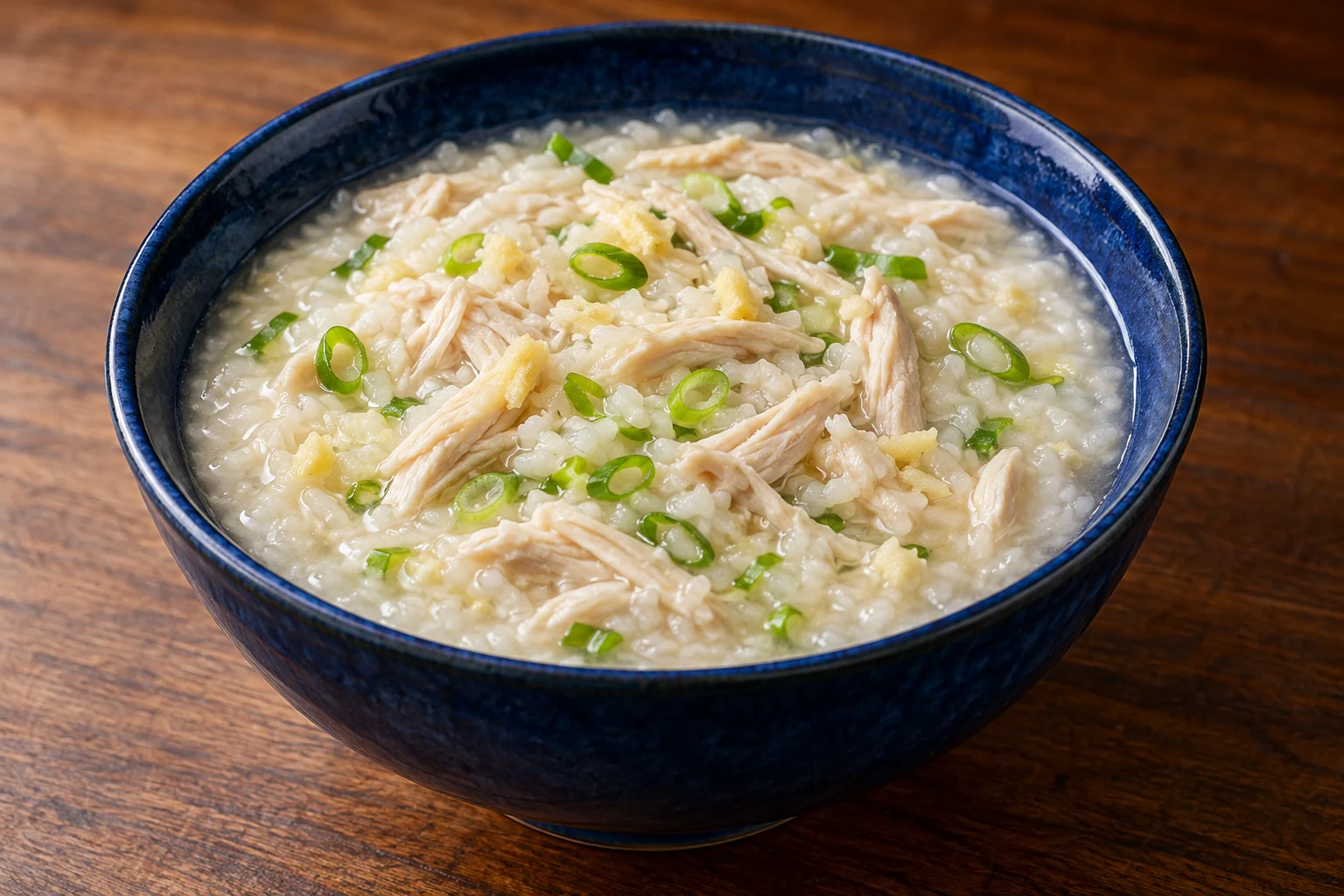
This bowl is meant to be soft and flowing, with rice grains partly broken down into the liquid. It uses a longer simmer than a pot of separate fluffy rice. Chicken is added late enough to avoid cooking for the entire rice-softening stage, then shredded and returned so the pieces are distributed through the porridge.
Ginger chicken rice porridge makes 4 servings, with 1 hr 30 min estimated total time. View the standalone recipe page.
Use the stated dry rice weight
Start with dry long-grain white rice and rinse it in a sieve before cooking. Cooked leftover rice is not an equal-weight substitute: it already contains water and has a different starch structure. Brown rice also needs a different schedule. The recipe divides the water into an initial amount and a reserved amount so the thickened mixture can receive the chicken without becoming a stiff mass. Measure both portions at the beginning, keeping the second one separate and clearly identified.
Let the grains open gradually
Bring the first rice-and-water mixture to a boil, then lower the heat and leave the lid slightly open. A hard boil can foam up and drive off water before the grains soften. Stir down to the base every few minutes, especially once the liquid turns cloudy and thick. You should see grains becoming swollen, split and softer at the edges. The first stage is not finished simply because the surface looks creamy; taste a grain for a firm center before adding the chicken.
Watch the pot bottom as it thickens
A heavy pot spreads heat more evenly, but thick rice can still stick. Use a spoon with an edge that reaches the curved corners and draw it across the bottom rather than stirring only the surface. If resistance increases, lower the heat and stir more frequently. A scorched smell is different from normal toasted rice aroma; do not scrape a dark burned layer into the whole batch. The reserved water is part of the written recipe, not an optional unmeasured correction.
Check chicken temperature before shredding
Cut raw breast into similar pieces so the largest one is not still undercooked when smaller pieces are ready. After adding chicken and reserved water, bring the pot back to a gentle simmer. Check the thickest pieces with a food thermometer for 165°F (74°C). Transfer cooked chicken to a clean board, using utensils that have not been left contaminated with raw chicken. Shred with forks, then return it with scallions, sesame oil and pepper for the final short simmer.
Serve while the texture is flowing
Rice porridge becomes thicker as it stands and thicker again in the refrigerator. Divide chicken and rice evenly among four bowls instead of taking most of the solids for the first serving. No fried toppings, soy sauce or extra oil are included in this version. For leftovers, use shallow containers and refrigerate promptly rather than leaving the full pot to cool for hours. Reheat thoroughly to 165°F (74°C), stirring so heat reaches the center. Added reheating water changes thickness but not the original portion count.
Common questions
Why are the grains still separate?
The first simmer may need more time, particularly if the heat was very low. Continue gently and stir until the grains split; the target is much softer than ordinary steamed rice. Do not add raw chicken early just to match a clock.
Can I use cooked rotisserie chicken?
That changes the ingredient profile and handling sequence. This formula calculates raw breast and cooks it in the pot. A cooked-chicken version needs its own weighed input, label review and reheating instructions.
Technique & food-safety references
These primary references support the technique, safety and storage guidance. The recipe and cooking explanations are original Recipe Pinboard content.


