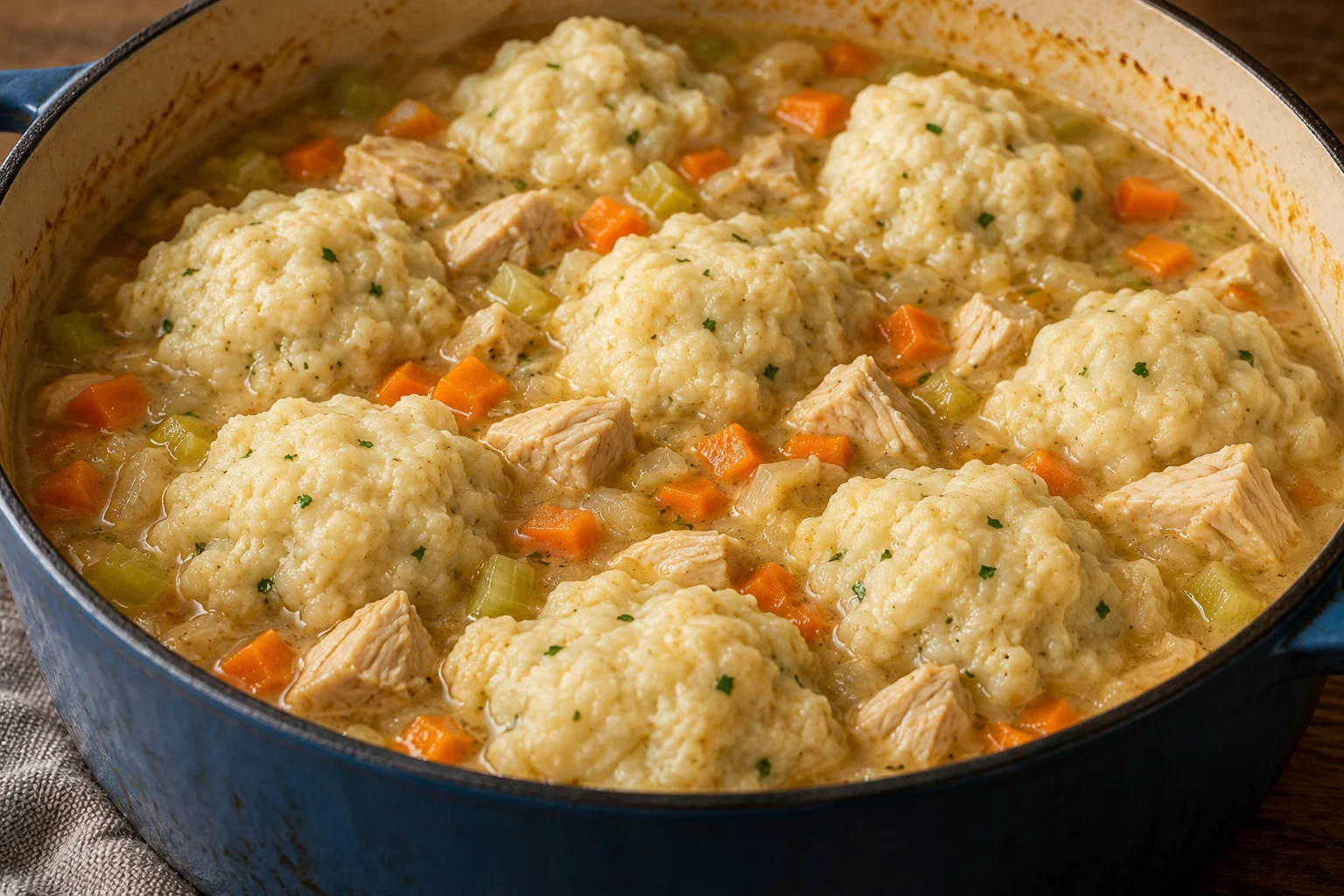
These dumplings are spooned dough cooked by steam above a simmering stew, not filled wrappers or oven-browned biscuits. The chicken and vegetables first cook in a lightly thickened broth, then eight small dough mounds expand under a tight lid. A wide pot, a gentle simmer and a fully cooked dumpling center matter more than a decorative topping. Each serving includes two dumplings and one quarter of the complete chicken stew.
Chicken stew with drop dumplings makes 4 servings, with 1 hr 35 min estimated total time. View the standalone recipe page.
Choose a pot with surface area
A wide four-quart pot gives the eight dumplings room to sit across the stew rather than stacking on one another. Check that the lid fits before cooking begins. A tall narrow saucepan may hold the liquid but leave too little space on top. Cut chicken and vegetables to the listed sizes so their cooking times remain reasonably aligned. Keep raw chicken equipment separate from tools used for the finished dish, and wash hands before moving on to the dumpling dough.
Build a light gravy, not a thick paste
Cooking the small measured flour addition with the vegetables distributes it before the broth is poured in. Add the broth gradually while stirring around the base to prevent dry flour pockets. The stew should still have enough liquid to simmer and produce steam. Avoid reducing it aggressively before adding the dumplings. Chicken juices stay in the pot and contribute to the finished gravy; nothing is drained after cooking. Check the largest meat pieces with a thermometer rather than relying on their surface color.
Mix dumplings close to cooking time
Have the dry ingredients ready, but add milk and melted butter shortly before the stew is ready for its topping. Stir only until dry flour disappears. This is a soft spoonable dough, so there is no kneading or rolling stage and no need for bench flour. Overworking can make the result less tender. All parsley belongs in the dough, which explains the small green flecks in the finished dumplings without introducing an unmeasured garnish to the photograph or recipe.
Keep the lid on and the heat gentle
Drop eight similar mounds over a steadily simmering surface, leaving gaps for expansion. Replace the lid promptly so steam can build around their tops. Repeated checking releases that steam and interrupts cooking. At the same time, a hard boil can scorch the thickened base, so reduce the burner to maintain a gentle simmer. The dumplings should look pale and softly set when finished. Brown tops would require a separate oven stage that this recipe does not include.
Check the center before portioning
After the initial covered cooking period, open the lid away from your face and split one dumpling. Its center should be fluffy and set, without sticky raw-flour paste. Verify the stated temperature and give the covered pot another short cook if necessary. Divide both meat and vegetables fairly between four bowls before allocating two dumplings to each. Refrigerate leftovers in shallow containers promptly; a large covered pot cools slowly. Reheat until both gravy and dumpling centers are thoroughly hot.
Common questions
Why are my dumplings heavy or wet in the middle?
Large uneven mounds, a weak simmer, frequent lid lifting or insufficient covered cooking can leave centers doughy. Check the center rather than serving by the clock alone. Mixing the dough heavily can also produce a denser texture even when it is cooked.
Can I replace the thigh with cooked leftover chicken?
That changes the sequence, food state and nutrition basis. This formulation starts with a weighed amount of raw boneless skinless thigh and retains its juices. A cooked-chicken adaptation needs separate timing and quantities rather than a direct weight-for-weight substitution.
Technique & food-safety references
These primary references support the technique, safety and storage guidance. The recipe and cooking explanations are original Recipe Pinboard content.


