Cabbage changes dramatically as it cooks: a loose pile of crisp ribbons becomes a much smaller, tender mixture. This skillet uses that change in two stages. First the cabbage meets the hot pan uncovered; then a short covered simmer softens it with tomatoes and chickpeas. Finishing uncovered brings the liquid back under control without cooking everything into a stew.
Chickpea, cabbage & tomato skillet makes 4 servings, with 35 min estimated total time. View the standalone recipe page.
Choose a pan with enough working room
A wide, deep skillet gives the raw cabbage room to turn through the onions. A small saucepan traps the lower leaves under a heavy mound, so they steam while the upper leaves barely warm. Slice the cabbage into thin ribbons and cut away the hard core before weighing the 600 g. Add it in two handfuls if necessary, allowing the first to wilt before the second goes in. The target is an even mix of softened ribbons with a few lightly colored edges, not deeply charred cabbage.
Keep the onion stage separate from the spices
The onion needs several minutes to soften in the measured olive oil. Garlic and paprika are added later because their small particles can scorch while you wait for the onion to cook. Once they enter the pan, stir for only about thirty seconds before adding the moist ingredients. Have the tomatoes, chickpeas and water ready beside the stove so this transition is quick. If the paprika turns very dark and smells acrid, the heat was too high; burned spice is difficult to hide in such a simple dish.
Use drained chickpeas and the stated water
The chickpea weight refers to drained, rinsed solids. Pouring the can liquid into the pan as well would change both saltiness and consistency. Fresh tomatoes contribute their own water, but the measured 100 g water helps create steam during the covered stage. Stir once so the bottom does not catch and the chickpeas heat evenly. The cabbage should lose its raw stiffness while retaining distinct ribbons. It does not need to become completely limp before you remove the lid for the final reduction.
Uncover to finish rather than increasing heat sharply
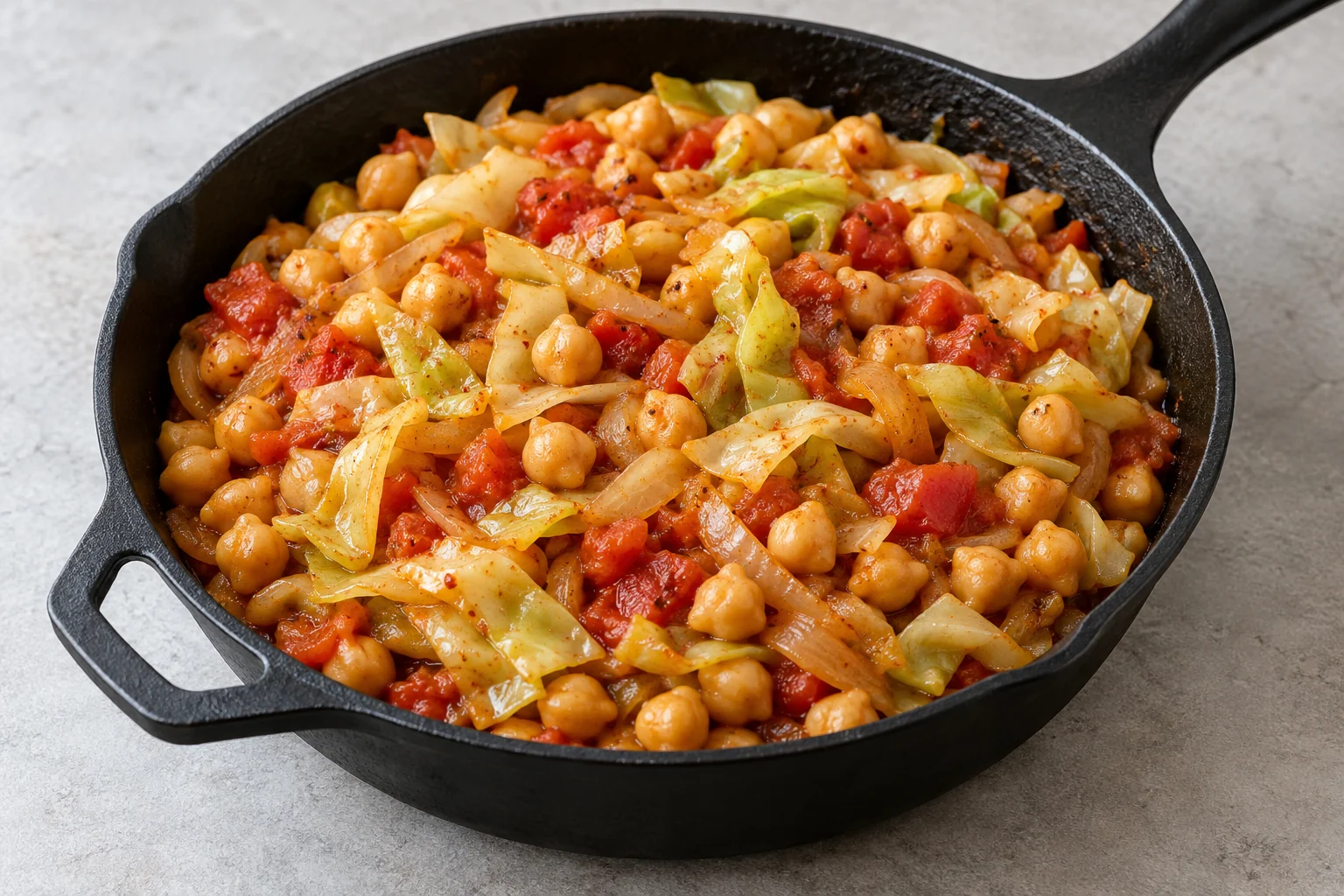
After the covered simmer, assess the liquid at the bottom. A broad pan can release it in a few minutes; a narrower one may need a little longer. Maintain a steady simmer and stir gently rather than turning the burner to maximum, which can scorch exposed cabbage before the sauce reduces. Stop when the mixture is moist but no longer sitting in a puddle. Fold in the lemon juice at the end so its flavor stays clear. The photograph illustrates that lightly coated texture rather than a broth-based soup.
Portion the vegetables and chickpeas together
Stir the finished skillet before dividing it into four equal portions so the chickpeas are not concentrated in the first two servings. The estimate includes all the oil and cooking liquid retained in the dish. Extra rice, bread or cheese is not included. Refrigerate leftovers promptly in shallow containers and use within three to four days. Reheat to 165°F (74°C), stirring so colder pockets warm through. The cabbage will soften further on reheating, so a leftover portion may be more tender than the freshly cooked skillet without requiring a new cooking method.
Common questions
Why does the skillet look like soup?
Wet chickpeas, very juicy tomatoes, a narrow pan or skipping the uncovered finish can leave excess liquid. Drain the chickpeas before weighing and let the final simmer evaporate water. Avoid adding extra starch merely to thicken a dish designed to reduce naturally.
Can I use red cabbage?
It changes the color, flavor and often the cooking time. The published method and photograph use green cabbage. A red-cabbage version may need a longer covered stage, so treat it as a variation and judge tenderness rather than assuming the same timing.
Technique & food-safety references
These primary references support the technique, safety and storage guidance. The recipe and cooking explanations are original Recipe Pinboard content.