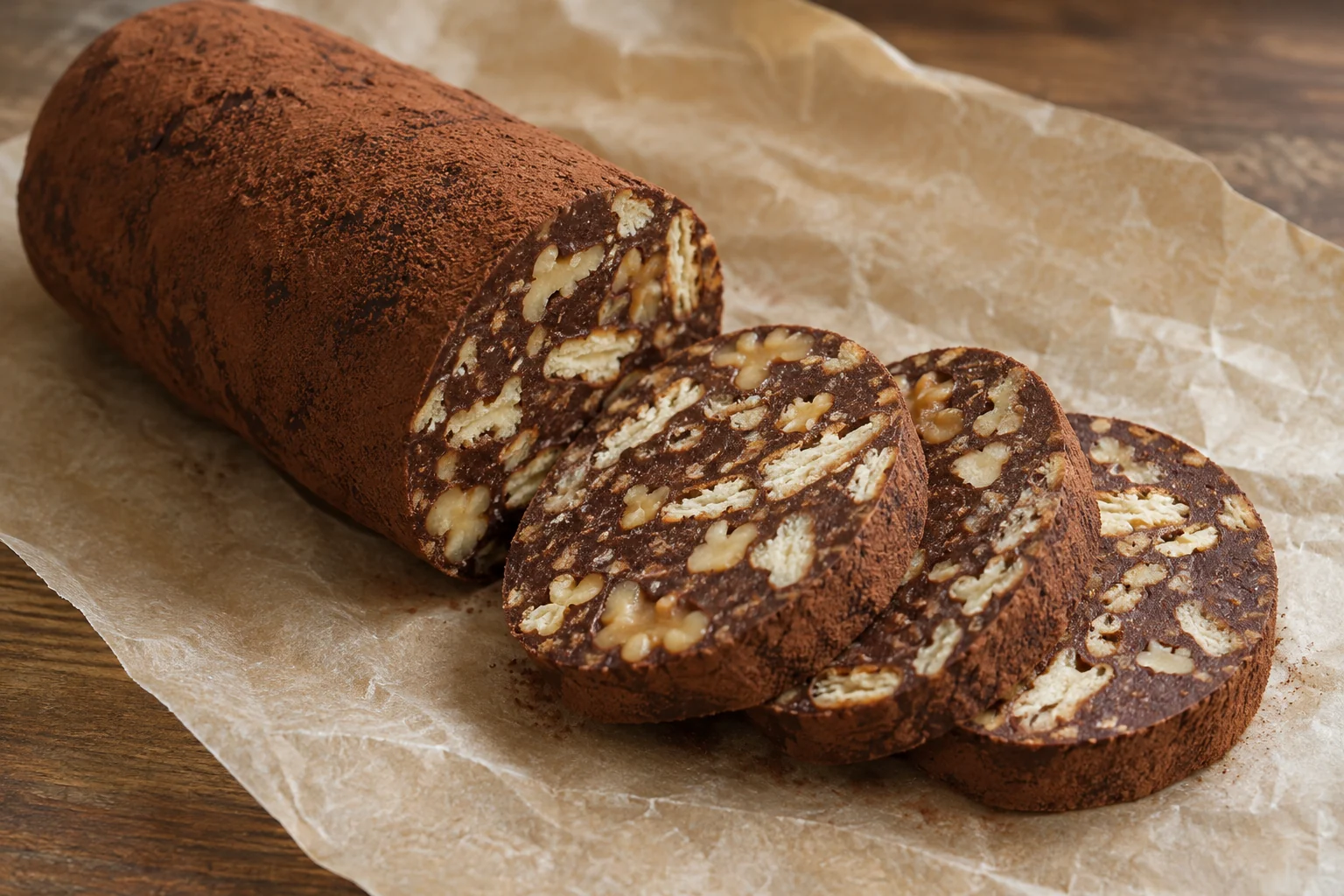
This refrigerator dessert sets a mixture of chocolate, dairy, graham crackers and walnuts into a compact sliceable log. It needs no raw egg or uncooked flour. The practical work is short, but the chilling time is essential: a warm mixture spreads instead of holding its shape, and a partly chilled log smears when sliced. Keep the cracker pieces varied but small enough to cut cleanly, and prepare a tray that will fit flat in the refrigerator before beginning.
Chocolate, walnut and graham biscuit log makes 9 servings, with 5 hr 20 min estimated total time. View the standalone recipe page.
Break crackers without turning them into powder
Use the specified plain or honey graham crackers and break them into roughly half-inch pieces. A few smaller crumbs are useful because they fill spaces around the larger fragments, so retain them. Avoid pulverizing the entire batch; visible pale pieces provide the contrast inside each slice. Chop the walnuts into manageable pieces too. Very large nut halves can interrupt a thin slice and pull it apart under the knife. Set the prepared crackers and nuts beside the chocolate bowl so they can be folded in once the base is smooth.
Melt the chocolate with gentle residual heat
Finely chop the chocolate before pouring over the hot cream and melted butter. Small pieces melt more evenly than large blocks. Heat the dairy only until steaming, then give it the brief standing time on the chocolate before stirring. Stir from the center outward until smooth, scraping around the bowl rather than beating in air. Add no water to loosen the mixture. If a few pieces remain, gentle warmth is preferable to aggressive boiling. The cocoa mixed into the base should disappear without leaving dry lumps or streaks.
Pre-chill until the mixture can be shaped
Fold in every cracker piece, crumb and walnut, coating them thoroughly. Let the mixture cool briefly, then refrigerate for the stated preliminary interval. Stir once halfway because the edges of the bowl cool faster than the center. The useful texture is thick and moldable: it should hold together when gathered but still yield under a spoon. If it is runny, it needs more cooling; if it has become hard, allow a brief pause at room temperature before shaping. Do not compensate for a warm mixture by adding unmeasured cracker crumbs.
Use parchment to compact an even cylinder
Spoon the mixture onto a large sheet of baking parchment and gather it into a rough line. Fold the paper over and use it to press the mixture into a log, reducing obvious air pockets without crushing every biscuit fragment. Work toward the stated length and diameter so the center chills predictably. Roll the wrapped log gently on the tray to round its sides, then refrigerate seam-side down. The optional gentle turn after the first hour helps prevent a flat bottom. Keep the wrapping closed during the full final chill.
Cut cold slices and keep the remainder chilled
When firm throughout, unwrap and apply the remaining measured cocoa to the exterior. Use a sharp knife and steady downward strokes to cut eighteen equal slices. If chocolate builds up on the blade, wipe it between cuts. A log that bends or smears needs more refrigerator time before continuing. Serve two slices per portion and keep the rest refrigerated at 40°F or below. Use within four days and return served portions to refrigeration within two hours. Warm rooms soften the chocolate, so bring out only the amount needed rather than displaying the entire log for a long gathering.
Common questions
Why does my biscuit log crumble when sliced?
Large cracker or walnut pieces, air pockets or an unevenly mixed base can create weak points. Break pieces to the stated size, coat them thoroughly and compact the mixture with parchment. Use a sharp clean blade after the complete chill.
Can I substitute another cookie?
Other cookies differ in sweetness, fat and absorbency. This version is formulated around plain or honey graham crackers. Use those for the intended texture; a different biscuit would be a changed recipe rather than an exact swap.
Technique & food-safety references
These primary references support the technique, safety and storage guidance. The recipe and cooking explanations are original Recipe Pinboard content.


