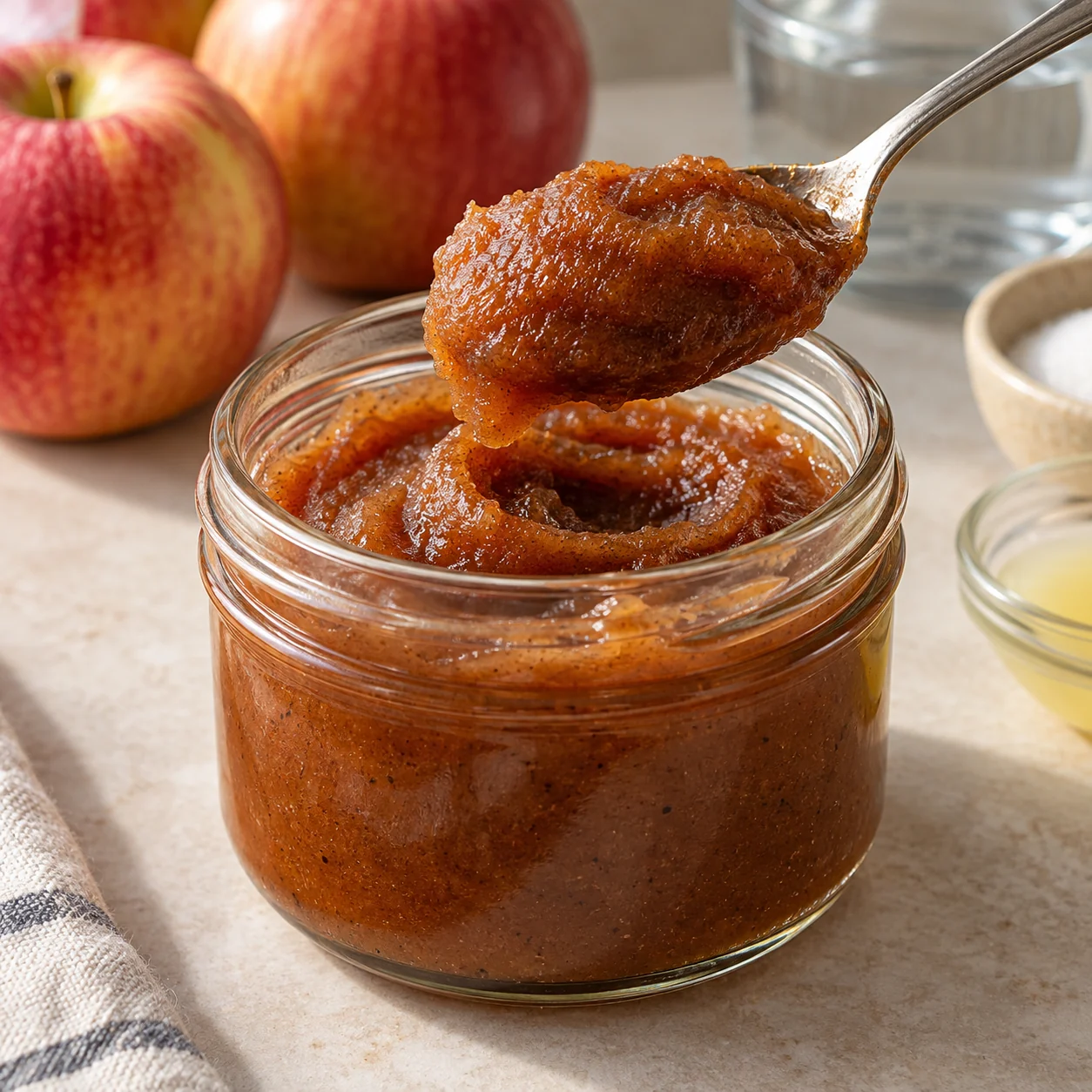
Apple butter is a concentrated fruit spread; the name does not mean dairy butter is added. This version keeps the edible apple skins, blends them into the fruit and reduces the puree slowly with cinnamon. The full card makes twelve portions and allows two hours and fifty minutes, including preparation and cooling. Apple variety, pan width and burner strength can all change the time needed to reach the final texture.
Cinnamon apple butter makes 12 servings, with 2 hr 50 min estimated total time. View the standalone recipe page.
Weigh cored apples with their skins retained
Rinse the apples and remove the cores before weighing one thousand grams of edible fruit. Keep the skins because they are included in both the method and the raw-ingredient nutrition profile. Cut the apples into pieces about half an inch across so they soften at a similar pace. A mixture of sweet and tart apples gives a different flavor from a single variety, so expect natural variation even when weights match. Avoid bruised or damaged pieces. The modest measured sugar amount is part of this formulation rather than an instruction to sweeten the pot without limit.
Soften fully before using the blender
Put apples, water and lemon juice in a wide heavy saucepan. Cover and cook gently for twenty to thirty minutes, stirring occasionally so the bottom does not catch. Test a piece that includes skin: it should break down readily when pressed. Firm skin left at this stage can create larger flecks that survive blending. Remove the pan from the heat before using the immersion blender, keep its head submerged and follow its hot-food instructions. Blend all the fruit and liquid rather than passing it through a sieve. Straining would remove ingredients included in the recipe's measured yield.
Reduce uncovered with frequent scraping
Stir in sugar and cinnamon, then cook uncovered over low heat. The long second stage lets moisture leave the puree, concentrating it into a spread. Good Food's apple-butter method also separates initial softening from further reduction, although its ingredients and straining method differ. Plan sixty to ninety minutes here and allow more if needed. Use a heatproof spatula that reaches the base and corners, scraping frequently as the mixture thickens. Small bubbles can spit hot puree, so keep the heat gentle and avoid leaning directly over the pan. A splatter screen can help without trapping steam like a closed lid.
Judge a cooled spoonful rather than color alone
The puree should darken and hold a trail briefly when a spoon moves through it. Color depends on the apples and cinnamon, so dark brown is not the only useful test. Put a small spoonful on a cool plate and let it stand briefly: it should sit as a soft spread without a watery ring. If it flows like applesauce, continue reducing gently. If the base begins scorching, stop and transfer the unburned upper mixture to a clean pan without scraping up the burnt layer. Increasing the heat near the end makes scorching more likely, not the texture more reliable.
Cool in a shallow container and refrigerate
Transfer the finished spread to a shallow heatproof container and cool for twenty minutes before portioning and refrigerating promptly. Divide the full batch into twelve equal shares. A fixed spoon measure is less reliable because evaporation changes the finished amount. Keep refrigerated and use within three to four days, or freeze portions promptly for longer storage. This original recipe has no validated canning process; clean jars and added lemon juice do not establish shelf stability. Date the container, use clean utensils and never leave the spread cooling on the counter for hours while waiting for it to become completely cold.
Common questions
Can I peel the apples?
The written method retains skins and uses a skin-on raw-apple profile. Peeling removes part of the measured ingredient and changes the texture. For this batch, core first, retain the skin and blend thoroughly.
Why is the finished amount smaller than expected?
Water evaporates throughout the reduction. That is intentional. The nutrient estimate divides all measured ingredients into twelve portions, regardless of the exact final weight, so weigh the finished batch for equal servings.
Technique & food-safety references
These primary references support the technique, safety and storage guidance. The recipe and cooking explanations are original Recipe Pinboard content.


