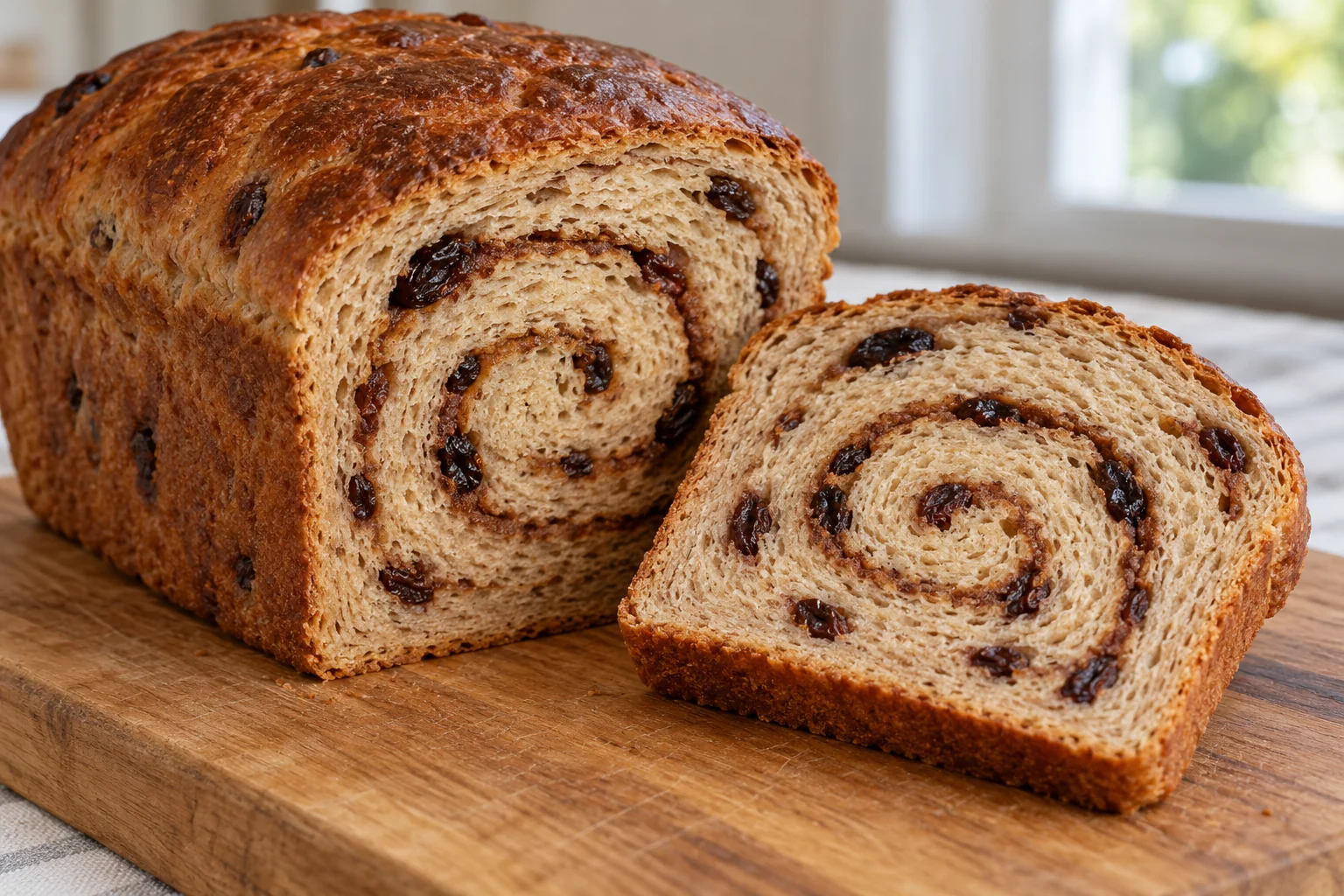
This loaf combines equal amounts of whole-wheat and all-purpose dough flour, raisins throughout the crumb and a thin cinnamon spiral. It is a sliced yeast bread rather than a tray of iced rolls. The filling uses a measured egg layer and a little flour to help it stay attached. Plan a generous baking window: two rises, oven time and a full cooling period are all part of the three-hundred-and-ten-minute schedule.
Cinnamon-raisin whole-wheat swirl loaf makes 12 servings, with 5 hr 10 min estimated total time. View the standalone recipe page.
Build a supple dough with measured flour
Reserve the ten grams of all-purpose flour intended for the filling before mixing the dough. Warm the milk within the stated range and allow the active dry yeast to foam with the dough sugar. Knead until the dough feels more elastic, then distribute the raisins without tearing the surface excessively. Whole-wheat flour absorbs liquid differently from white flour, so avoid adding handfuls of extra flour at the first sign of stickiness. The small measured oil allowance is for hands, surface, bowl and pan, and all of it is included in the estimate.
Let the first rise show real expansion
Cover the dough and note its initial size. It should expand substantially before shaping; a cool room can extend the sixty-to-ninety-minute window. Keep it away from strong direct heat that warms only one side or dries the top. A dough that has barely risen will not become light simply because it is rolled attractively. Conversely, leaving it far beyond the intended expansion can make shaping harder. Use the visual change alongside the timer, and accept that an unusually cool kitchen adds time to the overall schedule.
Make a thin, even spiral
Press the dough into the stated rectangle with the short side facing you. Brush the measured beaten egg over the interior, leaving the small bare border for sealing. Scatter the cinnamon, sugar and reserved flour evenly rather than piling filling into a central stripe. Roll snugly from the short side, keeping gentle tension without stretching the outside skin until it tears. Pinch the seam and ends closed. The loaf should fit lengthwise in its pan, seam underneath, with the filling enclosed rather than spilling out along the base.
Proof and bake the center through
The second rise should lift the center above the rim before baking. Do not compensate for an underproofed loaf with a hotter oven, which can set the crust before the interior expands comfortably. Bake at the stated temperature and check the center, not only the browned surface. If the top colors early, tent it loosely with foil while the center finishes. The recipe's temperature target is for this bread's baked structure. The thin egg layer is enclosed within a thoroughly baked loaf; raw dough should never be tasted.
Cool before judging the crumb
Leave the loaf in its pan briefly, then move it to a rack for at least an hour. Cutting while the center is hot compresses the crumb and can make the spiral appear gummy. Slice into twelve equal portions once sufficiently cooled. The finished loaf weight depends on evaporation, so divide by the actual loaf rather than assigning an unverified weight to each slice. Store completely cooled bread airtight for up to two days or freeze individual slices for longer keeping. There is no icing or butter topping included in the recipe.
Common questions
Why is there a gap around the cinnamon layer?
Uneven filling, a loose roll or a missing adhesive layer can allow separation. Keep the filling thin and use all the measured egg wash. A small gap can still occur in homemade bread; it does not automatically mean the loaf is underbaked.
Can I replace all the white flour with whole wheat?
That changes the dough's absorption and structure. This formula is specifically a half-whole-wheat dough, with a separate small white-flour quantity in the filling. A fully whole-wheat loaf needs its own liquid and shaping adjustments.
Technique & food-safety references
These primary references support the technique, safety and storage guidance. The recipe and cooking explanations are original Recipe Pinboard content.


