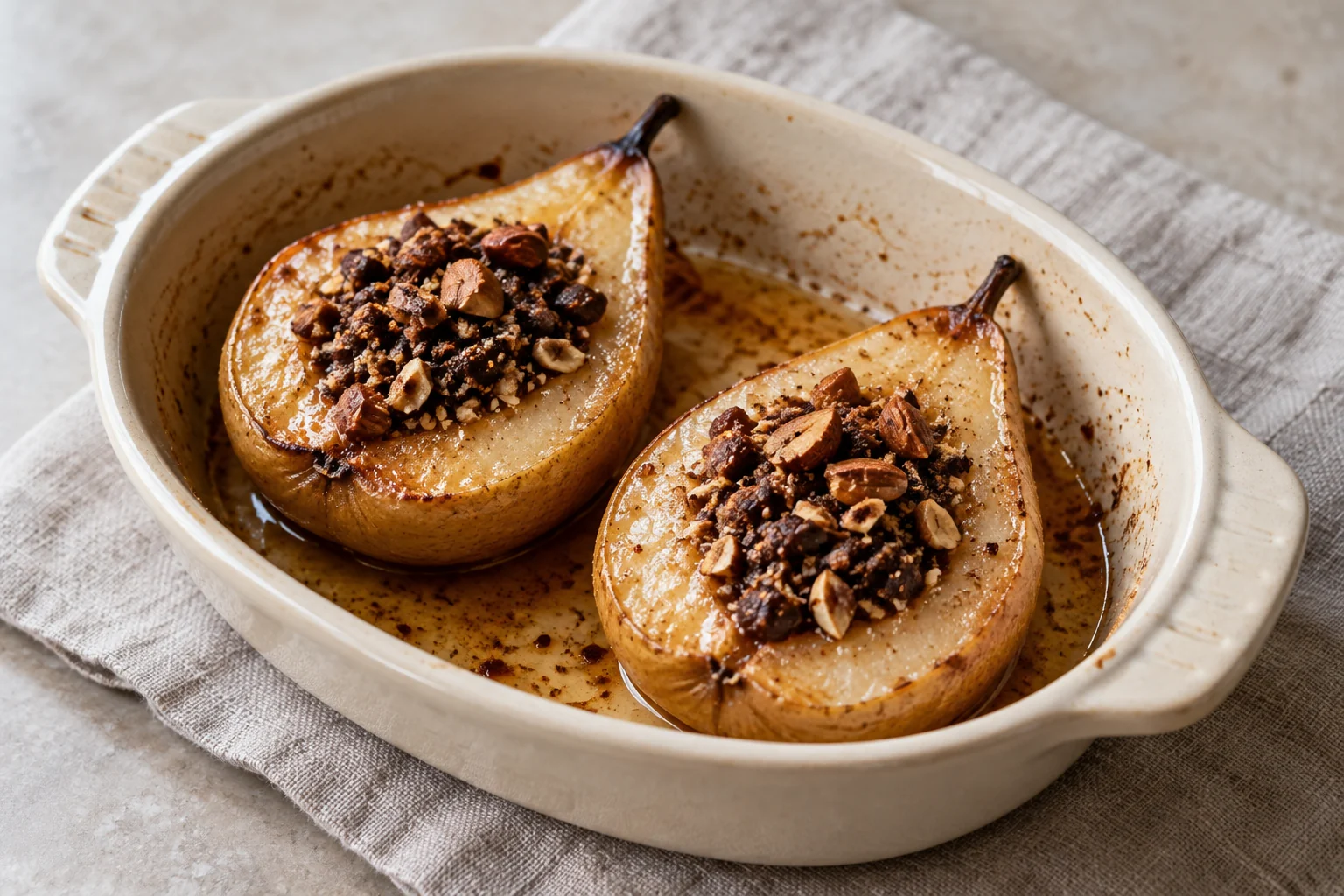
A pear that is firm enough to hold its shape can still become spoon-tender in the oven. The cocoa-almond filling adds texture without covering the fruit in a separate sauce. A covered first stage protects the nuts while the pear warms; uncovering later lets the filling dry slightly and the fruit’s surface become glossy.
Cocoa & almond baked pears makes 4 servings, with 55 min estimated total time. View the standalone recipe page.
Choose ripe-firm fruit and weigh the edible halves
Use pears that yield slightly near the stem but are not collapsing or bruised. Very hard fruit can require longer baking, while very soft fruit may slump before the filling warms. Halve lengthwise and remove the core with a teaspoon, keeping as much flesh as possible. The 600 g amount is prepared edible pear, not the whole purchased weight. Four large halves make four portions; a cluster of smaller pears would need a revised count and distribution.
Make a damp filling, not a liquid sauce
Finely chopped almonds should be small enough to settle into the cavities without forming a large unstable mound. Stir cocoa thoroughly into maple syrup and measured oil so dry pockets do not remain. Cocoa is unsweetened here; a drinking-chocolate mix would bring other ingredients and sugar. The mixture should resemble a damp crumbly paste. Divide it among all four cavities rather than putting most into whichever pear happens to have the deepest hollow.
Use a snug dish and keep water beside the fruit
Choose a dish that holds the halves comfortably with their cut sides up. If a rounded base tips, shave only a thin sliver to stabilize it. Pour the measured water around the pears, avoiding the filling. A very wide pan evaporates that small amount quickly and may let juices burn. Foil over the first baking stage retains moisture while the thick flesh heats, giving the fruit time before the exposed nuts become deeply colored.
Check flesh tenderness rather than nut color
After uncovering, insert a small knife into the thickest part of a pear. It should enter with little resistance while the half still holds together. Dark cocoa makes the filling a poor indicator of whether the fruit is done. If the almonds are browning but the pear is firm, cover again and continue baking. Variety, ripeness and size all influence the finish, so extra time may be needed beyond the estimate. Avoid increasing heat sharply to hurry a hard pear.
Share the juices and keep additions separate
Rest the dish briefly, then serve one half with a quarter of the pan juices. The estimate includes the complete filling and measured liquids, not ice cream, cream or chocolate sauce. Some moisture evaporates during baking; that changes finished weight rather than the number of defined portions. Refrigerate leftover fruit and filling within two hours and use within three to four days. This small dessert contains almonds; the vegan ingredient screen does not make any allergy-safety promise.
Common questions
Can I peel the pears?
The skin helps the halves hold together. Peeling changes edible yield and can make the fruit more fragile; weigh the prepared amount again and expect different handling rather than assuming the original portions are identical.
Why is the filling slightly crumbly after baking?
That is expected from chopped almonds and cocoa with a small measured amount of syrup. The pear and pan juices supply moisture at serving. Adding a separate chocolate sauce creates a different dessert and nutrition total.
Technique & food-safety references
These primary references support the technique, safety and storage guidance. The recipe and cooking explanations are original Recipe Pinboard content.