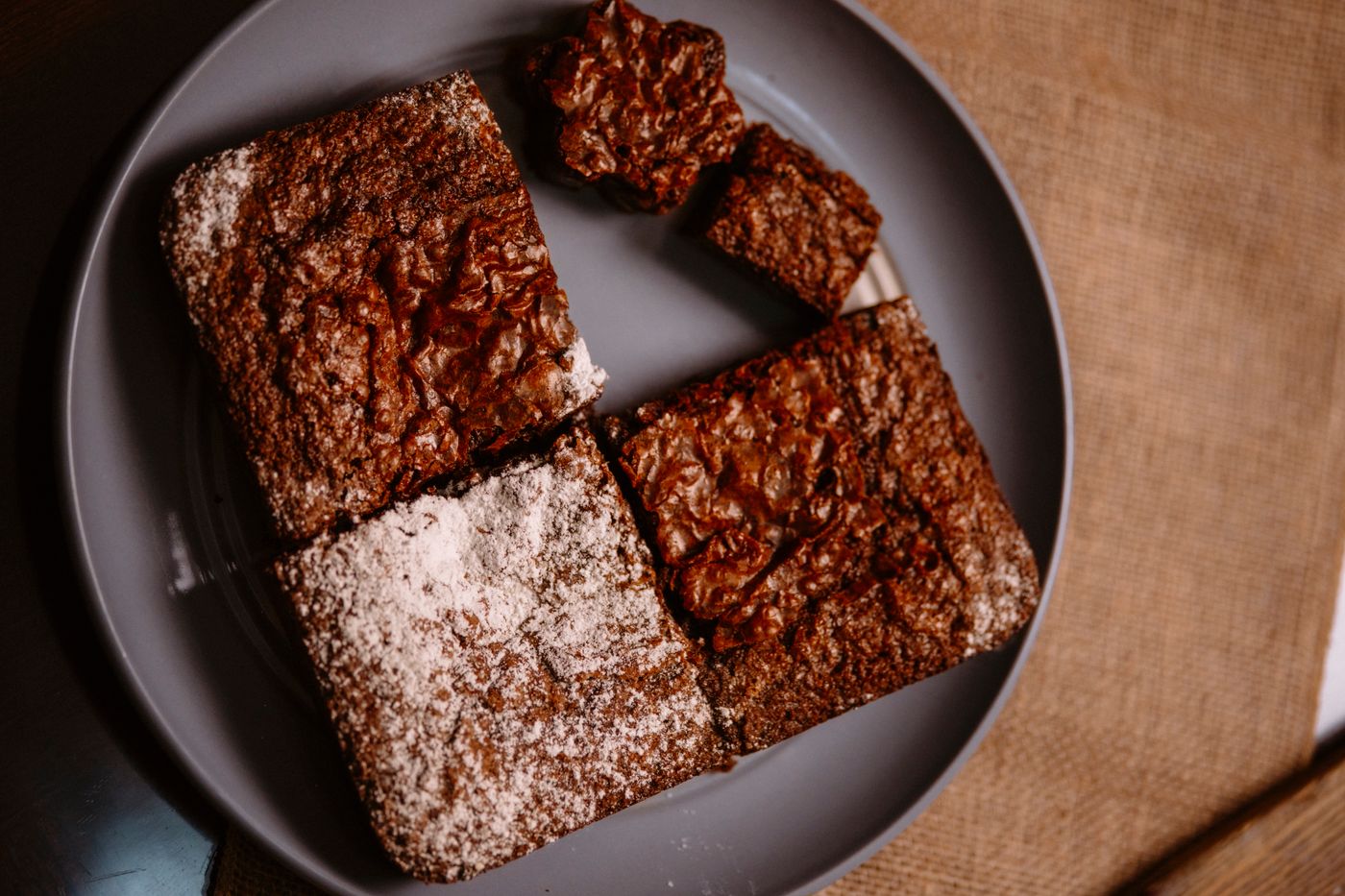
These brownies yield 16 squares from an 8-inch square pan. The recipe lists 100 minutes total, including time for cooling, and 40 minutes active. Baking itself is only 22–28 minutes. The word fudgy describes a dense, moist finished texture; it is not an instruction to leave liquid batter in the center.
Fudgy cocoa brownies makes 16 servings, with 1 hr 40 min estimated total time. Open the complete ingredient list and method.
Use the right pan and prepare it first
Heat the oven to 350°F (175°C) and line an 8-inch square baking pan with parchment. Leave a useful overhang so the cooled slab is easier to lift out. Different pan materials can affect browning, so begin checking within the stated window rather than assuming the last minute is always correct.
A larger pan spreads the batter into a shallower layer, while a smaller one makes the center thicker. Either change disrupts the original bake time. If you want to follow the recipe closely, retain the 8-inch square shape and size instead of trying to correct a changed pan with an unverified time adjustment.
Know what produces the texture
The batter uses ½ cup melted unsalted butter, 1 cup granulated sugar, two eggs and 1 tsp vanilla, followed by ⅓ cup unsweetened cocoa, ½ cup all-purpose flour and ¼ tsp salt. A further ½ cup chocolate chips provides pieces of melted chocolate within the cocoa batter.
There is no baking powder or baking soda in the formula. Do not add leavener simply because another brownie recipe contains it; that would move the texture away from this method. Cocoa supplies concentrated chocolate flavor without requiring a separate chocolate-melting step. Use unsweetened cocoa, not a sweetened hot-chocolate drink mix.
Whisk the wet mixture, then switch to folding
Whisk the melted butter and granulated sugar together, then add the eggs and vanilla and whisk until the mixture looks glossy. If the butter is very hot, allow it to cool somewhat before adding the eggs. The aim is a combined mixture, not bits of egg cooked by direct contact with hot fat.
Fold in the cocoa, flour and salt just until no dry pockets remain. Scrape through the bottom of the bowl where flour can hide, then fold in the chocolate chips. Stop once the ingredients are distributed. Continuing to beat a flour-containing batter is unnecessary when the goal is a dense, tender square.
Read the tester carefully
Spread the batter evenly in the lined pan, reaching the corners without leaving a much thicker central mound. Bake for 22–28 minutes until the edges are set and a tester brings up moist crumbs rather than liquid batter. Check near the center, where the batter is slowest to set.
A skewer that lands in a melted chocolate chip may look wet even when surrounding batter is cooked. Test a second nearby spot if the result is ambiguous. Conversely, do not excuse a broad streak of flowing batter as desirable fudginess. The FDA advises against tasting raw flour mixtures; fully cook the batter before sampling.
Allow the slab to cool completely
Leave the brownies to cool completely before slicing. While warm, the chocolate and butter are softer and the center is easier to crush or smear. Cooling is part of this recipe’s schedule, so baking immediately before you need neat squares is unlikely to produce the intended presentation.
Once cool, lift using the parchment and cut a four-by-four grid for 16 portions. Wipe the knife between cuts if crumbs or chocolate accumulate. Add the optional 1 tsp powdered sugar as a light dusting over the whole batch rather than assuming that amount applies to each square.
Troubleshoot and vary without rewriting the formula
Dry edges can result from baking too long, a hotter-than-expected oven or using a shallower pan. Before changing the butter or flour, confirm the pan size and check the oven with an oven thermometer. A glossy or crackly surface can vary with mixing and ingredients; it is not a reliable safety test.
For a small variation, keep the chocolate chips at ½ cup but choose a different chocolate style, such as darker or semisweet chips. Larger additions such as fruit purée or a cream-cheese layer would alter moisture and cooking behavior and are outside this formula. Once completely cool, wrap well to limit drying; freeze individual squares for longer storage and thaw them covered.
Common questions
Should the tester come out perfectly dry?
Not necessarily. The target is moist crumbs with no liquid batter. A completely dry tester may mean a firmer brownie than intended, but raw batter is not an acceptable shortcut to fudginess.
Can I cut them while warm?
You can expect a softer, messier result. The written method requires complete cooling before cutting into 16 squares, and the total time allows for that stage.
Food-safety references
These official references support the safety and storage guidance. The recipe and cooking explanations are original Recipe Pinboard content.