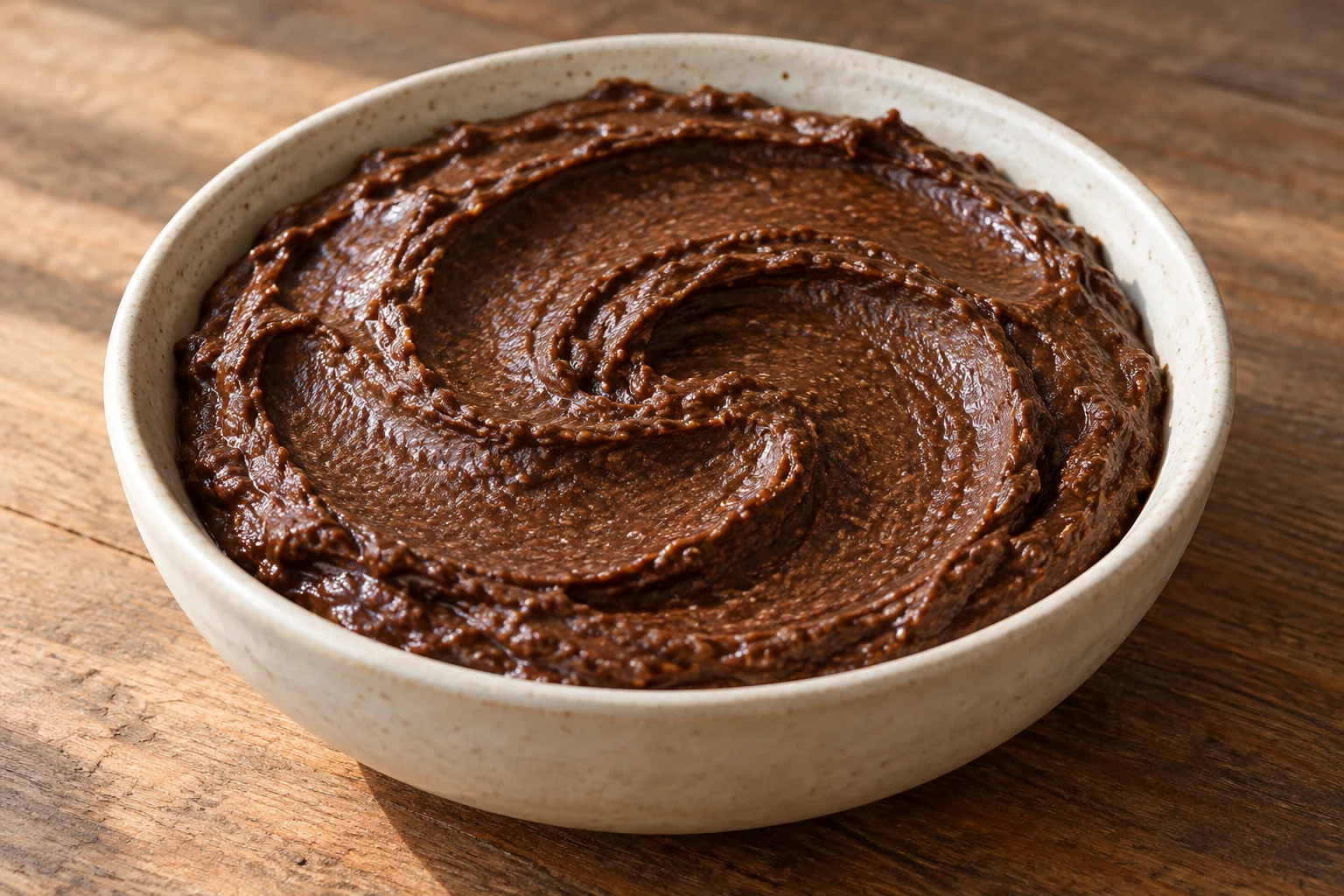
This cocoa spread starts with whole sunflower kernels rather than a purchased sweetened butter. Toasting, cooling and processing are separate stages, and allowing time for each helps you control the result. The finished mixture is dark, gently sweet and slightly textured, with water making it easier to spread. It is a refrigerated homemade preparation, not a shelf-stable chocolate spread. Eight equal portions include all the seeds, cocoa, sugar and oil in the bowl.
Cocoa & sunflower-seed spread makes 8 servings, with 55 min estimated total time. View the standalone recipe page.
Start with plain edible kernels
Use hulled sunflower kernels intended for people to eat, with no salty coating or flavoring. Weigh them before home toasting so the ingredient state matches the calculation. Unsweetened cocoa is important: drinking-chocolate powders bring additional sugar and sometimes milk. Powdered sugar blends more readily than coarse granules, but its starch and processing can vary by brand. Check the labels if vegan, dairy-free or gluten-free ingredients are important to you. A recipe without nuts is not a promise of safety for someone with an allergy; seeds themselves can also be allergens.
Toast gently and allow actual cooling time
Spread the kernels in one shallow layer so they color evenly. Stir halfway through the eight-to-ten-minute oven stage and look for a light golden change rather than deep brown edges. A dark tray or a few kernels near its rim may brown faster. Move the tray out promptly when the seeds smell pleasantly toasted, then give them the full fifteen minutes to cool. Do not seal hot seeds into a processor container. This cooling interval is included in the fifty-five-minute total rather than treated as invisible preparation.
Match the processor to a small batch
A compact food processor that is suitable for seed butter is more useful here than a very large bowl whose blade misses the ingredients. Start with the seeds and measured oil, then use short runs separated by scraping. Stop the motor before putting a spatula near the blade. Follow the appliance's own duty-cycle limits, allowing extra cooling time if necessary. A hot motor or stalled blade is a reason to pause, not to press harder. Fine seed texture is acceptable; chasing a factory-smooth finish can overwork small household equipment.
Add the powders and water deliberately
After grinding the seeds, add the cocoa, powdered sugar and salt. Pour the measured water gradually while processing so dry pockets can incorporate. Scrape the sides and bottom, where cocoa often collects unnoticed. The mixture may change from oily crumbs into a thicker cohesive paste as the water disperses; that transition is not evidence of a failed batch. Use the complete measured quantity before deciding on the final consistency. The ten-minute rest lets the powders hydrate, so judge the spread after that pause rather than immediately after the last pulse.
Portion and refrigerate the whole batch
Scrape the processor carefully so the serving estimate represents what you actually keep. Divide the finished spread into eight shares by weight if equal servings matter. Refrigerate it promptly in a clean covered container and use within three to four days. Added water makes pantry storage inappropriate even though commercial jars may sit on a shelf. Use a clean utensil for each serving. Chilling can make the paste firmer; stir the portion you need rather than repeatedly warming the entire container. Any bread or fruit served with it is additional food.
Common questions
Why is my spread gritty?
Visible seed fragments usually mean the first grinding stage needed more scraping or a smaller processor bowl. Powdered cocoa can also form dry clumps. Check for pockets before serving, but accept a fine seed texture instead of overheating the machine to erase every particle.
Can I use sweetened cocoa mix?
Not as an equivalent replacement. Its sugar, milk ingredients and cocoa content differ from unsweetened powder. Keep the stated ingredient for this formula and estimate; a different blend needs its own measured quantities and label review.
Technique & food-safety references
These primary references support the technique, safety and storage guidance. The recipe and cooking explanations are original Recipe Pinboard content.


