Shortbread asks for little active work but several waiting stages. This coconut-lime version includes butter softening, a 30-minute dough chill and at least 45 minutes of cooling after baking. Allow 150 minutes overall, and longer if the kitchen or finished slab needs it. Sixteen squares make eight portions of two, with about 15 minutes of active preparation.
Coconut & lime shortbread makes 8 servings, with 2 hr 30 min estimated total time. View the standalone recipe page.
Start with softened butter and the specified pan
Use 125 g unsalted butter soft enough to indent but not melted. The schedule allows about 30 minutes at room temperature; a cold kitchen can require longer. Melted butter is not the intended starting point. Meanwhile, line a 20 cm square metal pan with parchment, leaving handles on two sides for lifting the baked slab.
Measure 65 g fine granulated sugar, 180 g all-purpose flour, 40 g unsweetened finely shredded coconut, 4 g lime zest and 1 g salt. Fine coconut distributes through a thin pressed layer more evenly than large flakes. Keep the flour and coconut weights exact instead of adjusting them until the mixture resembles a different cookie dough.
Mix just enough to bring the crumbly dough together
Beat butter, sugar, zest and salt for one to two minutes until smooth. The zest enters here so its small pieces disperse through the butter mixture before dry ingredients are added. There is no need to keep beating for a very fluffy texture; follow the short mixing stage rather than treating it like a sponge cake.
Stir in flour and coconut until a crumbly dough forms, then press it together. Crumbliness at this point is expected, not an invitation to add milk, egg or lime juice. The recipe uses zest for its lime character. Do not taste the raw flour dough, and clean hands and equipment after handling it before touching finished food.
Press, score and chill the complete slab
Press the dough into an even layer across the prepared pan. Check the edges and corners as well as the center; a thick ridge around the perimeter will not bake like a thin middle. Smooth by pressing rather than prolonged kneading. The pan determines the slab's thickness, so a much smaller pan changes the result.
Score sixteen equal squares and prick lightly with a fork. Refrigerate the pan for 30 minutes. During the last 15 minutes, heat the oven to 325°F (165°C). This sequence keeps the dough chilled while the oven becomes ready. The scored lines are guides for a later warm cut, not a request to lift separate raw cookies.
Bake until dry on top and lightly golden at the edges
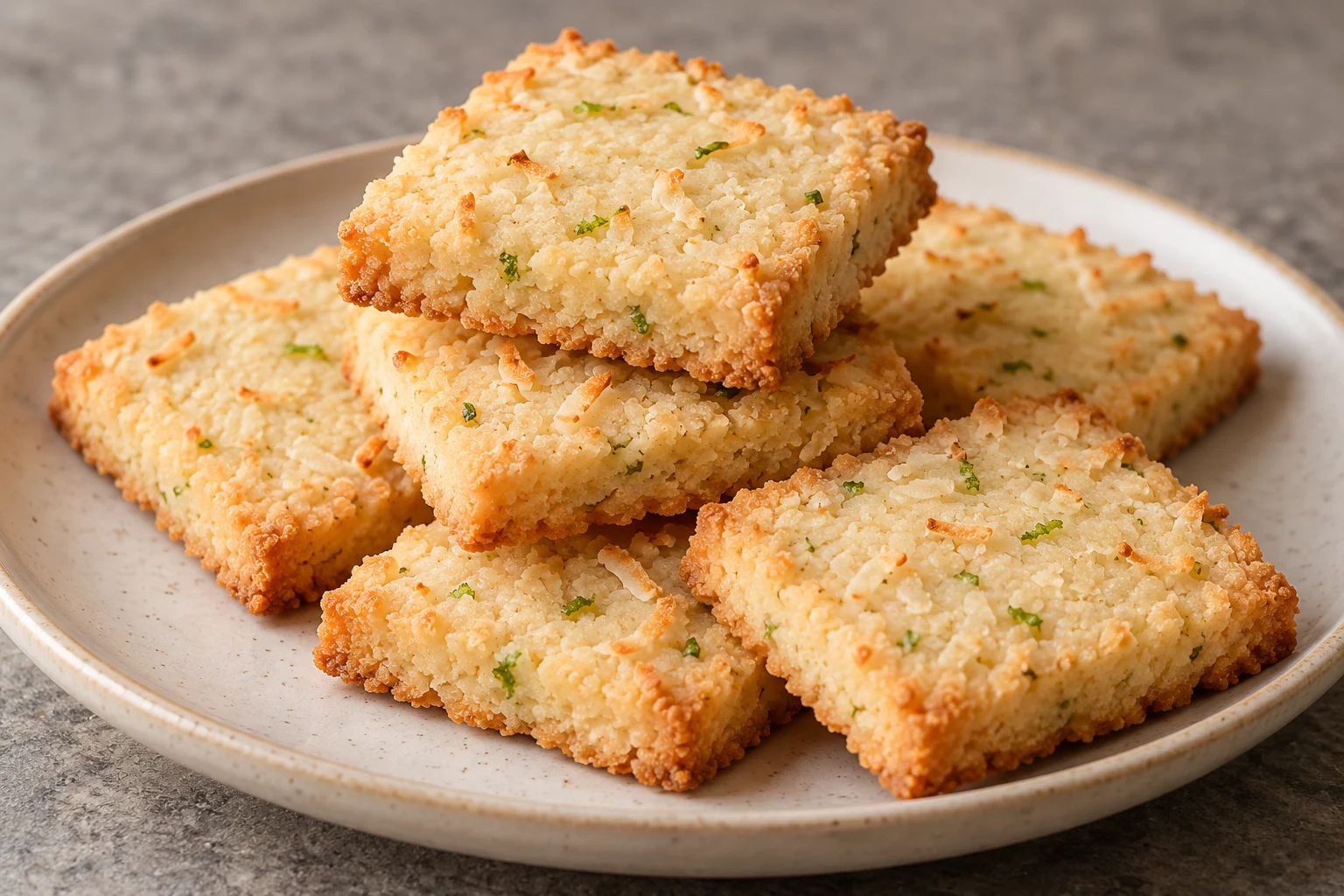
Bake for 25–30 minutes, watching for a dry surface and lightly golden edges. The shortbread is meant to remain fairly pale. Deep overall browning is not the target, and the coconut can make color uneven. Use the stated oven setting and the full set of cues rather than waiting for a dark cookie appearance.
While the slab is still warm, carefully follow the scored lines with a knife. This establishes clean divisions while it is easier to cut. Keep the pieces together in the pan for 15 minutes rather than lifting fragile individual squares immediately. Support the pan securely and use care around the warm metal and parchment edges.
Cool fully before separating and storing
After those first 15 minutes, lift the slab by the parchment onto a rack and cool for at least another 30 minutes before separating the squares. Give it extra cooling if it is still warm. Warm shortbread can crumble under handling even when it has baked correctly; patience here protects the clean square shape.
Serve two squares per person. There is no icing, glaze or extra garnish in the stated recipe. Once fully cooled, store in an airtight container in a cool, dry place for up to four days. Closing the container while the slab is still warm can trap moisture, undermining the dry, crumbly texture you have just created.
Common questions
My dough looks dry. Should I add lime juice?
No additional liquid is part of this formula. Check that the butter was softened rather than cold and the flour was weighed accurately, then press the crumbly mixture together. Lime zest provides the flavor without changing the measured dough balance.
When should I separate the sixteen squares?
Re-cut along the score lines while warm, but leave the slab in the pan for 15 minutes and then on a rack for at least 30 more. Separate only after that cooling stage, allowing longer if the shortbread is still warm.
Technique & food-safety references
These primary references support the technique, safety and storage guidance. The recipe and cooking explanations are original Recipe Pinboard content.