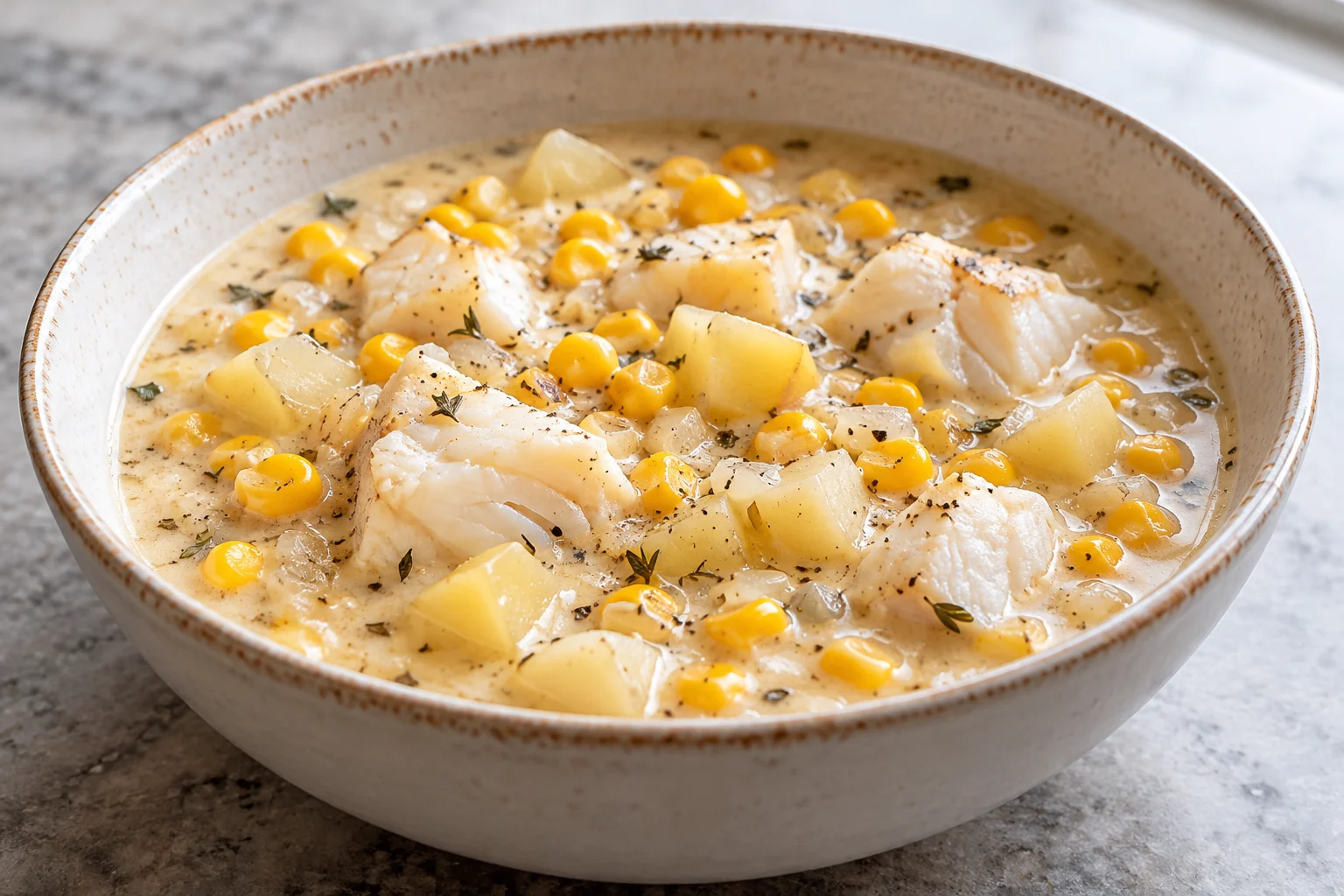
This chowder uses a little mashed potato to give the milk broth body. It does not need a flour roux or a cream addition. The sequence matters: potatoes become tender before milk is added, corn heats through next, and cod goes in last so its large pieces can cook without being repeatedly broken by stirring.
Cod, corn & potato chowder makes 4 servings, with 55 min estimated total time. View the standalone recipe page.
Cut potatoes for even cooking
Scrub the russet potatoes and retain the skin before weighing and cut them into small, similar cubes. Large pieces delay the fish stage, while tiny fragments can disappear before the rest of the batch is tender. Keep the onion dice smaller than the potato cubes so it softens into the broth. There is no need to brown the onion for this pale chowder; stir it gently in the measured oil until it looks translucent. A wide heavy saucepan makes it easier to monitor the bottom once milk enters the pot.
Finish the potato stage first
Simmer the potatoes in the measured water with thyme and salt. Test several cubes from different parts of the pan by pressing them with a fork. They should crush easily rather than snap. Mash roughly one quarter of them into the surrounding liquid, leaving plenty of distinct cubes. This gives light body rather than a completely smooth puree. An immersion blender can remove too much texture very quickly; a fork or hand masher is easier to control for such a small amount.
Add cold ingredients without boiling hard
Frozen corn and milk lower the temperature when they enter the pot. Return the mixture to a gentle simmer while stirring the base to prevent sticking. Small bubbles around the edge are sufficient. A rolling boil does not improve the potato thickening and can make the milk broth look less smooth. Use plain frozen corn, not a creamed or seasoned product with an unrelated ingredient list. The milk quantity and fat level are part of the published estimate, so cream is not an equivalent addition.
Give cod room to poach
Check the raw cod for bones and cut it into generous similar chunks before adding it. Slide the pieces into the hot chowder and nudge them below the surface with a spoon. Once they start to set, move the pan gently instead of stirring circles through it. Check the thickest pieces for 145°F (63°C); flaking is a helpful texture cue but does not replace the temperature check. Smaller pieces will finish sooner, which is why consistent cutting is useful.
Divide fish as well as broth
Use a broad ladle to distribute cod and vegetables among the four bowls, then add the remaining broth. Simply pouring from the pot can leave one portion mostly liquid. The chowder should be lightly creamy with distinct fish pieces, not thick enough to hold a spoon upright. Refrigerate leftovers in shallow containers promptly. When reheating, stir the potato-rich broth carefully and reach 165°F (74°C), accepting that the cod may break into smaller flakes during that second heating.
Common questions
Why is my chowder thin?
The potatoes may not have been tender enough to mash, or too few were broken into the liquid. Mash the specified portion before adding fish. Do not boil the cod for a long time merely to reduce the broth.
Can I use another white fish?
Different fish vary in thickness and nutrition. This recipe specifies raw Atlantic cod and its primary-source profile. Another fish requires a matching weighed profile and a temperature check, even if the general gentle-poaching approach remains useful.
Technique & food-safety references
These primary references support the technique, safety and storage guidance. The recipe and cooking explanations are original Recipe Pinboard content.


