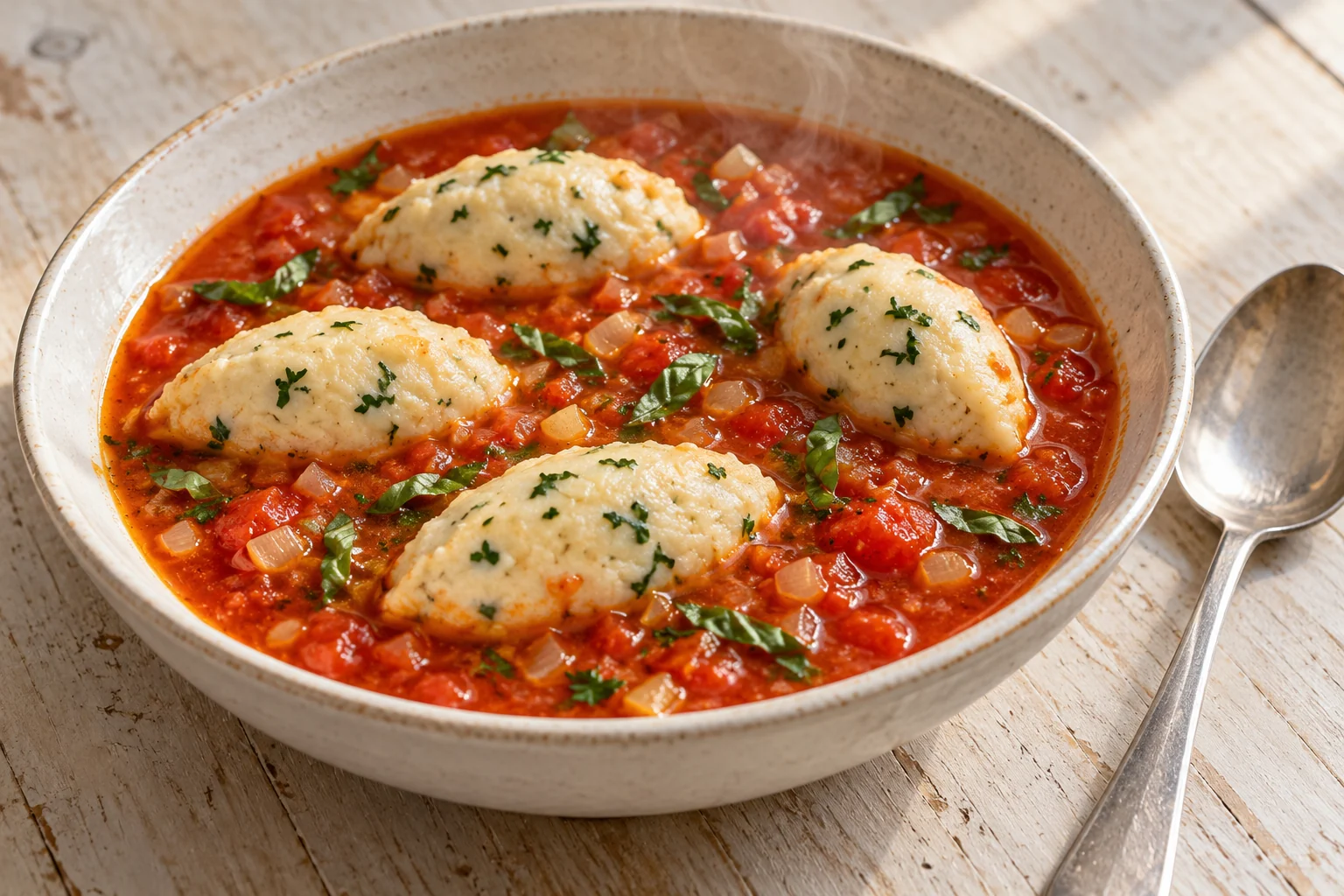
These dumplings use a smooth fish mixture rather than a flour wrapper. The practical challenge is keeping that mixture cold while giving it enough support to hold its shape in the broth. A measured amount of cream softens the texture, while egg and cornstarch help it set. The tomato broth supplies both the cooking liquid and the finished sauce, so nothing flavorful needs to be poured away.
Cod dumplings in tomato broth makes 4 servings, with 1 hr 40 min estimated total time. View the standalone recipe page.
Start with cold, evenly cut fish
Check the cod carefully for bones before weighing the edible portion. Cut it into similar chunks so the processor can reduce it evenly without running unnecessarily long. Cold cream and egg help keep the mixture cool during processing. Stop to scrape the bowl rather than letting a pocket of fish remain above the blade. The goal is a uniform paste with small parsley flecks, not a stringy mince. This recipe keeps the whole mixture rather than pushing it through a sieve, which would discard part of the measured ingredients.
Use the chilling interval productively
The thirty-minute refrigerator rest gives the mixture time to firm before shaping. Cover it and keep it refrigerated while the broth cooks; leaving it beside a warm stove works against that purpose. Meanwhile, soften the onion before adding tomatoes. An onion that is still crunchy when liquid enters the pot will need more simmering and can interrupt the otherwise smooth spoonful. Keep the finished broth gently moving, with occasional bubbles rather than rapid splashing. Use a wide pan so the dumplings have space around them.
Shape consistent spoonfuls
Divide the mixture into twenty portions of roughly equal size. Two damp spoons can pass a portion back and forth to make a loose oval; a perfectly polished restaurant shape is unnecessary. Similar thickness matters more than decorative edges because thick centers take longer to cook. Scrape the bowl and include the remaining mixture in the portions. If the paste becomes difficult to handle, return it to the refrigerator briefly instead of adding more starch. Extra dry ingredients would change both the texture and the recipe's calculated quantities.
Poach gently and check the center
Lower the dumplings close to the surface so they enter the broth without splashing. Let their exterior set before turning them carefully with a spoon. A rolling boil can break delicate edges even when the mixture itself is sound. Timing is a guide, not a replacement for measuring: this mixture contains whole egg, so check for at least 160°F in the center. Insert a thin thermometer from the side of a thick dumpling. Keep the first batch covered with hot broth while the second cooks, then return everything to serving heat.
Finish without losing the broth
Fresh basil goes in near serving so its aroma remains noticeable against the tomatoes. Divide the entire broth among the four portions along with five dumplings each. The photograph illustrates the dish rather than a weighed nutritional serving. For leftovers, shallow containers cool more efficiently than a deep pot; refrigerate promptly within two hours and use within three to four days. Reheat gently to 165°F, checking a dumpling center as well as the liquid. Vigorous boiling is unnecessary even when reheating.
Common questions
Why did my fish dumplings break apart?
Common contributors are warm paste, very large portions or fiercely boiling broth. Keep the mixture chilled, maintain a quiet simmer and avoid stirring before the exterior sets. Use the measured binder rather than improvising extra flour.
Can I replace the cod with another fish?
Another fish changes moisture, fat and the nutrition estimate. This formulation and calculation use raw Atlantic cod. Treat a substitution as a changed recipe, and still check the egg-containing center temperature.
Technique & food-safety references
These primary references support the technique, safety and storage guidance. The recipe and cooking explanations are original Recipe Pinboard content.


