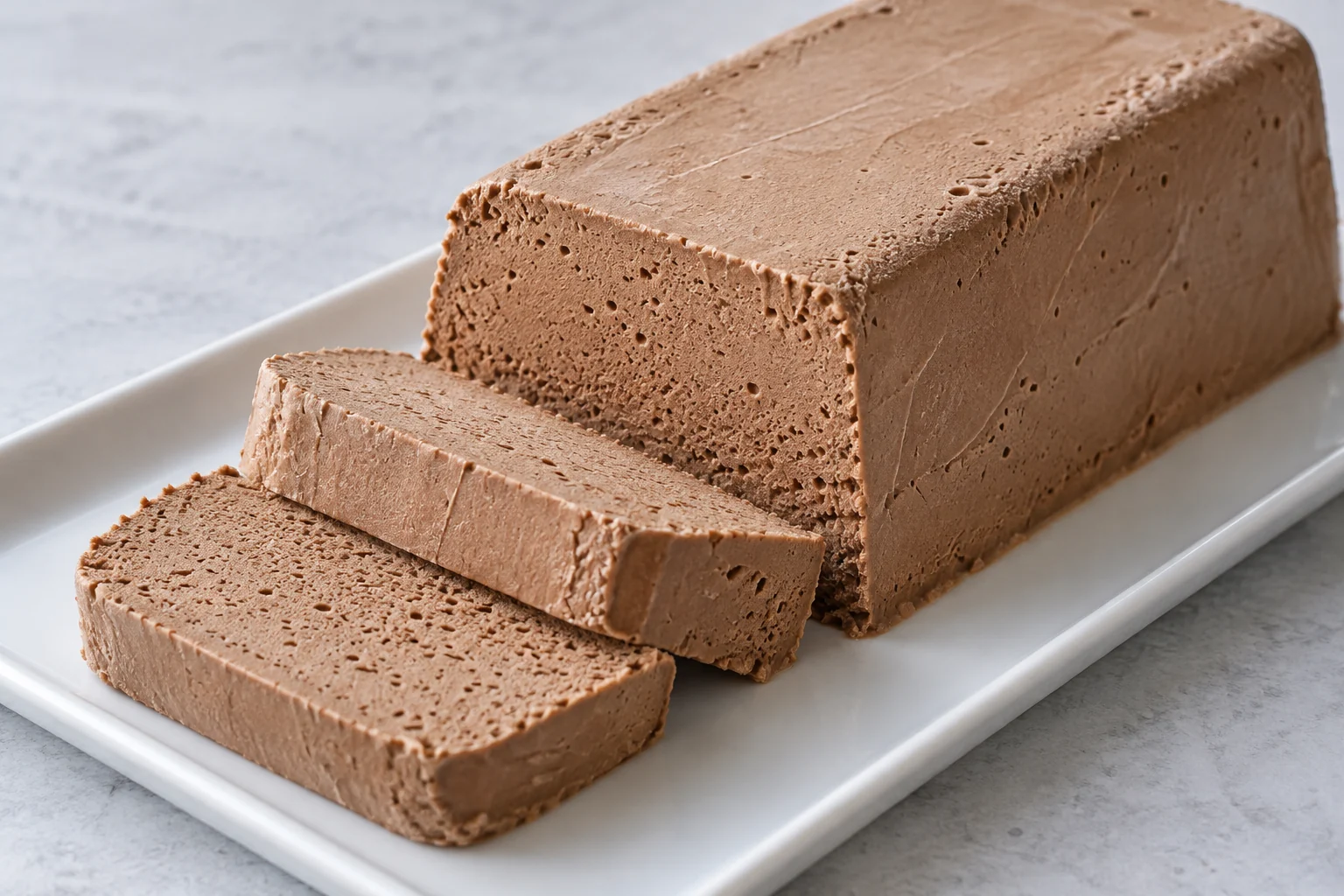
This semifreddo combines a cooked yolk custard with softly whipped cream, then freezes in a lined loaf pan. It does not use raw whipped egg whites, an ice-cream machine or a separate biscuit base. The fourteen-hour allowance includes the overnight freeze, so prepare it the day before serving. The most important temperature changes happen before it reaches the freezer: cook the custard to the stated endpoint, cool it promptly and make it thoroughly cold before adding the whipped cream. Eight equal slices make the serving basis.
Coffee & cocoa semifreddo makes 8 servings, with 14 hr estimated total time. View the standalone recipe page.
Weigh yolks and use prepared brewed coffee
The egg quantity is yolks only, weighed after separation. Save unused whites for another preparation rather than adding them to this formula or counting their weight as yolk. The coffee quantity is a ready-to-drink brewed liquid, not dry instant granules or the same mass of concentrated powder. Whisk cocoa and sugar with the yolks before gradually adding the milk and coffee. This helps disperse the cocoa rather than leaving dry pockets that later appear as dark streaks. All cocoa belongs inside the custard, with none reserved for dusting.
Heat slowly while scraping the saucepan
Use low to medium-low heat and keep the custard moving across the base and corners. A flexible spatula helps reach areas a whisk may miss. Follow the card's measured temperature rather than waiting for a boil; boiling can curdle the yolks and damage the smooth texture. Check without pressing the thermometer against the hot pan bottom. Once the endpoint is reached, transfer promptly to the clean bowl for cooling. Leaving the custard in the hot saucepan continues cooking it even after the burner has been turned off.
Make the ice bath part of the preparation
Have ice and water ready before the custard finishes. The cooling bowl should sit securely with bath water below its rim, and no water should enter the food. Stir the custard frequently so a cool layer at the outside does not hide a warm center. After the ice-bath interval, refrigerate until the mixture is fully chilled to the card's temperature. Do not treat a slightly cool surface as proof that the whole bowl is ready. This step protects the cream's texture as well as supporting prompt cooling.
Fold soft cream into a cold base
Whip the measured cold cream until it holds soft peaks that bend rather than standing rigidly. Overwhipping can make it grainy and harder to blend. Stir the first portion into the custard to loosen the heavier base, then fold the rest gently with a broad spatula. Turn the bowl and lift from underneath until the color is even. Excessive beating after combining can reduce the air you just incorporated. Scrape all the mixture into the lined pan and smooth it without repeatedly tapping the pan against the counter.
Freeze fully before slicing modest portions
Cover the pan and allow at least the full overnight freezing interval. A freezer door shelf or a deep, different container can change the result, so confirm the loaf is firm before unmolding. Remove all wrap and let it stand only briefly until a warm, dry knife can cut neat slices. Wipe the blade between cuts. Serve promptly and return unused portions to the freezer instead of letting the entire loaf soften through. The two-week suggestion concerns texture under frozen storage, not permission to hold a thawed custard dessert on the counter.
Common questions
Can I fold the cream into warm custard to save time?
No. Warm custard can soften the whipped cream and reduce the airy structure. Complete the ice-bath and refrigerator cooling steps first, checking the actual temperature rather than guessing from the bowl's exterior.
Why is the loaf icy or too hard to slice?
Extra coffee or milk changes the water balance, and repeated thawing can harm texture. Follow the measured liquid amounts, whip and fold gently, and allow the short serving pause. A frozen loaf may need a few minutes before cutting, but should not be left to melt.
Technique & food-safety references
These primary references support the technique, safety and storage guidance. The recipe and cooking explanations are original Recipe Pinboard content.


