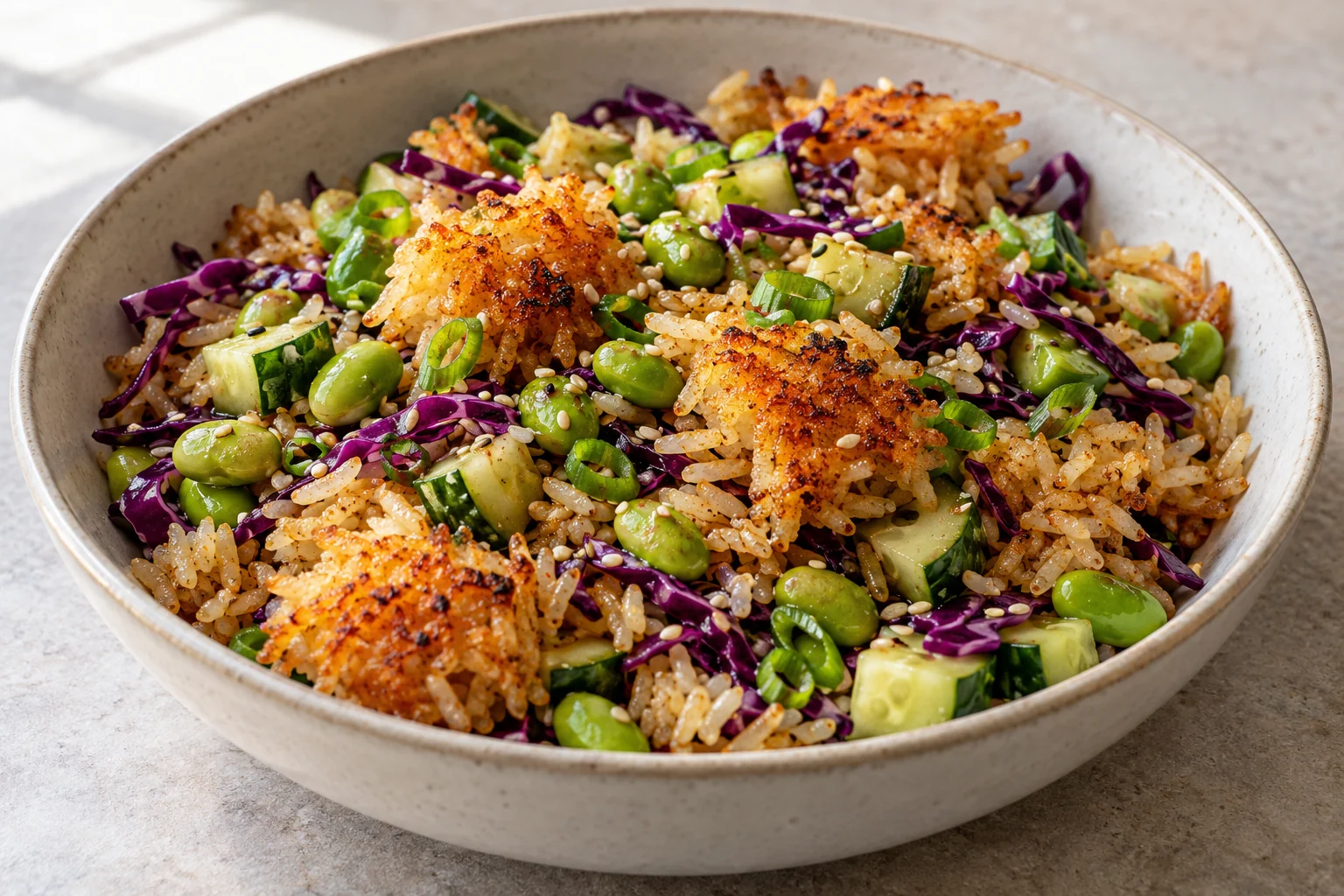
The contrast in this salad comes from oven-crisped rice clusters mixed with cool vegetables and cooked edamame. A lime, soy and sesame dressing supplies moisture only at the end. The 210-minute allowance begins with dry rice and includes its cooking, rapid refrigeration and chilling before baking. This is not a shortcut that starts with an unspecified bowl of leftovers. Use the entire measured batch to make four portions, and plan to eat the assembled salad immediately while the rice still has crunch.
Crispy rice and edamame salad makes 4 servings, with 3 hr 30 min estimated total time. View the standalone recipe page.
Cook the dry rice by absorption
Use the specified dry enriched long-grain rice and measured cooking water. Do not substitute the same weight of cooked rice, which already contains absorbed water. Follow the package's simmering time as a guide and check that the grains are tender and the water absorbed. The covered ten-minute rest finishes the initial cooking stage. All rice remains in the recipe, with no rinsing or draining step. The calculation is based on dry input, so there is no need to guess a cooked yield from how full the saucepan looks.
Chill promptly in a shallow layer
Spread cooked rice immediately on a clean shallow tray and place it in the refrigerator promptly instead of leaving the pan on the counter. Aim to chill it as quickly as possible, ideally within an hour, using a thin layer to release heat. Keep it at 40°F or below and use within twenty-four hours. The Food Standards Agency explains that storage before reheating matters because rice can contain bacterial spores that survive cooking. A long period at room temperature cannot be corrected simply by making the rice very hot afterward.
Spread small clusters across the baking sheet
Once cold, break the rice into small clusters and coat them with the measured canola oil and paprika. Spread them thinly on a large lined metal sheet; a deep heap steams in the middle while its edges darken. Turn clusters halfway through baking so more surfaces contact the hot sheet. Look for crisp golden edges and make sure the rice is steaming hot throughout and reaches 165°F. This oven stage is its single reheating. Let it stand only briefly before combining, not for another extended room-temperature cooling period.
Cook edamame and prepare the dressing
Frozen shelled edamame must be cooked according to its package, not merely thawed and treated as ready to eat. Weigh it before cooking, then drain and cool promptly in a shallow container. Dice cucumber with its peel and shred cabbage finely enough to mix between the rice clusters. Whisk the dressing until the sugar dissolves before adding vegetables. The specified soy sauce contains wheat, so this recipe is not tagged gluten-free. Keep every measured dressing ingredient in the bowl rather than serving some separately and guessing how much was eaten.
Combine only when everyone is ready
Fold rice and sesame into the dressed vegetables just before serving. Four equal bowls should each receive rice, edamame, vegetables and dressing from the bottom. The clusters will gradually soften once wet; that change is expected and is why early assembly is less useful than preparing components separately. Make only the quantity you plan to eat, and do not save the rice for a second reheating. Keep uncombined vegetables chilled. No peanut butter, avocado, meat or additional garnish is part of this formulation or its nutrition estimate.
Common questions
Why is my rice chewy instead of crisp?
Large moist clumps and a crowded baking sheet limit evaporation. Break the chilled rice into smaller clusters, use a broad sheet and turn them during baking. Avoid pouring extra dressing over the rice before it reaches the table.
Can I use rice from yesterday?
Only if it was cooled quickly, refrigerated promptly, has not already been reheated and is still within twenty-four hours of cooking. The card starts from weighed dry rice, so unknown leftover quantities also require a separate nutrition calculation.
Technique & food-safety references
These primary references support the technique, safety and storage guidance. The recipe and cooking explanations are original Recipe Pinboard content.


