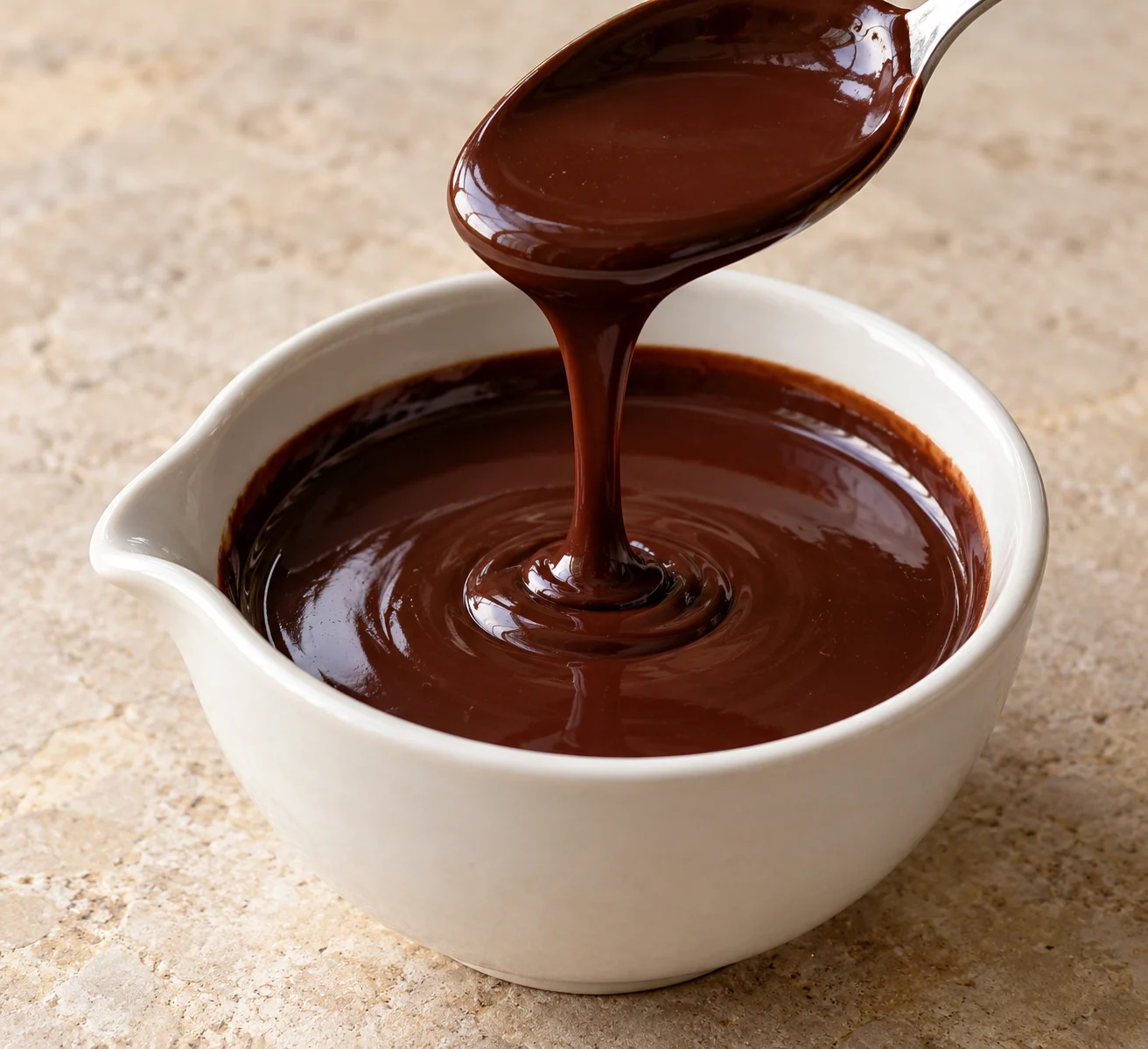
This sauce uses twice as much cream as chocolate by weight, giving it a flowing consistency while warm. It is a cream emulsion, rather than a cocoa syrup or a firm truffle filling. The chocolate already contains sugar; the recipe simply needs no separate spoonful of sugar. Its short ingredient list makes the chocolate specification, gentle heat and serving temperature especially important.
Dark chocolate ganache sauce makes 8 servings, with 25 min estimated total time. View the standalone recipe page.
Choose the chocolate before changing anything
Use a bar in the stated 60–69% cocoa range and chop it into small, reasonably even fragments. A much darker bar changes both sweetness and the balance of solids; milk chocolate changes the dairy and fat balance. Neither is an exact swap for this formulation. Chips designed to hold their shape can also melt differently. Read the complete label for gluten-containing additions and allergens. The nutrition panel uses a representative dark-chocolate profile, so a particular brand can differ without the weighed recipe changing.
Heat the cream, not a bare pan of chocolate
Set out the dry bowl, chopped chocolate and stirring utensil before warming the cream. The small saucepan should hold the cream comfortably without spreading it into a very shallow layer. Watch for steam and tiny edge bubbles, then remove it from the heat. A hard rolling boil is unnecessary and makes evaporation harder to control. Pour every measured gram into the chocolate bowl, scraping the pan. The short covered wait lets the heat reach the fragments before stirring begins.
Build a smooth center and expand it
Begin with small, slow circles in the middle of the bowl. The mixture may look streaky at first; keep working gradually outward until the darker center joins the remaining cream. Scrape the bottom and sides, where hidden chocolate pieces collect. There is no need to whisk vigorously, which introduces bubbles into a sauce intended to look smooth. If a few firm fragments persist, use brief gentle warmth over barely simmering water, keeping the bowl above the water. Remove it promptly once those pieces disappear.
Judge flow at the temperature you will serve
The sauce is noticeably thinner immediately after mixing than after its ten-minute stand. Give it that rest before deciding anything is wrong. Stir once during cooling so the surface and center stay consistent. A spoonful should flow back into the bowl instead of standing as a stiff peak. Cold ganache firms further, which is expected and does not mean the ratio failed. Extra chocolate would move this batch toward frosting, while extra cream would change both its portion basis and estimated nutrients.
Store the cream sauce as a perishable food
Serve the sauce warm rather than holding it beside a hot stove for an extended meal. Transfer leftovers to a shallow covered container and refrigerate promptly within the limits in the card. Portion before reheating so the entire batch does not undergo repeated warming and cooling. Use gentle heat and regular stirring to reach the leftover reheating endpoint, then allow a brief cooling period before eating. Scrape the bowl thoroughly when dividing the recipe; eight portions means eight equal shares, not an asserted finished spoon or cup yield.
Common questions
Why does the sauce look oily?
Excess heat or incomplete mixing can leave fat visible on the surface. Take the bowl off the heat, let it settle briefly and stir slowly from the center. If smoothness does not return, avoid repeated hard boiling or adding unmeasured ingredients merely to preserve the stated nutrition. Burnt flavor cannot be stirred away.
Can I make it ahead and serve it cold?
It can be refrigerated ahead within the stated storage window, but cold sauce will be thicker and less pourable. Warm only the amount needed as directed. This recipe is not a shelf-stable chocolate syrup, and the presence of sugar does not remove the need to refrigerate its cream.
Technique & food-safety references
These primary references support the technique, safety and storage guidance. The recipe and cooking explanations are original Recipe Pinboard content.


