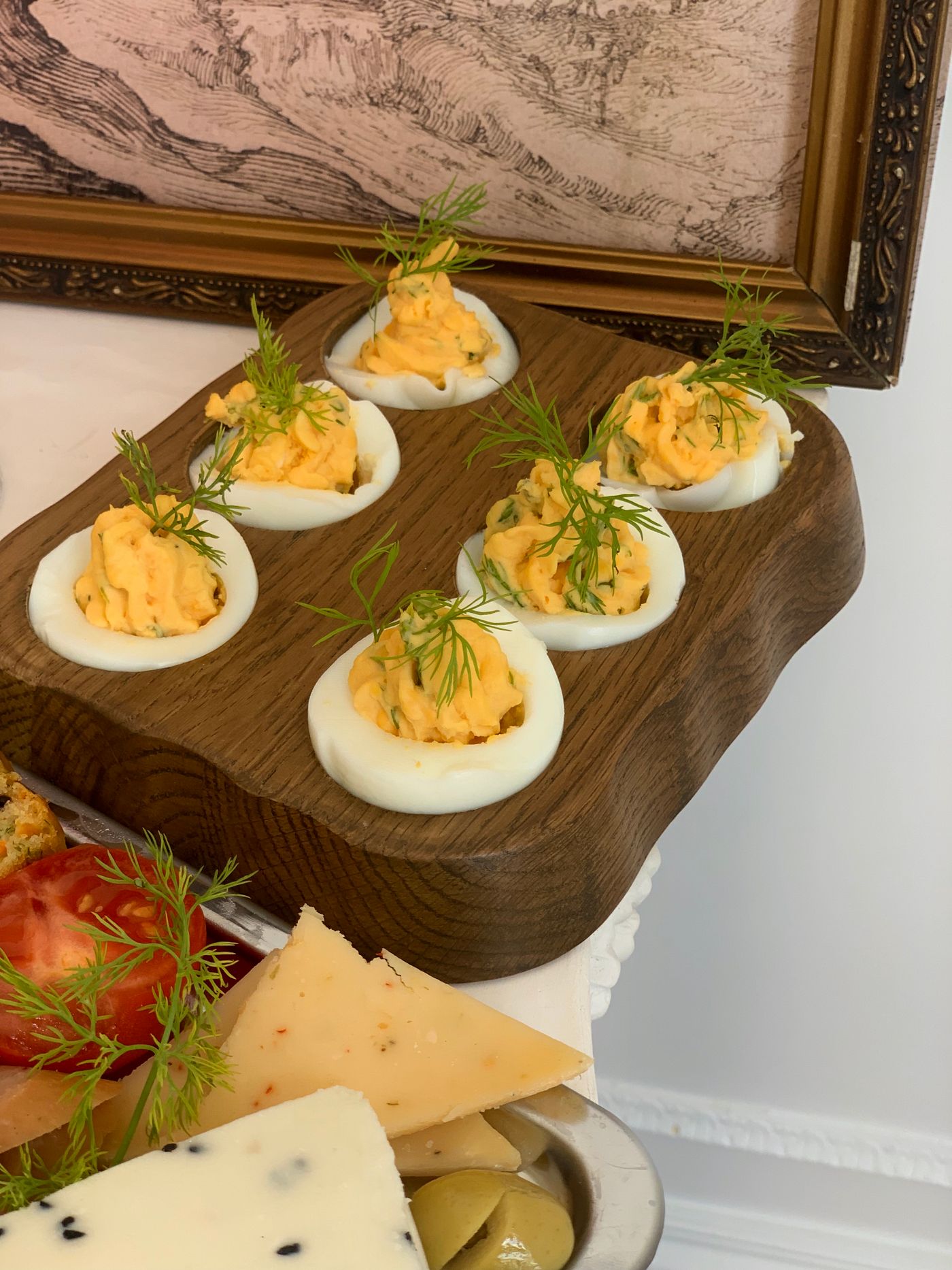
Dill deviled eggs turn six whole eggs into twelve filled halves, or six servings of two halves each. The thirty-five-minute recipe includes a twelve-minute covered stand in hot water and ten minutes in ice water. Most of the finishing work is simple: peel carefully, break down the yolks before adding the creamy ingredients and divide the filling evenly. Fresh dill supplies the garnish rather than an added paprika topping.
Dill deviled eggs makes 6 servings, with 35 min estimated total time. View the standalone recipe page.
Cook the eggs with the stated off-heat method
Put the six eggs in a saucepan and add cold water to cover them by 2 cm. Bring to a boil, cover, turn off the heat and let stand for twelve minutes. Start that standing timer after the water has boiled and the heat is turned off. Choose a saucepan that lets the eggs sit comfortably rather than wedging them tightly together.
Prepare the ice water while the eggs cook. The aim is fully firm yolks and whites suitable for cutting and mashing. Different egg sizes and pans can affect cooking, so check the eggs as you halve them later. A soft yolk is not the intended filling base, and it should not be disguised by mixing it into mayonnaise.
Cool thoroughly and peel with gentle pressure
Transfer the eggs to ice water for ten minutes. Cooling makes them easier to handle and helps stop further cooking. Tap the shells gently, loosen a small area and work the shell away without gouging deeply into the white. A smooth white is a nicer serving cup, but a few small dents do not require discarding an otherwise sound cooked egg.
Keep the peeled eggs on a clean plate separate from shells and raw-egg packaging. Slice each one lengthwise using a clean knife, wiping the blade if yolk begins to smear across the whites. Lift the yolks into a mixing bowl and arrange the twelve white halves in a stable serving dish or a container that can go into the refrigerator.
Mash the yolks before adding the dressing
Break the yolks down thoroughly with a fork so no large dry pieces remain. Add the 3 tbsp mayonnaise, 1 tsp Dijon mustard, 1 tsp lemon juice, ¼ tsp salt and ¼ tsp pepper, then mash and stir until smooth. Beginning with finely broken yolks is more effective than trying to chase dry lumps through an already creamy mixture.
Scrape around the sides and bottom of the bowl to incorporate every portion. The filling should be soft enough to spoon or pipe while still holding its shape. Do not immediately add more mayonnaise if the mixture looks rough; continue mashing first. Extra dressing changes the fixed recipe and can make the filling loose without eliminating the underlying yolk pieces.
Fill all the halves before adding the dill
Spoon a modest amount into every white half, then distribute what remains. This avoids lavishly filling the first few and leaving the final eggs nearly empty. A piping bag is optional; a spoon gives the same flavor and portioning. If piping, choose an opening wide enough that any small remaining pieces will not clog it.
Wash and dry the 10 g fresh dill, then use it to garnish the filled eggs. Break or cut it into manageable fronds rather than laying long coarse stems across them. The optional 100 g cherry tomatoes and 60 g sliced cheese are side accompaniments as pictured. They do not belong inside the yolk filling unless you intentionally make a different recipe.
Keep the eggs cold until the serving moment
Serve promptly or cover and refrigerate at 40°F (4°C) or below. For make-ahead planning, Egg Farmers of Canada advises serving prepared devilled eggs within two days. This is a useful conservative window for the filled recipe; the longer storage allowance for plain hard-cooked eggs should not automatically be applied to a handled, filled platter.
For a gathering, bring out a small platter and replace it with a chilled one as needed. Do not leave the eggs unrefrigerated beyond two hours, or one hour above 90°F. Keep optional cheese chilled too. Refrigerating a platter after it has exceeded those limits does not reset the clock, so note when it first leaves the refrigerator.
Common questions
Why is my filling lumpy?
The yolks may not have been broken down enough before adding mayonnaise. Mash them thoroughly with a fork, then work in the measured dressing ingredients. For especially smooth piping, press the cooked yolks through a fine sieve before mixing rather than adding extra liquid.
Are six servings the same as six egg halves?
No. Six whole eggs produce twelve halves, and the recipe serves six people with two halves each. The optional tomatoes and cheese accompany those servings. Keeping that distinction clear helps you plan a platter without accidentally halving the expected portion.
Technique & food-safety references
These primary references support the technique, safety and storage guidance. The recipe and cooking explanations are original Recipe Pinboard content.