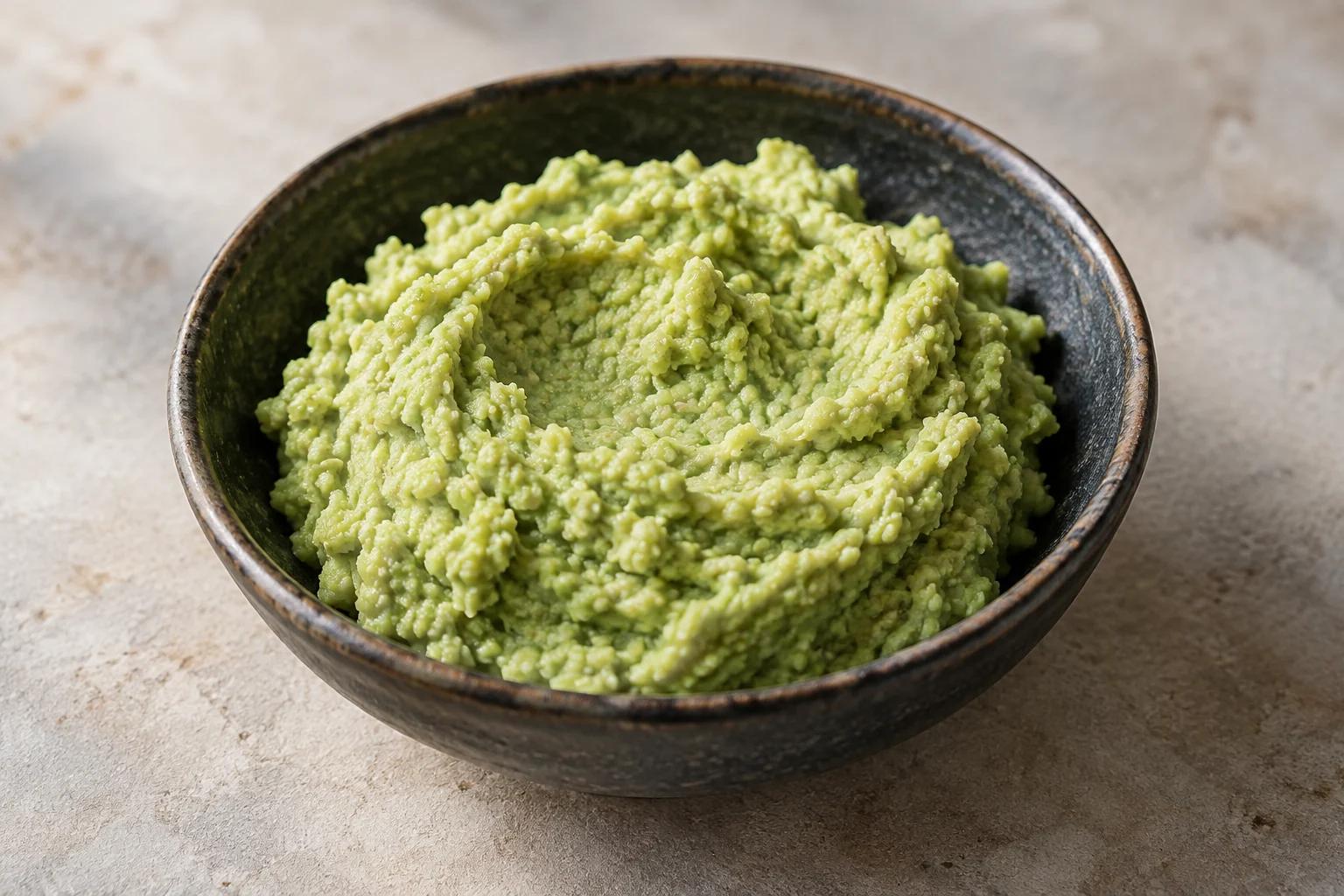
Edamame makes a different spread from a soft canned bean: its skin and firm interior leave a pleasant coarse texture. The method uses properly cooked, shelled beans, a measured amount of water and stirred tahini. Lemon provides brightness, while the food processor does the work of breaking the beans into a spreadable mixture.
Edamame, sesame & lemon spread makes 8 servings, with 25 min estimated total time. View the standalone recipe page.
Weigh shelled beans before cooking
Read the frozen edamame package and follow its cooking directions. Frozen vegetables should not automatically be treated as ready to eat. The recipe begins with 400 g frozen, unprepared, shelled edamame, so pods never enter the calculation. Buying shelled beans makes that starting weight practical; a bag of whole pods is not an equivalent food weight. Drain in a sieve and let the beans cool briefly so escaping steam does not collect under the processor lid.
Stir tahini in its container first
Tahini often separates into a dense lower layer and liquid oil above. Stir it thoroughly before weighing the 45 g portion; scooping only the oil gives a different mixture. Check that the ingredient list is sesame rather than a sweetened sauce. Tahini is not interchangeable with whole sesame seeds in this method. Whole seeds need different grinding and would leave a noticeably grittier spread even when the nominal weight is the same.
Give the blades access to the beans
Pulse the beans and garlic before adding the other ingredients. Stop occasionally to move material down from the sides with the motor off. A few large pieces sitting above the blade will not disappear simply by running the processor continuously. Half the measured water helps the initial mixture circulate. Add the remainder with the oil only after the beans are finely chopped. This staged addition makes it easier to see whether the blade is actually moving the food.
Aim for spreadable, not perfectly smooth
Edamame skins can remain as fine flecks even after thorough processing. The target is a cohesive mound that spreads without crumbling, not the glassy surface of a strained puree. If the mixture looks loose immediately after blending, pause before changing it; the sesame paste can thicken as it hydrates. Use all the stated water for the published version. Extra tahini or oil is a recipe change, not a nutritionally invisible texture adjustment.
Keep portions and storage practical
Divide the finished spread into eight equal portions, preferably by weighing the whole finished batch. Soy and sesame are present, and neither the vegan nor gluten-free ingredient screen is an allergy certification. Check packaged ingredients and utensils for your own needs. Refrigerate in a shallow covered container within two hours and use within three to four days. A clean spoon prevents crumbs and other foods being mixed into the storage container; keep serving accompaniments separate.
Common questions
Can I blend the beans while still frozen?
No. Cook them according to their package, drain and briefly cool first. Frozen beans can resist the blade, leave hard pieces and fail to meet the package preparation instructions.
Can I substitute canned chickpeas?
That creates a different spread with different moisture, flavor and nutrient values. The lemon and tahini may work with chickpeas, but the edamame-specific quantities and calculation should not be presented as unchanged.
Technique & food-safety references
These primary references support the technique, safety and storage guidance. The recipe and cooking explanations are original Recipe Pinboard content.