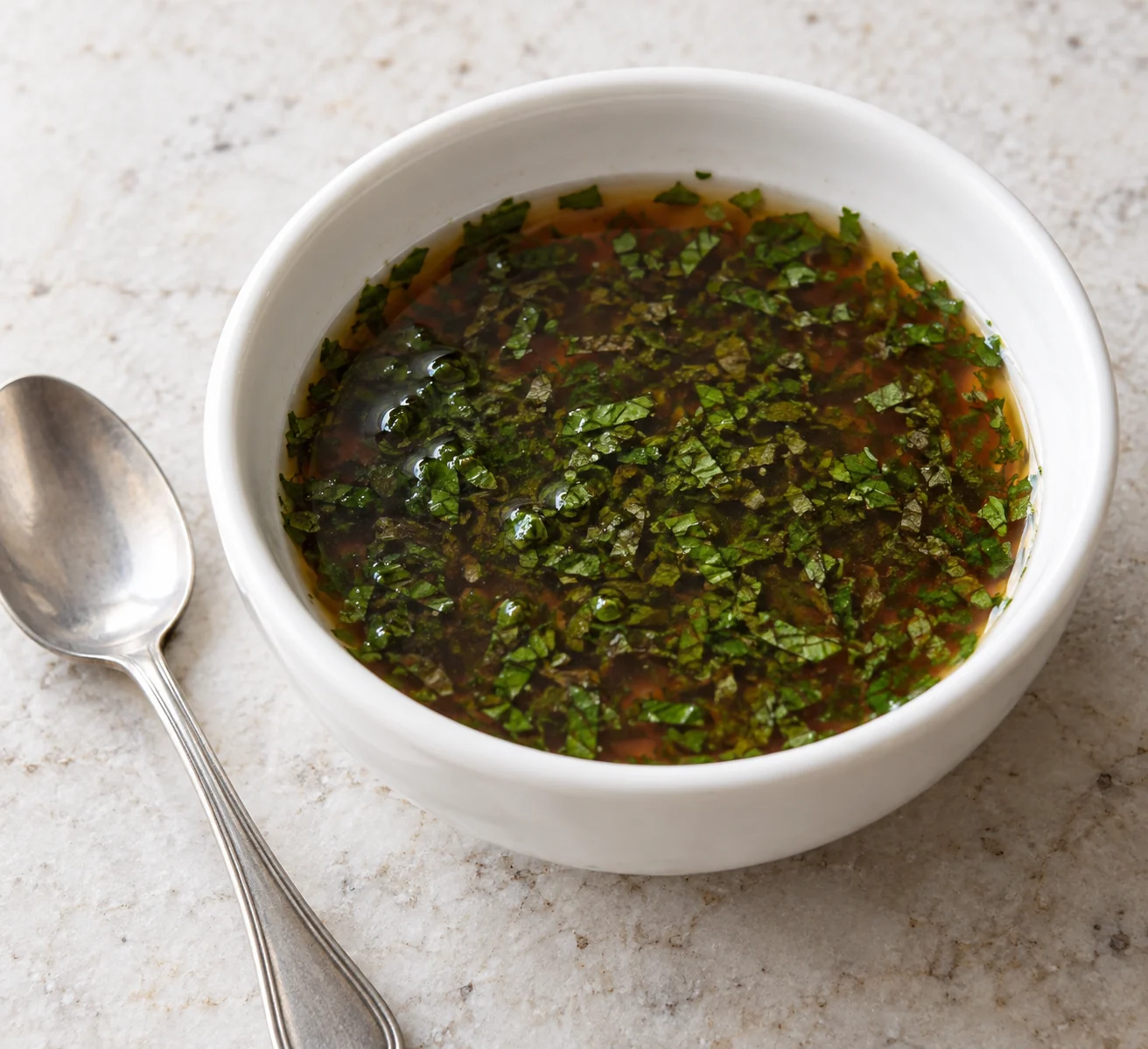
This sauce keeps the chopped-leaf texture of mint rather than blending the herb into a green puree. A small amount of hot sweetened water softens the leaves, and vinegar added afterward supplies the sharpness. The steeping liquid stays in the bowl, so the recipe does not discard a mint infusion and then pretend all of its original ingredients remain. Its finished consistency is thin and spoonable, with leaves and liquid served together.
Fresh mint & vinegar sauce makes 6 servings, with 40 min estimated total time. View the standalone recipe page.
Start with edible leaves and a dry board
Strip away tough stalks before weighing the mint. A bunch weight that includes large stems is not the same amount of usable herb. Wash the leaves, dry them thoroughly and spread them briefly on a towel if droplets remain. Excess wash water would dilute this small batch noticeably. A sharp knife makes small clean pieces without requiring repeated crushing. Gather the leaves into a loose pile and work across them, stopping when they are finely chopped rather than continuing until they become a dark paste.
Use the measured steeping water
Put the mint, sugar and salt into a heatproof bowl before adding the just-boiled water. Stir so the sugar does not remain as a gritty layer underneath the leaves. The water quantity is intentionally small, and none is poured away. Do not borrow a method that blanches mint in a large saucepan and then drains it while keeping this ingredient calculation unchanged. That is a different process. Let the mixture stand for its full initial interval so the leaves soften and the bowl loses its first burst of heat.
Add vinegar after the initial cooling period
The red-wine vinegar gives this version a slightly tinted liquid as well as acidity. It is not interchangeable in appearance with a pale white-wine or distilled vinegar, and an unusually sweet flavored vinegar changes the balance. Use the specified culinary product and check its ingredient label. Stir it through the steeped mint, reaching the bottom of the bowl. The sauce contains no oil, so it does not need to be whisked into an emulsion and should not develop the thick glossy body of a pesto.
Allow the second rest before serving
The twenty-minute wait after adding vinegar gives the chopped leaves and liquid time to mingle. Tasting immediately after pouring in the vinegar can give a sharper impression than tasting the completed sauce. Let the stated method finish before changing the amounts. The leaves will gradually lose their bright fresh color and become more olive green, especially after refrigeration. That expected color change is not a reason to add green coloring or extra fresh leaves outside the recipe. Judge storage by time and handling, not color alone.
Stir each serving from the bottom
Mint pieces settle or gather together while the sauce stands. Stir before portioning so the first spoonful is not mainly vinegar and the last mainly leaves. Six servings means six equal shares of the whole mixture, including its liquid. A roast or vegetable dish served with it has its own ingredients and nutrients. Cover and refrigerate unused sauce promptly, using it within the short storage window in the card. A strong vinegar taste does not establish a safe cupboard preserve or a tested canning formula.
Common questions
Can I blend the mint instead of chopping it?
A processor can turn this small amount into a puree before the larger pieces have been evenly reduced. The intended result has fine visible leaf pieces suspended in a thin liquid. Knife chopping offers more control and avoids adding extra water or oil merely to keep a blender moving.
Why does it taste different from bottled mint sauce?
Commercial products vary in sweetness, acidity, leaf concentration and added thickeners. This recipe has a fixed amount of sugar and no thickener. It is an original fresh preparation, not a claim to reproduce a particular brand. Adjustments would create a different formulation and should not inherit the unchanged estimate.
Technique & food-safety references
These primary references support the technique, safety and storage guidance. The recipe and cooking explanations are original Recipe Pinboard content.


