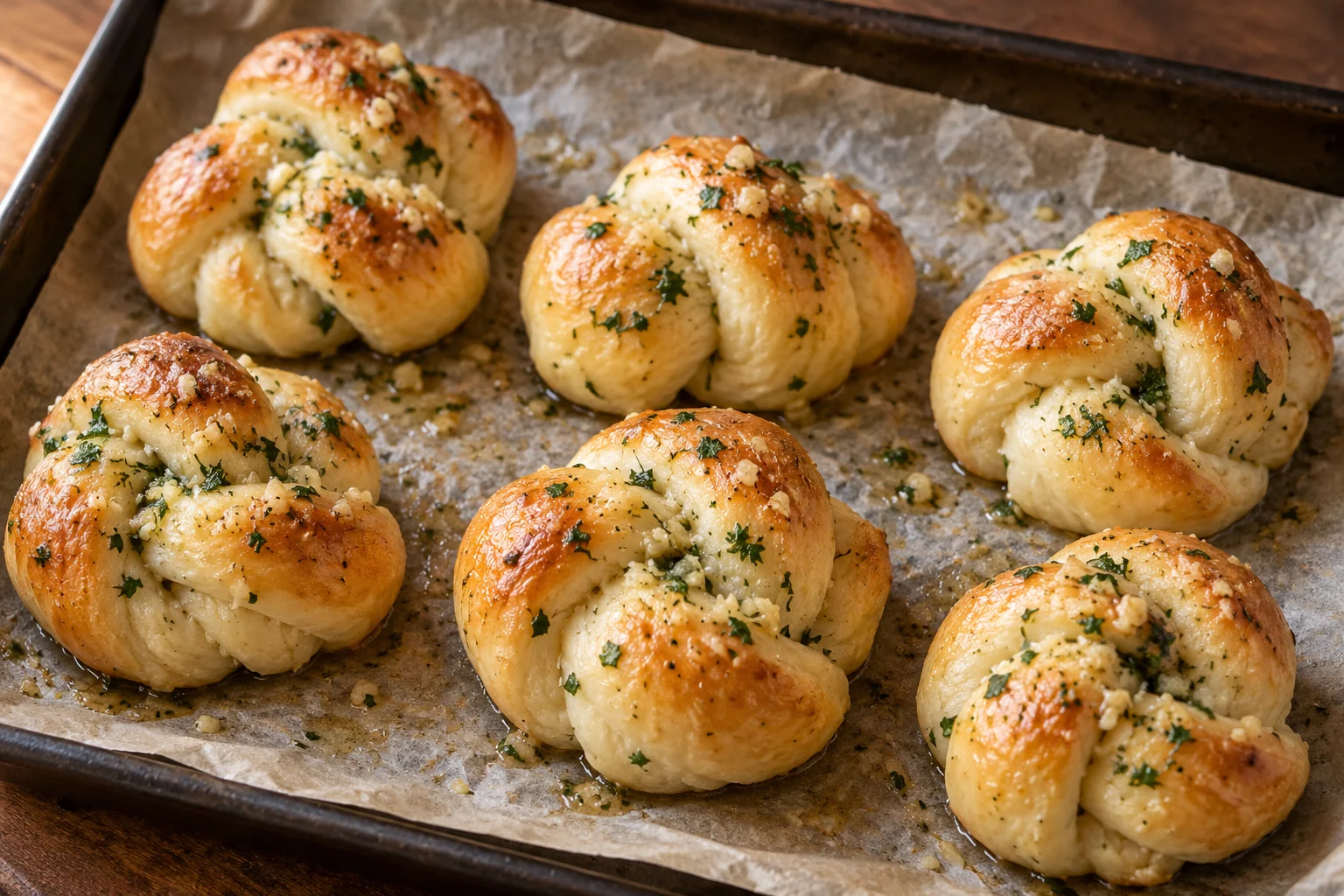
These rolls begin as a simple oil-enriched yeast dough and become knots before their second rise. The garlic butter is cooked separately and added after baking, so small garlic pieces stay fragrant instead of burning on the tray. Making the dough, giving the ropes time to relax and leaving space for expansion matter more than producing twelve perfectly identical shapes on the first attempt.
Garlic & parsley yeast knots makes 12 servings, with 4 hr 25 min estimated total time. View the standalone recipe page.
Keep the handling flour inside the total
Measure the full flour quantity, then separate the small handling allowance before mixing. This prevents an open flour bag from becoming an invisible extra ingredient every time the dough feels tacky. Knead patiently so the dough becomes smoother through gluten development rather than through repeated dusting. Use the measured oil allocation for the bowl and hands. Any clean handling flour left on the board should join the dough surfaces during shaping. Flour scattered onto an unclean surface cannot be recovered and should not be treated as retained food.
Use the first rise to develop a supple dough
The active dry yeast is first mixed with warm water and sugar; overly hot water can damage it, while cold water slows activity. The dough should roughly double during its covered bulk rise, but the clock is only a planning guide. A cold room can extend the stated range. Check the dough itself rather than moving directly to shaping because an hour has passed. Keep it covered so the outer layer does not dry into a skin that tears when you stretch the ropes.
Tie a loose knot with relaxed ropes
Divide the dough evenly before rolling, then give the pieces their covered rest. If a rope repeatedly shrinks, stop and let it relax a few more minutes. Pulling harder produces thin weak points. Roll each piece to the stated length, cross one end over the other, pass it through and leave the knot loose. Tuck the short ends underneath rather than pinching the center tightly shut. The rope should remain recognizable after shaping, with room for its curves to swell during the second rise.
Proof generously and bake with room around each roll
Arrange the knots across two trays so neighboring rolls do not seal together. Their final proof should leave them visibly puffy, not merely warmer. Preheat during the latter part of this rise so the oven is ready when the dough is. Swapping shelves and rotating the trays helps when baking both at once. If the oven cannot accommodate both, the second tray needs a cooler holding place and another baking interval; that additional time is not hidden inside the listed single-cycle estimate.
Add all the garlic butter after baking
Warm the minced garlic in butter only until aromatic, keeping the heat low enough that the small pieces do not scorch. Stir in parsley off the heat. Brush the hot knots and spoon the remaining garlic solids over them, distributing the topping evenly rather than leaving concentrated pools on a few rolls. The brief cooling period helps the crumb settle before eating. Refrigerate leftovers promptly because the topping contains fresh garlic, and follow the reheating endpoint in the card rather than storing them as plain unadorned bread.
Common questions
Why did the knot shape disappear?
A very tight knot, thin rope or crowded tray can make the sections merge during proofing. Keep the initial tie loose, the rope thickness even and the ends tucked underneath. A soft roll with a less pronounced knot is still usable; avoid adding flour simply to force a more rigid decorative shape.
Can I brush garlic butter on before baking?
This method deliberately adds it afterward. Tiny garlic pieces can darken faster than the bread, making the topping bitter before the center is done. Keep the measured butter and garlic for the finishing step. There is no extra oil, egg wash or cheese topping outside the listed ingredients.
Technique & food-safety references
These primary references support the technique, safety and storage guidance. The recipe and cooking explanations are original Recipe Pinboard content.


