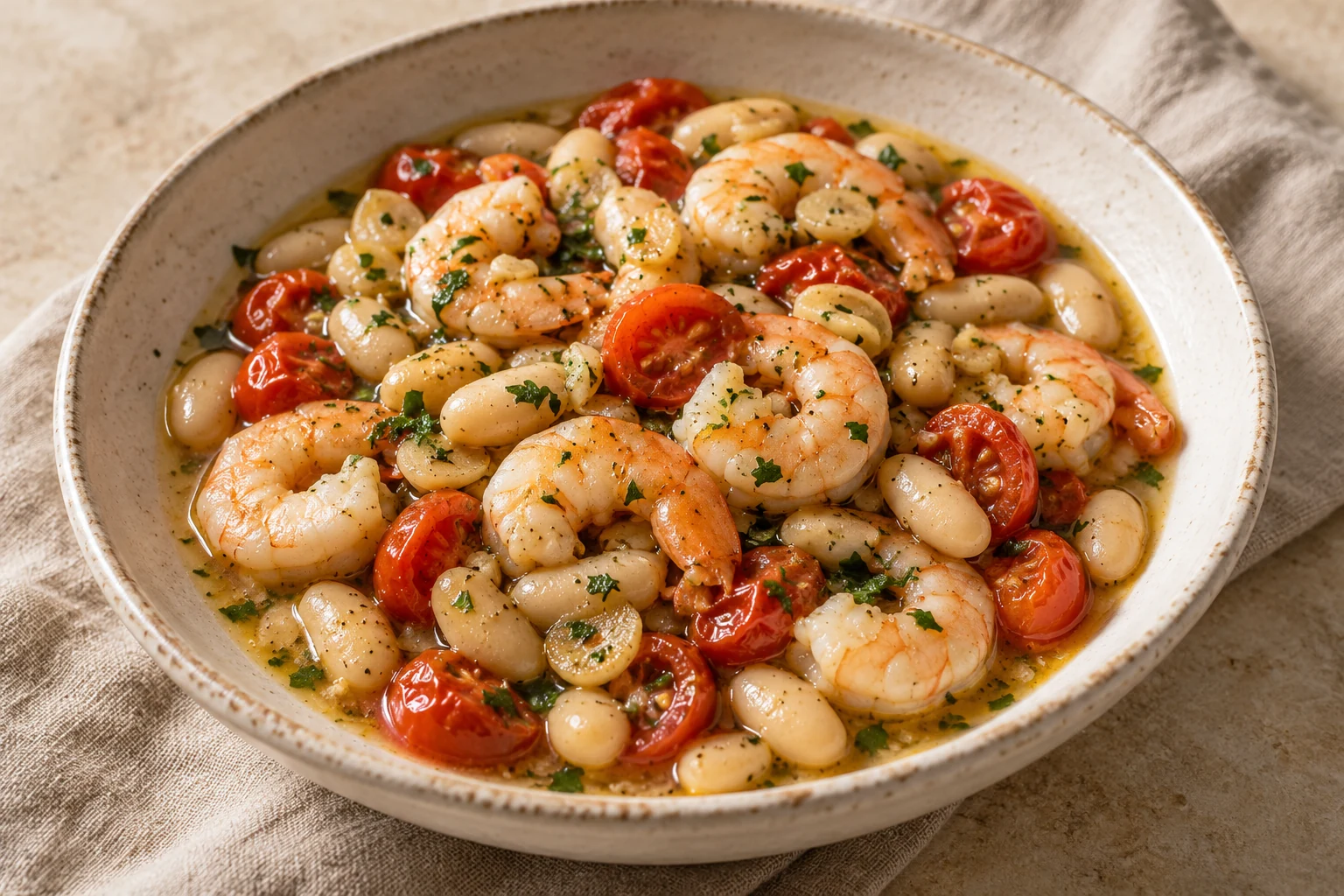
The shrimp leave the skillet while the beans simmer, which is the key distinction in this recipe. Canned cannellini beans need warming, while raw shrimp need a short, careful cook. Giving each its own stage protects the seafood and keeps the beans recognizable in the lemony broth.
Garlic shrimp & white beans makes 4 servings, with 25 min estimated total time. View the standalone recipe page.
Drain the beans and prepare the shrimp
Rinse and drain both cans of cannellini beans before heating the pan. The measured half cup of vegetable broth supplies the simmering liquid; a colander full of rinse water should not arrive with the beans. Handle them gently because they are already cooked and their skins can split under rough stirring.
Use the raw, peeled, deveined shrimp specified in the card. If frozen, thaw safely in the refrigerator and dry the surface before cooking. The recipe does not specify shrimp size, so its approximate two minutes per side cannot be treated as a guarantee for every package.
Cook the shrimp, then take them out
Heat the first tablespoon of olive oil over medium-high heat and arrange the shrimp with room to turn them. A packed pile cooks unevenly and releases liquid into the pan. Work in batches if your skillet cannot hold the pound of shrimp in a useful single layer.
Follow the stated endpoint: the flesh should be pearly and opaque throughout, not translucent at its thickest part. FDA also gives 145°F as the general seafood cooking temperature. Transfer cooked shrimp to a clean plate immediately; leaving them in the skillet through the next eight minutes would add unnecessary cooking.
Lower the heat for sliced garlic
Add the remaining oil, the sliced garlic and halved cherry tomatoes over medium heat. The change from the shrimp’s medium-high heat matters: thin garlic slices can darken quickly in the residual heat of the skillet. Stir during the three-minute stage so they do not remain against one hot spot.
The tomatoes should begin softening and releasing juice while still looking like pieces of tomato. This is not a long-cooked tomato sauce. If the garlic begins browning too rapidly, lower the heat rather than trying to compensate later with more lemon; bitter scorched garlic cannot be balanced away reliably.
Simmer the beans without breaking them down
Stir in the drained beans, broth and quarter teaspoon of salt. Keep the five-minute simmer moderate, with enough movement to heat the beans but no violent boiling. Use a broad spoon to lift and turn the mixture instead of pressing it hard against the pan.
The result should have a little broth around intact beans, with softened tomato and garlic distributed through it. Return the cooked shrimp only for the brief warming stage. Once everything is hot, take the skillet off the heat before adding the lemon juice and chopped parsley as the method directs.
Serve and reheat without prolonged holding
Divide the shrimp deliberately among four portions before spooning over the beans and juices. The light sauce belongs with the dish, so use bowls or plates with enough depth to contain it. This recipe does not include pasta or another base; the cannellini beans are the substantial component beneath the shrimp.
Refrigerate leftovers promptly in shallow containers, within two hours or one hour above 90°F. Use within three to four days. Reheat to 165°F, checking the whole portion, and stop once it is ready. Repeated or extended reheating can make the shrimp firmer even when the beans remain pleasantly soft.
Common questions
Why are the shrimp rubbery?
They may have remained in the pan during the bean simmer or been reheated for too long. This method fully cooks them first, removes them, and returns them only briefly.
Should the beans make a thick sauce?
No thickener or bean-mashing step is included. Expect a light broth with some body from the cooked beans and tomatoes, rather than a purée or a heavy gravy.
Technique & food-safety references
These primary references support the technique, safety and storage guidance. The recipe and cooking explanations are original Recipe Pinboard content.