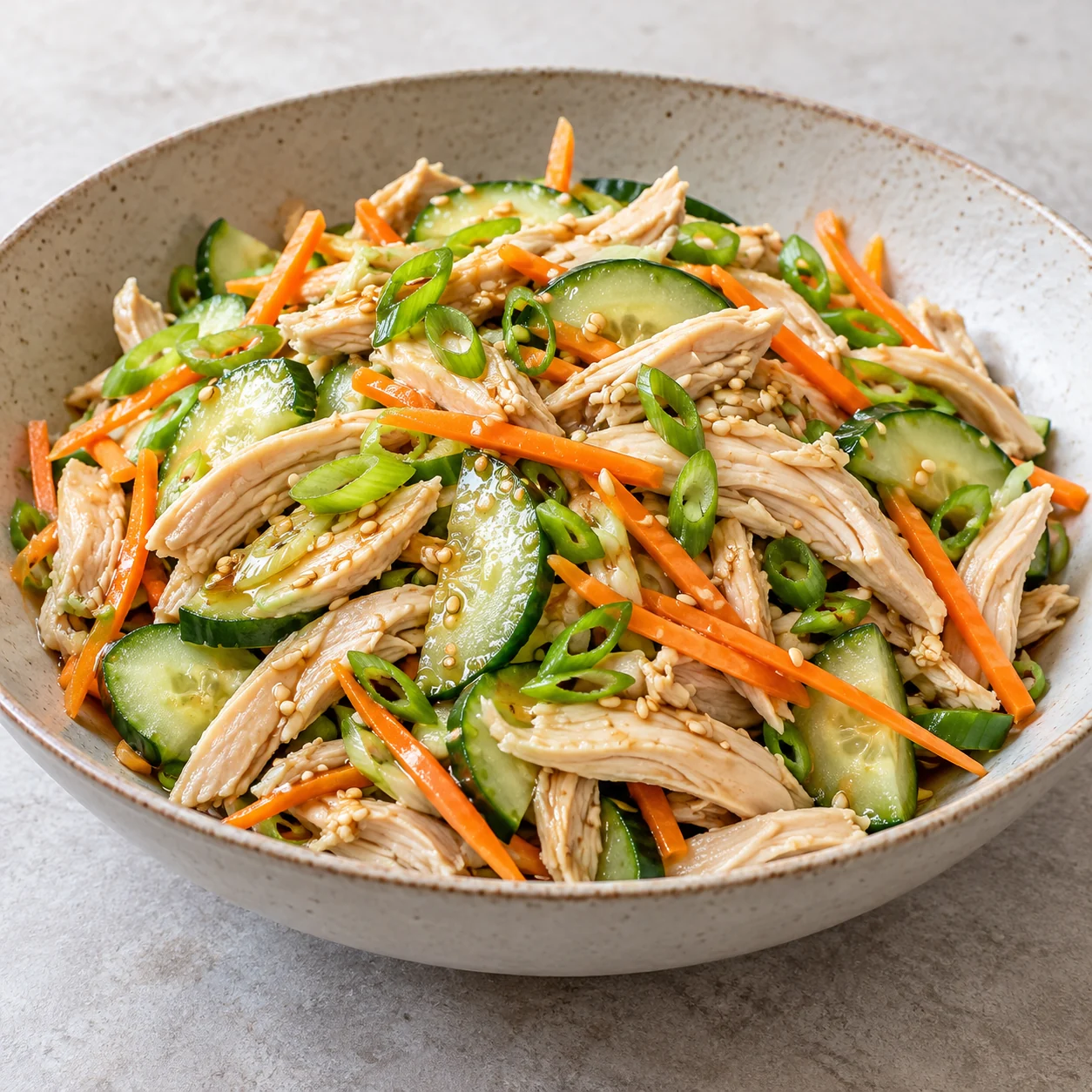
Steaming the chicken on a rimmed plate collects its juices for the lime-soy dressing. Thin cucumber, carrot matchsticks and sliced scallions provide the contrasting crunch. The complete recipe makes four portions in about an hour and can be served while the chicken is lightly warm or after prompt refrigeration. Its most important checkpoints are chicken thickness, thermometer readings and keeping raw poultry away from the uncooked vegetables.
Ginger-steamed chicken & cucumber salad makes 4 servings, with 1 hr estimated total time. View the standalone recipe page.
Prepare the steamer before handling chicken
Choose a heatproof rimmed plate that fits securely above the water with space around its sides. Steam needs that clearance to reach the food. A plate wedged tightly against the pot walls can obstruct circulation, while a flat plate risks losing the cooking juices. The Woks of Life's steamer guide specifically discusses a rim for retaining liquid from proteins. Set up the equipment first, then prepare the chicken on a separate board. Do not rinse poultry; wash hands and clean equipment after contact with raw chicken before moving on to salad vegetables.
Even thickness matters more than matching outlines
Split thick breasts horizontally to keep every portion no thicker than an inch. Four pieces of similar thickness are easier to cook evenly than a thick central mound beside thin edges. Arrange them in one layer and spread seven grams of the grated ginger over the chicken. Start steaming over steadily simmering water and keep the lid closed except when checking near the expected finish. Eighteen to twenty-five minutes is an estimate, not a guarantee. Measure each portion in its thickest part with a food thermometer and continue cooking until all reach 165°F / 74°C.
Save the cooked juices and shred with clean forks
Lift out the plate carefully, keeping it level so the liquid stays inside. Rest the chicken for five minutes, then shred using clean forks, not utensils that touched it raw. Pull along the natural grain into manageable strips rather than mashing it into fine fibers. Allow a further ten minutes of cooling while preparing the vegetables. Retain every bit of the cooked plate liquid for the dressing. That both carries ginger flavor into the salad and matches the nutrition assumption that no chicken drippings are deliberately discarded.
Match the vegetable cuts to the shredded chicken
Rinse the cucumber and retain its skin, slicing it into thin half-moons. Cut the peeled carrot into fine matchsticks so it bends with a forkful instead of dominating the bite as a hard chunk. Slice the scallions thinly, separating any packed rings. Pat washed vegetables dry before cutting to avoid adding unnecessary surface water. This recipe does not salt and drain the cucumber: the measured edible vegetables remain in the bowl. Toss close to serving because cucumber releases moisture after contact with the salty dressing, gradually making a prepared salad wetter.
Whisk the dressing and portion the whole salad
Combine lime juice, reduced-sodium soy sauce, sesame oil, remaining ginger and the cooked chicken juices before adding the solids. This distributes the concentrated soy sauce more evenly than pouring it over one patch of chicken. Toss thoroughly, scatter the measured sesame seeds and divide chicken, vegetables and all dressing among four portions. Reduced-sodium soy sauce still varies by brand and this profile contains wheat, so the dish has no gluten-free tag. Refrigerate promptly in shallow containers at 40°F / 4°C or below, within two hours or one hour above 90°F / 32°C. Use within three to four days.
Common questions
Can the salad be packed for lunch?
Yes, after chilling it promptly. Use an insulated bag with cold packs and keep it cold until eating. Storing the dressed chicken separately from the cucumber can preserve texture, provided all measured components are served together.
Can I judge steamed chicken by its color?
No. Pale flesh or clear juices do not replace a thermometer. Check the thickest part of every portion for 165°F / 74°C; take care that the probe tip is in meat rather than against the hot plate.
Technique & food-safety references
These primary references support the technique, safety and storage guidance. The recipe and cooking explanations are original Recipe Pinboard content.


