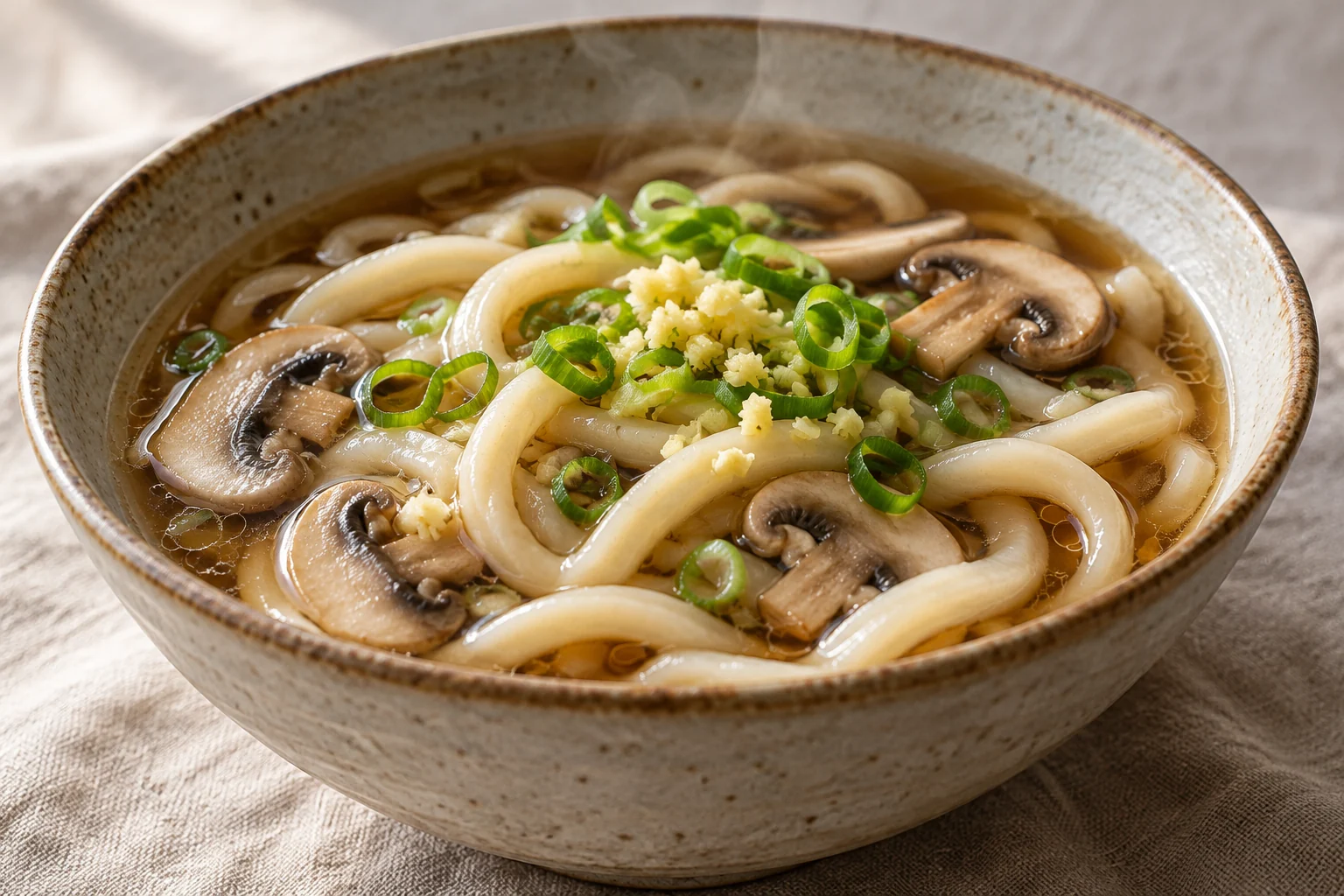
Hand-cut udon gets its character from a firm wheat dough, a generous rest and a substantial noodle width. This is a deliberate cooking project rather than a quick packet-noodle replacement. The mushroom broth is simple enough to prepare while the dough rests, leaving attention free for rolling and cutting. The finished noodles should be chewy throughout, without a raw floury center.
Hand-cut udon in mushroom broth makes 4 servings, with 4 hr estimated total time. View the standalone recipe page.
Let a firm dough hydrate before kneading
Dissolve the salt completely in the measured dough water before mixing it with the flour. At first the mixture may look rough and crumbly because the water proportion is lower than in soft bread dough. Press it together and give it the initial covered rest instead of immediately pouring in extra water. Knead with firm folds and pressure after that interval. Covering matters: a dry skin makes rolling harder and can create rough edges. The recipe counts all dough salt even though some will later enter the boiling water.
Use the long rest to relax resistance
The main two-hour rest makes the dough easier to roll into an even sheet. A cold room may require about another hour, which extends the stated total. This is a texture cue as well as a clock interval: dough that persistently springs back benefits from more covered resting. Prepare mushrooms, ginger and scallions during this period. Keep the green scallion tops separate for the final bowls. There is no egg in this dough, and the broth must also be verified free of animal ingredients for the vegan designation.
Roll evenly and separate the strands
Use the measured cornstarch allowance on the board, sheet and folds. Roll toward an even three-millimeter thickness rather than making the center thin and leaving heavy edges. Fold loosely so the knife can cut several layers without pressing them into a solid block. Slice strips approximately as wide as the sheet is thick, then unfold them promptly. A sharp knife and a steady downward cut help preserve distinct edges. Uneven handmade noodles are fine, but very thick pieces will need longer than their thinner neighbors in the boiling water.
Build broth flavor while the noodles cook
Cook the mushrooms in sesame oil until they soften and release moisture. Add ginger and scallion whites briefly, then the vegetable broth and measured soy sauce. The broth can simmer gently while a separate large pot heats for noodles. Separate boiling keeps loose starch from making the serving broth excessively thick. Cook the noodles in two uncrowded batches, stirring carefully at first so they do not settle into a clump. Check a thick strand near the end: it should resist pleasantly without tasting of uncooked flour.
Rinse briefly, then return to heat
Drain and rinse the boiled noodles briefly under cold water to remove loose surface starch. Return them to the simmering broth promptly and heat through before portioning. Divide all mushrooms, broth and noodles among four bowls, then add the measured green scallion tops. The estimate uses dry ingredients rather than an invented cooked noodle weight, and unmeasured boiling or rinsing losses are not subtracted. Refrigerate leftovers within two hours and use within three to four days. Reheat to 165°F; noodles stored in broth will soften further.
Common questions
Why does my noodle dough keep shrinking?
It is probably still too resistant to roll comfortably. Cover it and allow more resting time, especially in a cool room. Forcing it thin immediately tends to produce uneven edges and a thicker center.
Can I skip the separate boiling pot?
Cooking raw noodles directly in this measured broth changes its starch concentration and available liquid. The written method uses a separate pot, a brief rinse and reheating in broth for a cleaner finished texture.
Technique & food-safety references
These primary references support the technique, safety and storage guidance. The recipe and cooking explanations are original Recipe Pinboard content.


