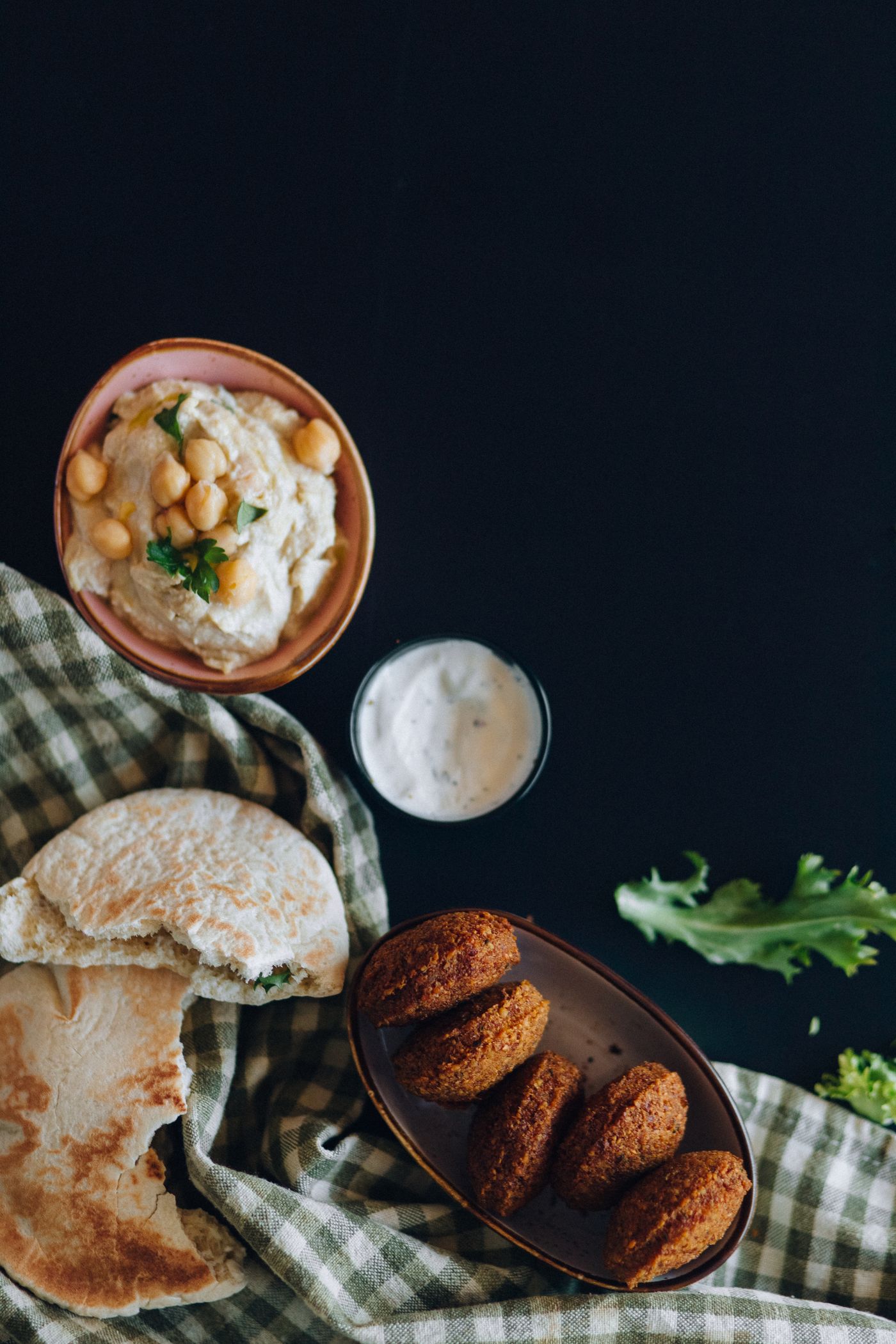
This falafel recipe is a plan-ahead dish with a short active finish. Its eighteen small patties begin with dried chickpeas soaked in the refrigerator, not cooked chickpeas mashed from a can. Keeping that starting state, removing surface water and giving the mixture its chill are the most useful controls before the first patty enters the oil.
Herby falafel with hummus & pita makes 6 servings, with 13 hr 10 min estimated total time. View the standalone recipe page.
Count the soak as part of dinner preparation
The 250 g chickpea amount is the dry weight before soaking. Cover the beans generously with cold water and refrigerate for the specified twelve hours. The water level must allow room for expansion. Do not interpret the eventual heavier soaked beans as a reason to start with less of the dried ingredient.
Drain the soaked chickpeas thoroughly and pat away surface moisture before processing. They should be hydrated but remain uncooked at this stage. Cooked or canned chickpeas have a different texture and are not an interchangeable shortcut in this formula. Keep the separate hummus for serving, rather than mixing it into the patty mixture.
Pulse to a fine meal rather than a smooth dip
Combine the chickpeas with onion, garlic, parsley, cilantro, cumin, coriander and salt in the processor. Pulse, stop and redistribute as needed. The goal is evenly fine pieces that can be compressed together; a few large chickpea chunks make shaping harder, while processing everything into a wet puree loses the intended texture.
Add the measured baking powder and flour after processing. Scrape the mixture into a covered bowl and chill for thirty minutes. This is a useful pause for preparing the serving platter and washing equipment, not an invitation to taste the raw mixture. Both its chickpeas and flour still require cooking.
Divide the mixture before heating the oil
Shape eighteen small patties of similar size and thickness. For an even yield, divide the whole mixture into three groups and make six patties from each. Compress them enough to hold together without squeezing them into hard, dense disks. Similar thickness helps the centers cook at a comparable pace.
If a patty breaks as you lift it, stop before filling the pan. Check whether the mixture was drained, chopped finely enough and chilled as directed. Recompress a small patty and handle it gently. Adding large, unmeasured amounts of flour changes both the texture and the recipe rather than fixing its starting conditions.
Fry steadily without filling the pan
Use the heavy skillet and one-centimeter oil depth specified in the card, heating to about 350°F (175°C). Add patties carefully with space between them. Batches are preferable to pressing eighteen patties into one crowded pan. Keep a rack ready so the first cooked batch does not sit in a puddle while the next cooks.
The method allows three to four minutes on each side. The surface should become deep golden and the center must cook through rather than remain hard and raw. Check the first patty before committing the full batch to the same timing. If the exterior darkens prematurely, lower the heat; never compensate by serving an uncooked middle.
Build six complete portions and keep the crisp finish
Each serving receives three patties, a share of the 300 g hummus, half a pita and one lettuce leaf. Keeping hummus beside the falafel instead of coating every surface helps preserve contrast. Warm the pita near the end, after the frying station is under control, rather than juggling bread and a crowded oil pan.
The total planning time is thirteen hours ten minutes, including soaking and chilling, with about forty minutes active preparation and cooking. Stay beside hot oil and keep water away from it. Let used oil cool fully before handling. Refrigerate leftovers promptly; keep hummus and pita separate so reheating the patties is simpler.
Common questions
Can I use a drained can of chickpeas?
This particular mixture is formulated for soaked, uncooked dried chickpeas. Canned chickpeas are already cooked and are not a like-for-like replacement; choose a recipe specifically written for them.
Why do patties break during frying?
Wet beans, coarse uneven processing, skipping the chill or moving a fragile patty too early can contribute. Correct the preparation and fry a small first patty before cooking the remaining batch.
Technique & food-safety references
These primary references support the technique, safety and storage guidance. The recipe and cooking explanations are original Recipe Pinboard content.