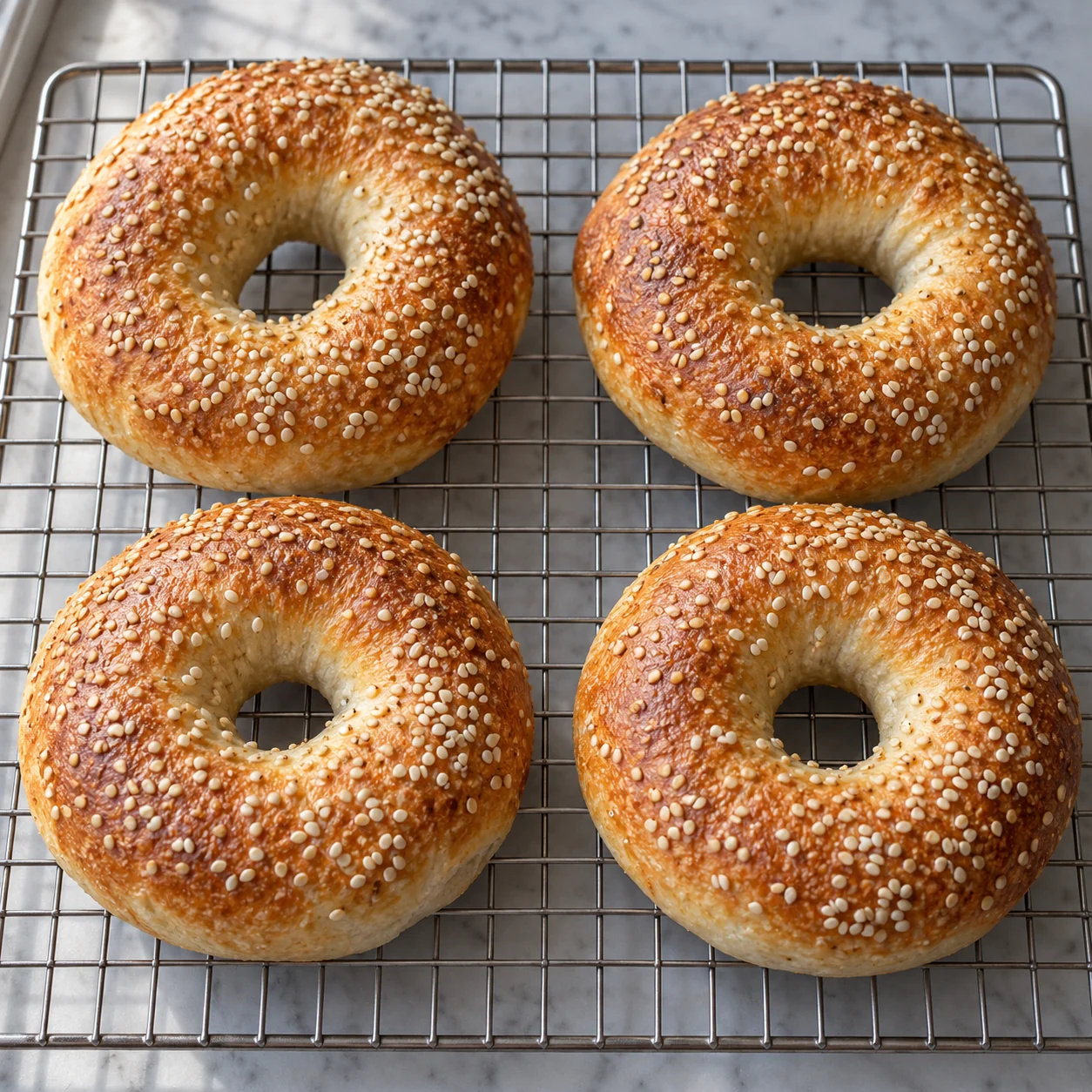
These bagels begin as a firm yeast dough and pass through a short plain-water boil before baking. The finished crumb should be chewy rather than the fluffy interior of a soft dinner roll. The complete card makes eight bagels, one per serving, and allows three hours and thirty-five minutes for mixing, rising, shaping, boiling, baking and cooling. The water bath contains no sugar, malt or baking soda.
Homemade sesame bagels makes 8 servings, with 3 hr 35 min estimated total time. View the standalone recipe page.
Knead a firm dough without extra flour
Dissolve the yeast and sugar in the measured lukewarm dough water, then wait for foam. Incorporate the bread flour and salt and knead for ten to twelve minutes. This dough should hold its shape rather than spread loosely across the work surface. Bread flour is useful for the intended chew; changing flour type changes how the dough behaves. Use a silicone mat or parchment for handling instead of continually adding flour. If kneading becomes difficult, pause with the dough covered briefly and resume. Do not taste raw dough, even though this recipe contains no egg.
Look for puffiness during the first rise
Cover the bowl and allow sixty to ninety minutes in a comfortably warm place. The dough should become noticeably fuller and lighter to handle, but there is no need to wait for a dramatic balloon-like expansion. King Arthur's bagel guidance likewise describes a firm dough and a visibly puffy rise. A cold kitchen can extend the schedule. Divide the dough into eight equal portions, preferably with a scale, then shape each into a tight ball. Cover those balls for ten minutes before making holes; this brief pause helps the surface stretch without tearing.
Make the holes larger than the finished opening
Push a finger through the center of each rested ball and gently rotate and stretch the ring. Aim for an opening about one and a half inches across. The hole narrows as the dough expands, so a tiny puncture may close during boiling or baking. Keep the dough thickness fairly even all around rather than stretching one side into a thin cord. Arrange the rings on parchment, cover loosely and rest fifteen to twenty minutes while the oven and water heat. If a ring retracts sharply, give it another short covered pause before adjusting its shape.
Boil in small batches and seed while damp
Bring two litres of plain water to a gentle boil in a wide pan. Lower in two or three rings, leaving room for them to float without pressing together. Cook forty-five seconds on each side, turning gently with a slotted spoon. Lift and drain briefly rather than leaving them to drip until dry. Set them on the lined tray and immediately distribute the measured sesame over the damp tops, pressing lightly. The recipe counts all twenty-four grams of seeds; collect loose seeds from the working surface and apply them before baking instead of adding an unmeasured extra handful.
Bake until set, then cool before slicing
Bake at 425°F / 220°C for twenty to twenty-five minutes, looking for a golden surface and a set interior rather than simply elapsed time. The plain-water bath produces a different crust finish from a sweetened bakery bath, which is intentional here. Transfer to a rack and wait at least thirty minutes before slicing so the warm crumb is not compressed. Store fully cooled bagels covered for up to two days, or freeze promptly for longer keeping. Wheat and sesame are present; the vegan and dairy-free classifications also depend on the flour, yeast, sugar and seed labels.
Common questions
Why did the center hole disappear?
It probably started too small or the ring was unevenly stretched. Make the opening clearly visible before the final rest and check it again before boiling, widening gently if necessary without deflating the whole ring.
Can I add sugar to the boiling water?
That is a different preparation from this card. The written bath is plain water, which avoids guessing how much dissolved sweetener remains on the bagels. Keep the measured dough sugar in the dough.
Technique & food-safety references
These primary references support the technique, safety and storage guidance. The recipe and cooking explanations are original Recipe Pinboard content.


