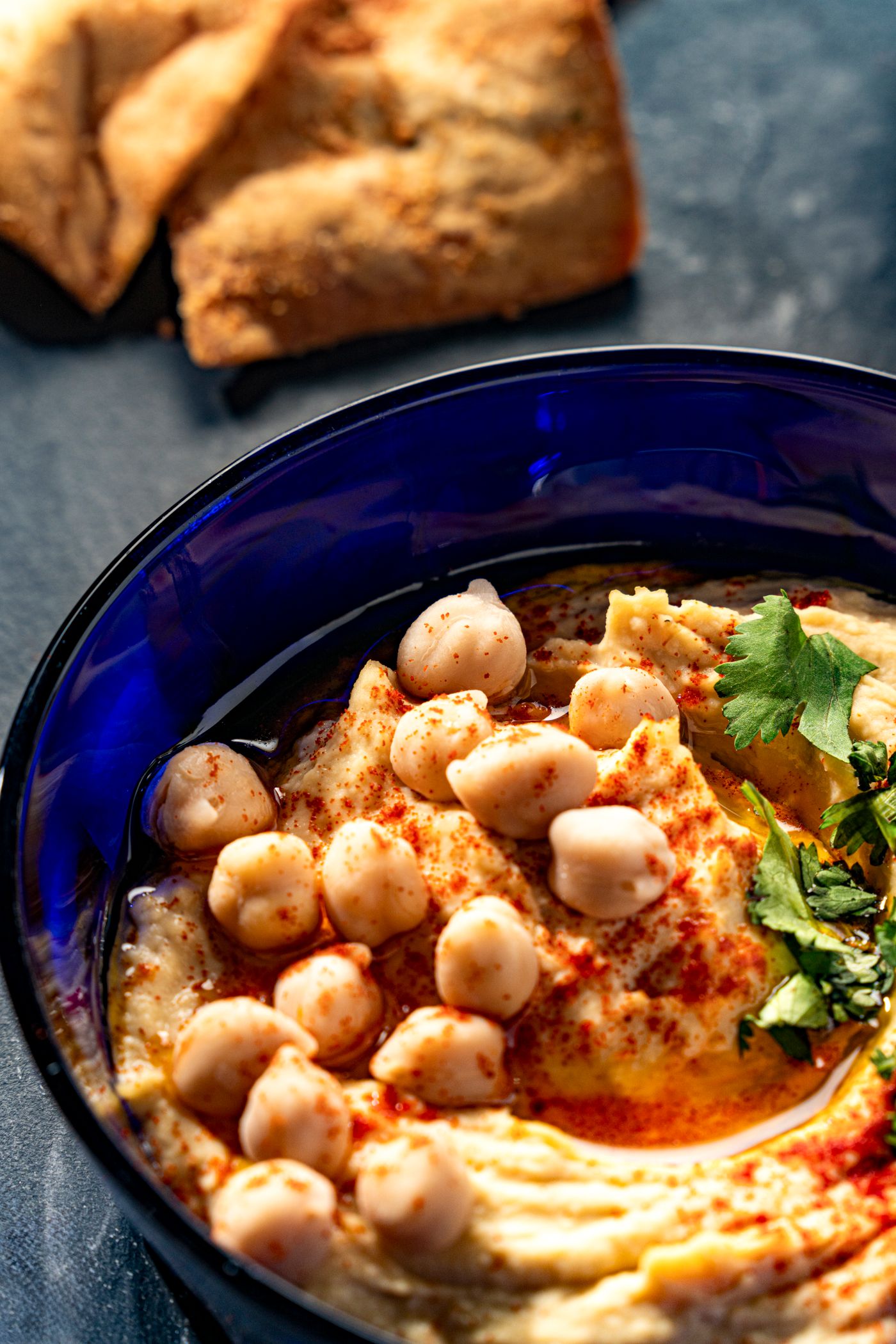
This hummus uses one 15 oz can of chickpeas and makes six servings in about 10 minutes. Its texture depends less on adding more oil than on blending thoroughly and introducing cold water gradually. Start with the stated lemon and salt, then make the small taste adjustments allowed in the recipe after the dip is smooth.
Lemon & garlic hummus makes 6 servings, with 10 min estimated total time. Open the complete ingredient list and method.
Prepare chickpeas and stir the tahini jar
Drain and rinse the canned chickpeas before blending. The 15 oz refers to the can and its contents before draining, not a requirement for 15 oz drained chickpeas. Canned chickpeas are already cooked; dry chickpeas cannot replace them without a separate soaking and cooking method.
Tahini often separates in its container. Stir it thoroughly before measuring ¼ cup so you do not take only thin oil from the top or a dense lump from the bottom. Its sesame flavor and consistency are central to this hummus. Check the label for handling instructions and use a clean spoon to avoid introducing moisture or crumbs into the jar.
Begin with tahini and lemon
Blend the tahini with 3 tbsp lemon juice in a food processor for 30 seconds. This first step distributes the liquid through the sesame paste before the bulk of the chickpeas arrives. Depending on the tahini, the mixture may initially become noticeably thick; do not assume it is ruined.
Scrape the sides only with the machine stopped and follow its safety instructions. A bowl that is much too large for the quantity may leave ingredients spread below or beyond the blade’s effective reach. Use a suitably sized processor and give the ingredients repeated chances to move through the blade area.
Blend the chickpeas and aromatics thoroughly
Add the chickpeas, one small garlic clove, 2 tbsp olive oil, ¼ tsp ground cumin and ¼ tsp kosher salt. Blend, stopping to scrape down the sides. Cutting the garlic into smaller pieces before adding it can help prevent an intact fragment from hiding in the finished dip.
A small clove is important: replacing it with several large cloves changes the balance markedly. Garlic is uncooked here, so its sharpness stays more apparent than in a sautéed sauce. The cumin provides a background earthy note, while the olive oil adds richness. Neither needs to dominate the lemon and sesame.
Add the measured water gradually
Add cold water one tablespoon at a time, using the listed range of 3–5 tbsp as needed. Blend between additions and check the consistency before pouring in more. Scrape again if paste remains attached to the bowl instead of circulating through the processor.
The target is creamy and spreadable, not stiff enough to stand in hard peaks and not thin enough to run off a piece of pita. Chickpea firmness and tahini thickness vary, which is why the recipe provides a range. If the dip looks slightly coarse, additional blending and scraping may help more than immediately adding the maximum water.
Taste the completed dip and diagnose problems
Taste after blending, when lemon, garlic and salt are distributed evenly. The method permits adjusting lemon or salt if needed; make small additions and taste again rather than doubling an ingredient. A dry cracker used for tasting may itself be salty, so consider a plain spoonful when deciding whether the dip lacks seasoning.
If the hummus is too thick, work within the remaining measured water first. If it is too loose, further water will not help; avoid adding liquid before giving it a moment to settle. A strongly bitter or rancid sesame flavor is not something to conceal with lemon. Check ingredient condition rather than trying to overpower an off taste.
Vary the serving and keep the dip chilled
The simplest variations are in how you serve it: offer raw vegetables, crackers or warm pita, none of which are included in the six-serving ingredient quantities. For a milder future batch, choose a particularly small garlic clove. Roasted garlic would be a separate flavor variation with additional preparation time, not part of the 10-minute version.
Transfer the hummus to a clean covered container and refrigerate until serving. Keep it at 40°F or below; as a general leftover-handling plan, use within 3–4 days. Put out a small bowl and refill from a chilled supply rather than leaving the full batch warm. Discard perishable dip left out over two hours, or one hour above 90°F. Lemon juice does not make this a shelf-stable preserve.
Common questions
Should I add more oil to make hummus thinner?
Not automatically. This recipe uses 2 tbsp oil for richness and 3–5 tbsp cold water to adjust texture. Add the water gradually before changing the oil quantity.
Can I omit tahini?
That would make a different chickpea dip. The measured tahini is central to both the flavor and texture here, so an omission is not an equivalent version of the original recipe.
Food-safety references
These official references support the safety and storage guidance. The recipe and cooking explanations are original Recipe Pinboard content.