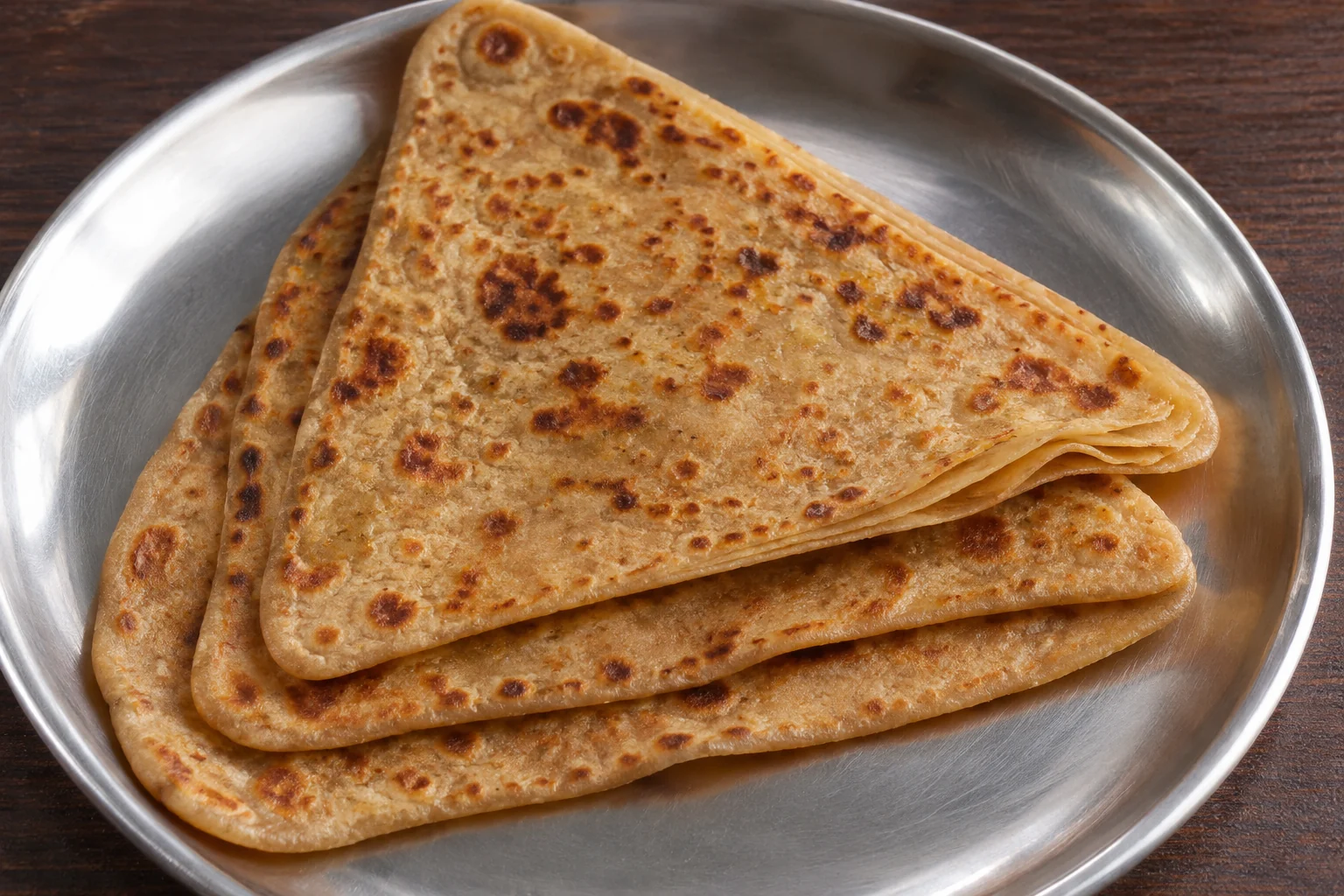
These triangular flatbreads get their layers from a simple pair of folds, with a thin film of oil and flour between them. They are rolled as individual breads rather than cut into wedges after cooking. Finely milled whole-wheat flour, a covered dough rest and a moderately hot griddle work together to keep the centers flexible while the outside develops brown spots. The schedule includes cooking all six breads in sequence.
Layered whole-wheat parathas makes 6 servings, with 1 hr 40 min estimated total time. View the standalone recipe page.
Divide the flour and oil before mixing
Set aside the measured flour for layering and rolling before making the dough, and keep those two portions separate. Do the same with the oil for the dough, layers and pan. This small preparation step keeps the shaping stage orderly: you can use what has been allocated without repeatedly reaching into a flour bag. Mix the dough flour with salt, warm water and its oil, then knead until it holds together smoothly. Finely milled flour is useful here because coarse bran can make the thin folded surfaces harder to roll evenly.
Give the covered dough its full rest
Cover the kneaded dough so the surface cannot dry into a skin, then leave it for thirty minutes. This rest is a working part of the method, not spare time to remove when you are in a hurry. The flour takes up water and the dough becomes easier to roll without springing back immediately. Divide it into six similar pieces afterward and keep the waiting portions covered. If one portion resists rolling, pause briefly while working with another rather than forcing it flatter with heavy pressure or repeatedly adding flour.
Fold each round into a layered triangle
Roll one piece into its initial round. Spread half of that bread's layering oil and flour thinly across the surface, fold it into a semicircle, then add the remaining half before folding again. The result is a triangle with rounded corners, not a tightly wound coil. Spread the oil rather than leaving a puddle at the fold, and distribute the flour as a fine dusting. Roll the folded piece gently to its final size and thickness, working toward the corners without crushing all the layers into a dense ridge.
Cook the corners as carefully as the middle
Heat a heavy griddle or skillet over medium heat before adding the first bread. Begin with the brief dry cooking stage, then turn it and apply its share of the pan oil to the two surfaces as directed. Look for scattered brown spots rather than a uniformly dark crust. Press the corners lightly with a spatula when they lift away from the pan; thick corners otherwise remain pale while the center finishes. Each bread needs several minutes, and later breads may require a lower burner setting if the pan keeps accumulating heat.
Stack briefly, then serve while flexible
Move each cooked paratha into a clean cloth-lined stack while finishing the others. The short covered stand softens the surface slightly without needing a heavy brushing of extra fat. Separate a corner gently to see the folded layers, but do not pull every bread apart before serving or they will cool faster. Refrigerate cooled leftovers in a covered container within two hours and use within three days. Rewarm in a skillet until hot, turning as needed. A long uncovered reheating session will dry these thin breads more than a brief warming does.
Common questions
Why does the dough keep shrinking when rolled?
It may need more covered resting time. Pause before rolling again, and use light passes of the pin rather than pushing harder. Keep the waiting pieces covered so a dry skin does not add further resistance.
Why are there dark spots but a doughy edge?
The pan may be too hot, or the corners may be thicker than the center. Lower the heat slightly, roll more evenly next time and press raised corners gently against the pan. Browning alone does not prove every folded edge is cooked.
Technique & food-safety references
These primary references support the technique, safety and storage guidance. The recipe and cooking explanations are original Recipe Pinboard content.


