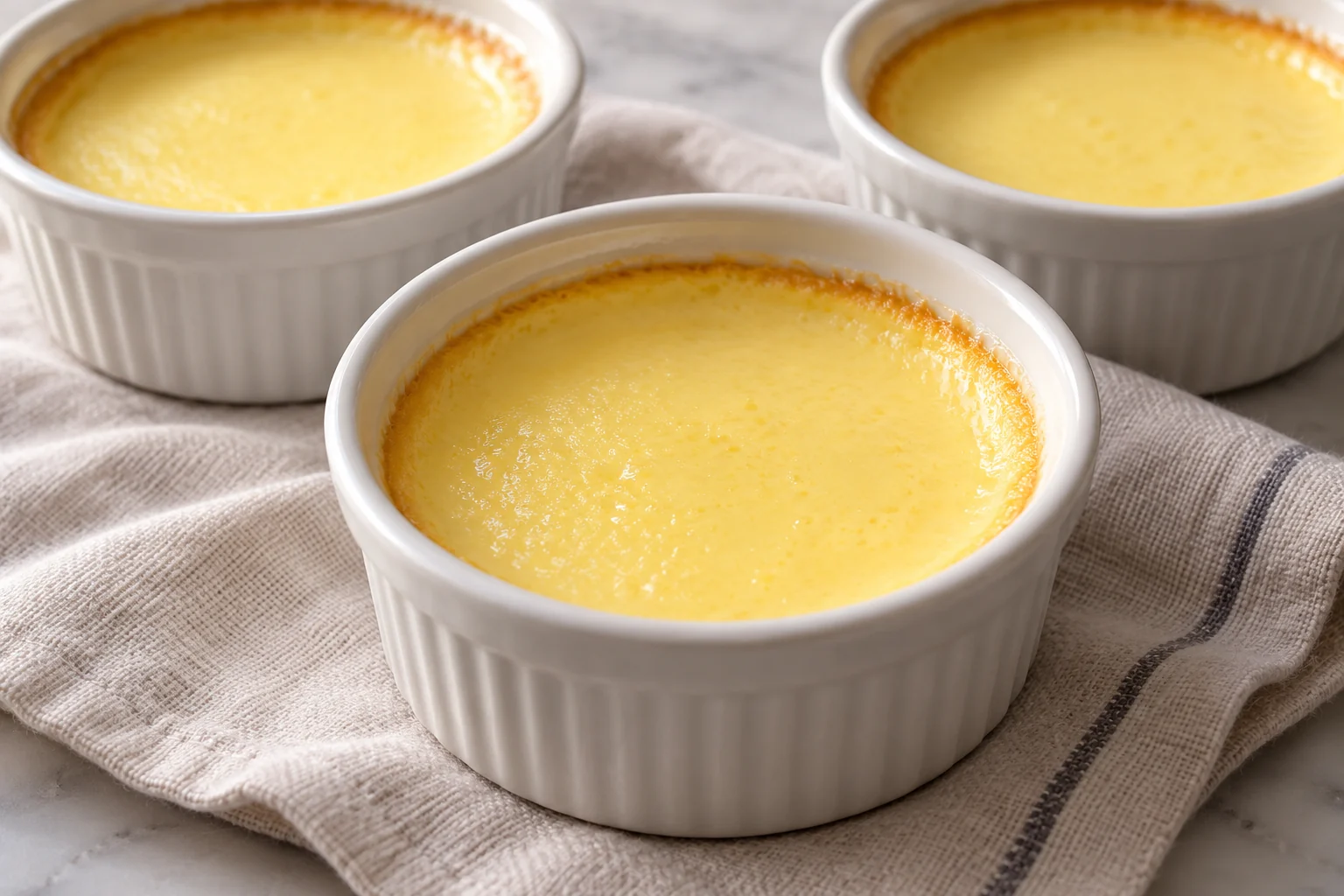
These small custards get lemon flavor from zest infused into milk rather than a large addition of acidic juice. Eggs set the mixture during a gentle bake, and chilling completes the serving texture. The recipe takes only a short period of active preparation, but the cooling and refrigeration time are essential parts of the total.
Lemon baked custard cups makes 4 servings, with 3 hr 30 min estimated total time. View the standalone recipe page.
Prepare the cups before heating milk
Use four ovenproof eight-ounce ramekins in a roasting pan with enough space to lift them safely. Larger-capacity cups leave useful headroom above the measured custard. Set a fine sieve and pouring jug nearby before warming the milk. This arrangement matters because the egg mixture needs attention once hot liquid is added. Grate only the colored lemon surface; thick strips of white pith can give a harsh flavor and are harder to strain. Weigh the zest rather than assuming every lemon provides the same amount.
Warm the milk without reducing it
Heat milk and zest until steaming, stirring occasionally, then remove it from the heat. A prolonged boil would evaporate part of the measured water and alter the balance between milk and eggs. Meanwhile whisk the weighed beaten egg with sugar gently. This is not a sponge batter: a thick foam is unnecessary and can leave bubbles on the finished surface. The approximate egg count is only a shopping guide; the shell-free mass is the canonical quantity used in the recipe.
Bring the two mixtures together gradually
Add a small amount of warm milk while whisking the eggs, then continue with the remainder in a steady stream. Keep the bowl stable and whisk through the entire mixture, including the edge. Pour through the sieve into a jug to remove zest and any stray firm egg strands. Divide the liquid equally among the four cups. A jug with a spout reduces spills on the rims and makes it easier to keep the cups at similar depths for even baking.
Use the water bath and a temperature check
Place the roasting pan on the oven rack before carefully adding hot water halfway up the ramekin sides. The bath moderates the heat around the cups. Bake until edges are set and centers tremble gently, checking for 160°F (71°C) in the center. A surface that looks completely rigid can indicate the custard has gone too far. Remove individual cups from the water with suitable heatproof grips, keeping hot water away from your hands and out of the custard.
Allow the full chill before judging texture
Cool the cups briefly on a rack, then refrigerate within two hours and chill for at least two hours before serving. Warm custard is more delicate than chilled custard, so do not use its first texture as a reason to bake it again. One cup is one of four portions, without cream or fruit toppings. Keep covered and use within three to four days. The calculation conservatively counts all measured zest even though it is strained out; no exact extraction percentage is invented.
Common questions
Why are there watery pockets or a grainy texture?
Overheating can make the egg mixture set unevenly. Keep the milk below a boil, combine it gradually with eggs, use the water bath and remove the cups when they reach the stated temperature rather than waiting for a completely rigid center.
Can I add lemon juice for a sharper flavor?
The recipe is formulated around zest-infused milk. Juice introduces acid and additional liquid, which can change the setting behavior. Develop and calculate that version separately instead of assuming the same custard ratio will behave identically.
Technique & food-safety references
These primary references support the technique, safety and storage guidance. The recipe and cooking explanations are original Recipe Pinboard content.


