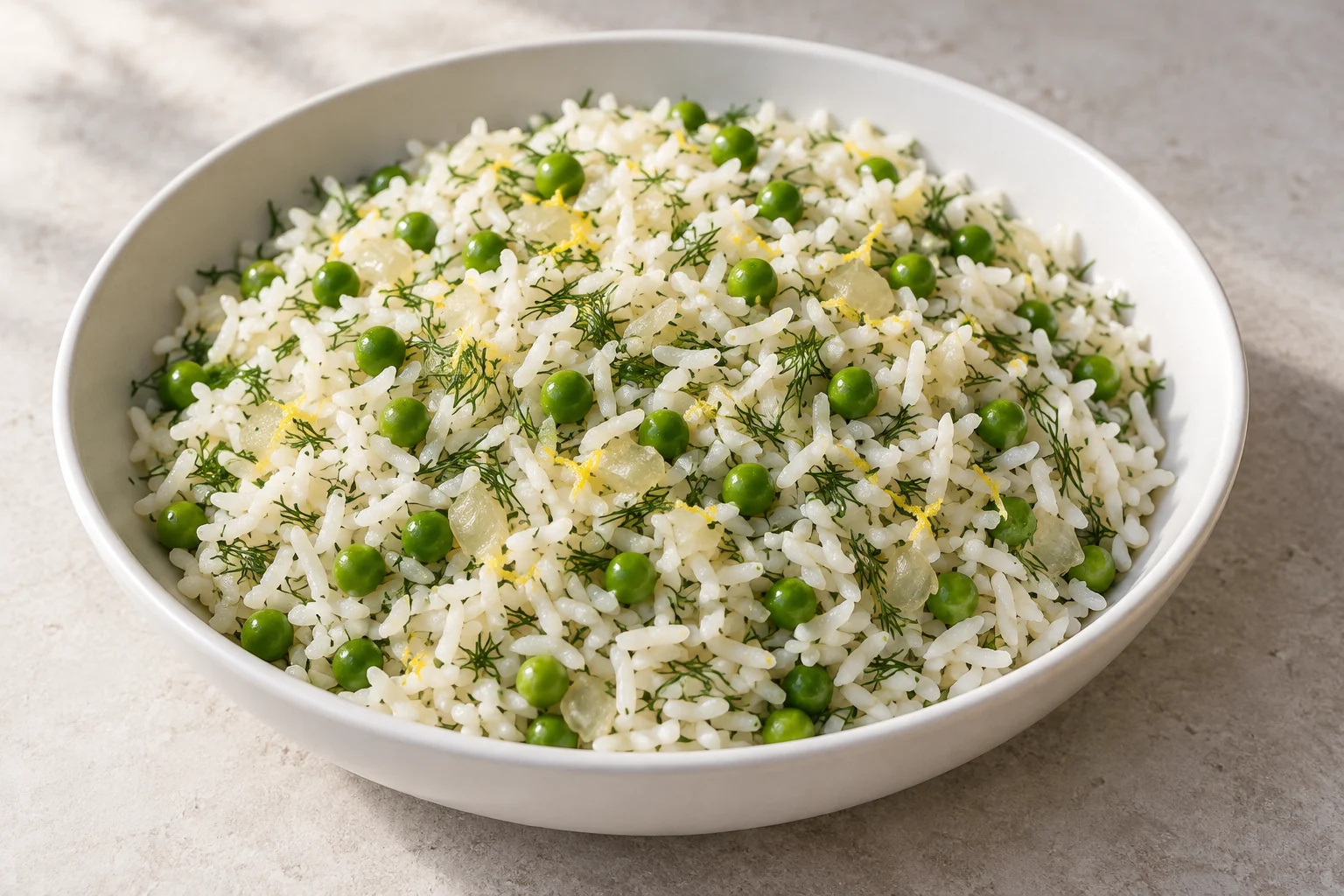
Rice with peas looks simple, but repeated stirring or a leaking lid can change the result more than a small seasoning adjustment. This recipe uses an absorption method: the rice cooks with measured water in a covered saucepan, then rests before fluffing. Lemon and dill enter at the end, while the peas get their own short heating stage on top of the rice.
Lemon-dill rice with peas makes 4 servings, with 45 min estimated total time. View the standalone recipe page.
Measure dry rice before rinsing
The recipe begins with 240 g dry long-grain white rice. Rinsing removes some loose surface starch, but soaking the rice for a long time would change how much water it takes up before cooking. Use a fine sieve and drain well after rinsing. Briefly stirring the rice through the softened onion and oil coats the grains without trying to brown them deeply. Choose a saucepan with a tight-fitting lid; a broad uncovered skillet loses water at a different rate and is not an equivalent vessel for this method.
Lower the heat once the water boils
Bring the water and rice to a boil, then cover and reduce to the lowest heat that maintains a gentle simmer. A vigorous boil can drive off water too quickly and leave the bottom dry while the upper grains stay firm. Resist lifting the lid to watch the progress. Escaping steam is part of the cooking system, and frequent opening makes timing less predictable. Keep the pot on a burner suited to its base rather than using a flame or heating zone much wider than the saucepan.
Add frozen peas quickly and replace the lid
At fifteen minutes, scatter the peas across the surface without stirring through the partly cooked rice. Replace the lid promptly and give them five minutes of gentle heat. This keeps their cooking period shorter than the rice’s full simmer. Check that the grains are tender and the water is absorbed. If the rice is still firm and dry, add the stated small splash of hot water and continue covered for a few minutes. This adjustment addresses evaporation differences; it does not mean an arbitrary large pour of water is needed.
Rest before folding in dill and lemon
The five-minute covered rest lets moisture distribute through the grains after direct heat stops. Then use a fork to lift and loosen, folding the peas, dill, lemon juice and zest through gently. Vigorous stirring can break grains and release more starch, making the mixture feel sticky. Fresh dill has a delicate texture, so remove tough stalks and chop the tender parts finely. Zest only the colored lemon surface. The bitter white pith is not the ingredient intended by the small two-gram zest quantity in the card.
Cool leftovers promptly in shallow containers
Cooked rice should not sit in the warm saucepan for a long cooling period. Divide leftovers into shallow containers and refrigerate promptly, within two hours of cooking, or one hour if the surroundings exceed 90°F (32°C). Keep the refrigerator at 40°F (4°C) or below. Use within three to four days and reheat to 165°F (74°C), checking that the center is hot. Reheating is not a way to rescue rice left out too long. The four servings are side-dish portions; additional proteins or sauces have separate nutrition.
Common questions
Why is the rice sticky instead of fluffy?
Too much water, frequent stirring, a different rice variety or skipping the rest can all contribute. Use the specified long-grain rice, drain after rinsing and leave the lid closed during the main simmer. Fluff with a fork rather than beating the grains together.
Can brown rice use the same method and timing?
Brown rice needs different water and cooking time. It is not a direct substitution in this forty-five-minute recipe. Use the published white rice for the stated card and nutrient profile, or follow a separately developed brown-rice method.
Technique & food-safety references
These primary references support the technique, safety and storage guidance. The recipe and cooking explanations are original Recipe Pinboard content.