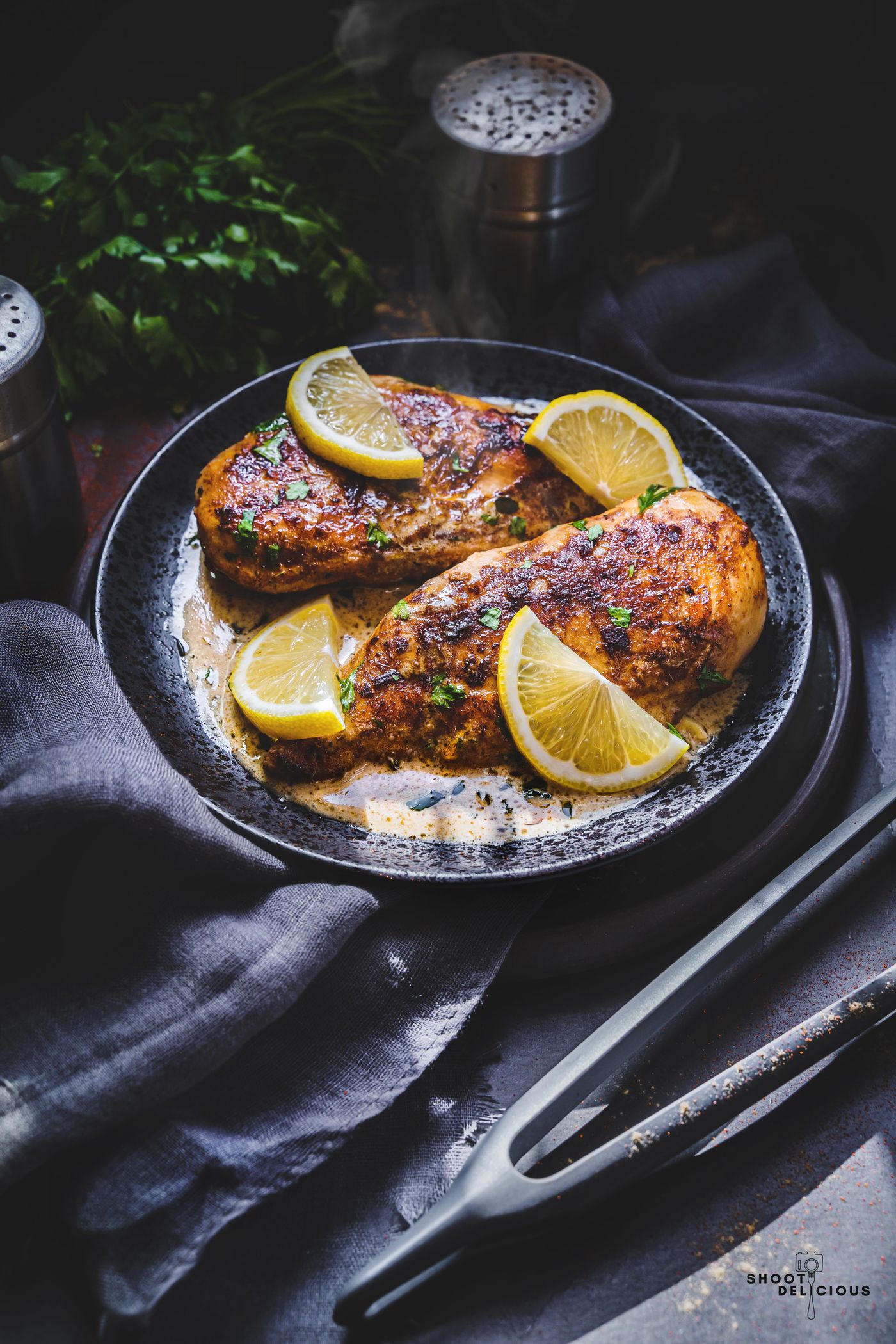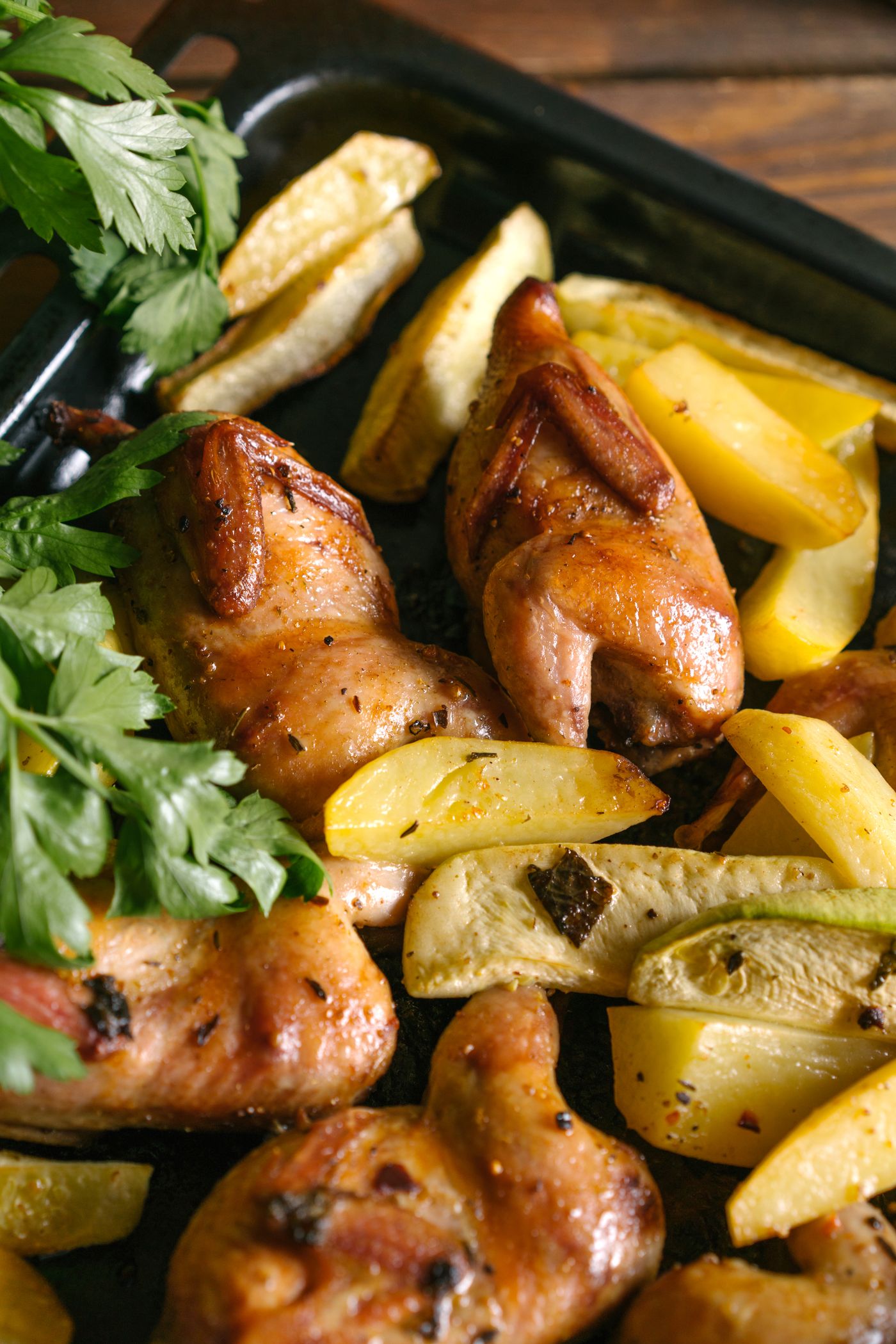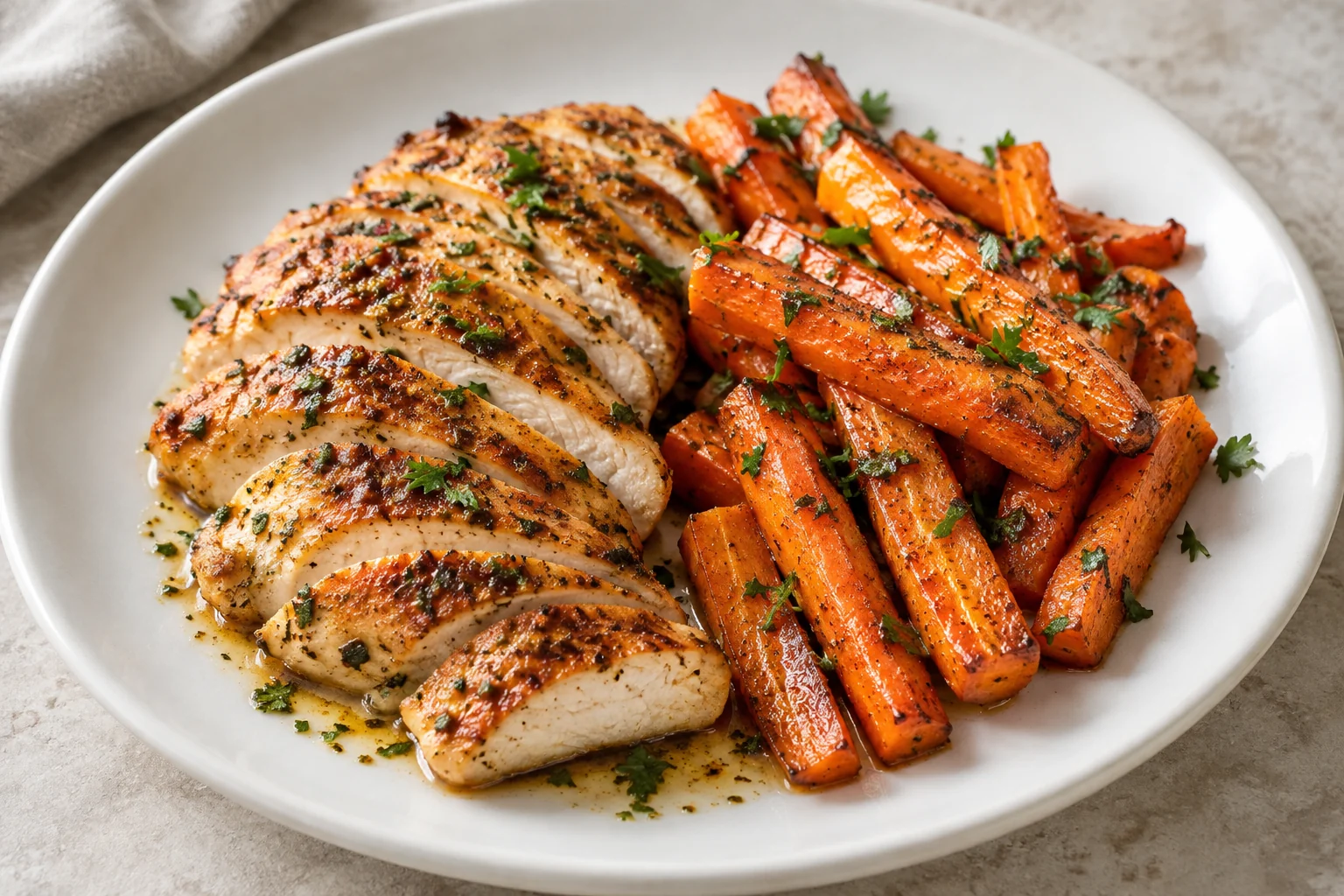
Chicken breast and carrot batons do not need identical roasting time. Starting the carrots first lets them soften while the chicken stays out of the oven, then an even chicken thickness makes the second stage more predictable. Lemon and parsley finish the dish after cooking, keeping a fresh note alongside the browned vegetables rather than burning on the hot tray.
Roasted lemon-parsley chicken & carrots makes 4 servings, with 55 min estimated total time. View the standalone recipe page.
Cut the carrots for the schedule
The stated timing assumes batons about half an inch thick, not whole carrots or very fine shreds. Split especially thick lengths before cutting them into shorter pieces so the center of every baton is a similar distance from the hot surface. Dry the carrots after peeling and rinsing. Water clinging to them must evaporate before their surfaces can brown. Spread the oiled pieces out on the tray rather than stacking them, and use another tray if the available pan is too small.
Make the chicken thickness more even
Four portions of equal weight can still cook at different speeds if one has a tall thick end. Gently flatten those thick ends to the stated thickness on a board reserved for raw poultry. Do not pound the entire piece into a paper-thin cutlet, which would need a different schedule. Keep the prepared chicken separate from the washed parsley and serving utensils. Wash hands and contact surfaces after handling it. Rinsing raw chicken spreads splashes around the sink without replacing the need for safe cooking.
Combine the trays at the right moment
After the carrot head start, turn the batons so another side meets the tray and make room for the chicken. The chicken should lie flat rather than sitting on a thick carrot mound. If using two trays, rotate their positions when appropriate for an uneven oven and check each separately. Oven temperature and food thickness affect the actual finish time. The card gives a range because a timer cannot tell whether the coldest center of a particular breast has reached the required temperature.
Check the thickest center, then rest
Insert a food thermometer from the side toward the middle of a breast, avoiding contact with the hot tray. Check all four pieces rather than assuming the smallest sample represents the whole batch. Each must reach 165°F. If the chicken is ready before the carrots, transfer it to a clean plate while the vegetables finish. The carrots should be easy to pierce. The short rest allows the chicken to settle before slicing, but it is not a substitute for reaching the required temperature first.
Finish with lemon and parsley off the heat
Add the lemon juice and chopped parsley after roasting, then distribute the vegetables and pan juices evenly. This keeps chopped herbs from becoming black specks on the tray and lets the citrus remain distinct. Slice the chicken across the muscle fibers if serving it in strips, or keep each weighed breast as one portion. Store leftovers in shallow containers rather than leaving a full hot tray on the counter until completely cold. When reheating, check the center and follow the temperature guidance in the card.
Common questions
Can I use very thick chicken breasts without flattening them?
They will need a different cooking time and may finish after the carrots. The published schedule assumes the stated thickness; use a thermometer and remove components separately when ready.
Why are the carrots pale?
Crowding, wet surfaces and a cool oven favor steaming. Space the batons out and verify tenderness before extending cooking solely for more color.
Technique & food-safety references
These primary references support the technique, safety and storage guidance. The recipe and cooking explanations are original Recipe Pinboard content.