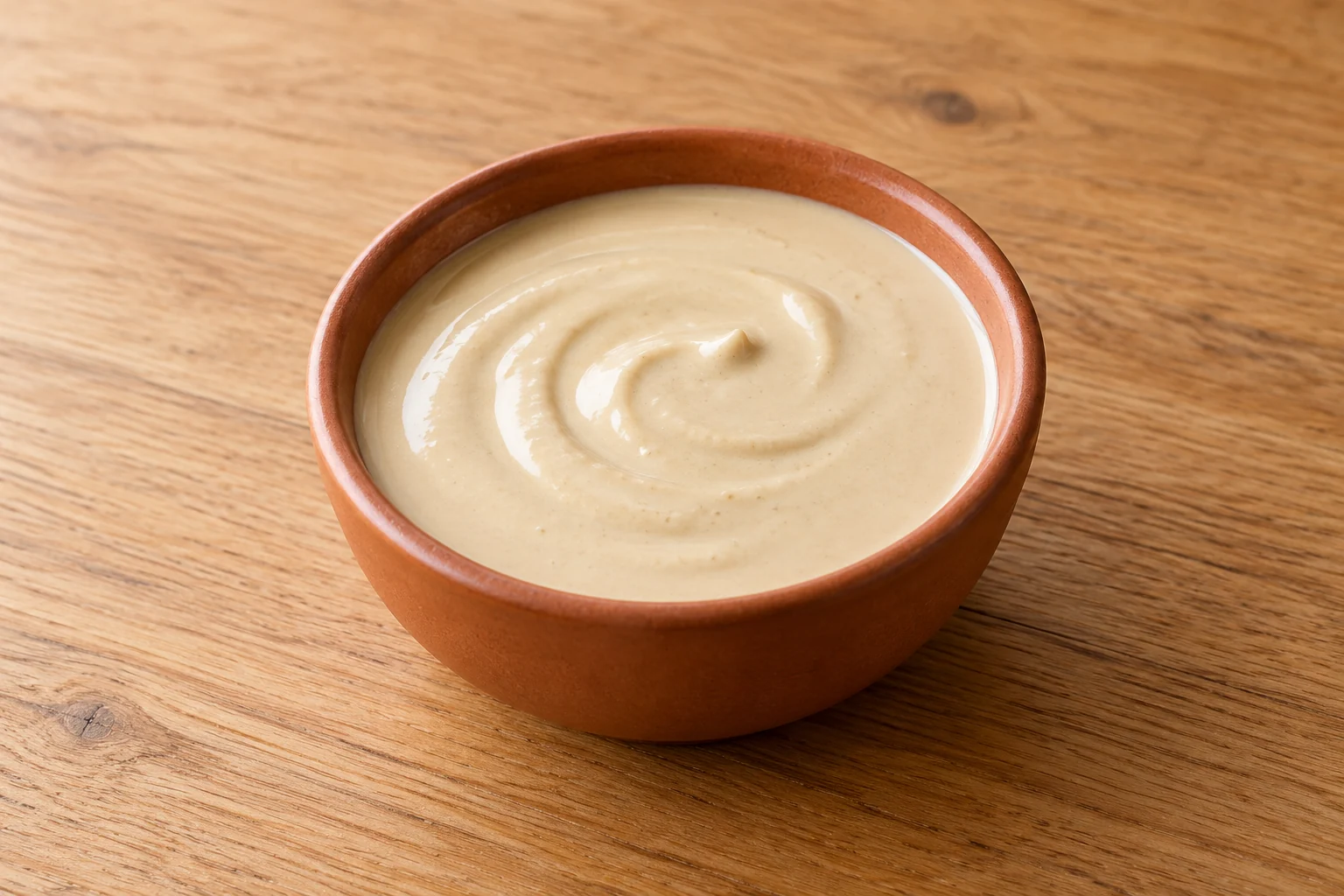
Lemon tahini sauce has a very short ingredient list, but its texture can look surprising during mixing. The sesame paste may tighten as soon as lemon juice is added, even though the goal is a pourable sauce. That intermediate stage does not automatically mean something went wrong. This recipe builds the sauce in a bowl with a whisk, then uses measured water to bring it to the consistency you need.
Lemon tahini sauce makes 6 servings, with 10 min estimated total time. View the standalone recipe page.
Stir the jar before you measure
Plain tahini should list sesame seeds as its ingredient. Oil separation in the jar makes the top much looser than the dense paste at the bottom. Stir the jar thoroughly before weighing the recipe’s 80 g; otherwise, one batch can be oily and another unusually stiff even when the scale shows the same amount.
Use a bowl with enough space to whisk energetically without splashing. Have the lemon juice and water measured separately. Keep the garlic finely grated so it disperses through the sauce instead of leaving an occasional sharp chunk. This is a raw-garlic sauce, so its small measured amount is deliberate; more garlic is a flavor change, not a requirement.
Expect the paste to tighten briefly
Whisk the tahini with lemon juice, garlic and salt first. The mixture can become thick, grainy-looking or almost dough-like as the aqueous ingredients meet the sesame paste. Keep mixing long enough to distribute them before deciding on the final texture. Adding extra oil at this stage would alter the recipe rather than solve the intended water balance.
Begin adding the 60 g water a little at a time while whisking. Scrape the sides of the bowl so no dense paste is left behind. As the water is incorporated, the mixture becomes lighter and smoother. A spoon can help press out a stubborn pocket, but vigorous whisking is generally the useful tool for this small batch.
Stop at the texture suited to your meal
For a spoonable topping, the initial water amount may be enough. For a sauce that falls in a ribbon, add the optional additional water in small increments, up to the stated 20 g. The amount you use depends on the original tahini, the temperature and how you intend to serve it. The sauce should remain cohesive rather than separating into a watery puddle.
Test a little sauce on a spoon or on the food you are about to serve. A thin coating for roasted vegetables is different from a thicker layer inside a sandwich. Do not keep diluting while the sauce is still partly unmixed: give each addition time to incorporate, then check again. This prevents overshooting the desired consistency.
Keep the recipe’s yield separate from the meal
The finished batch makes six small sauce portions, roughly 30–33 g each depending on the extra water. Divide the actual finished sauce evenly rather than assuming a tablespoon is an exact weight. The food you dress with it is not included in the sauce’s yield or ingredient calculation.
Bowls, vegetables and salads are serving ideas, not automatic dietary classifications. Tahini contains sesame, and a plant-based sauce is not an assurance of allergy safety. If you are using a dietary collection, check the specific product label and any food served alongside it. Substituting yogurt, nut butter or another seed paste would require a different recipe review.
Allow for thickening in the refrigerator
Refrigerate the sauce promptly in a clean covered container and follow the short storage period in the recipe. Cold sauce often becomes thicker. Stir it first after taking it out, then add a small splash of water if it needs loosening. That is a texture adjustment, not a way to rescue sauce that was held too long at room temperature.
Use a clean spoon each time and avoid returning sauce from someone’s plate to the storage container. Fresh lemon and raw garlic do not make this shelf-stable. The recipe is convenient for making a small amount ahead, but it still belongs in the refrigerator when it is not being served.
Common questions
Did I ruin the tahini when it became stiff?
Usually that is an intermediate mixing stage. Add the measured water gradually and whisk thoroughly. If the original tahini was not stirred in its jar, first account for that uneven oil-to-solid balance rather than pouring in unlimited water.
Can I use bottled lemon juice?
The written recipe uses fresh lemon juice for its flavor. A bottled product can taste different and may have additional ingredients. It is not needed to make the sauce safe for room-temperature storage; this remains a refrigerated fresh sauce either way.
Technique & food-safety references
These primary references support the technique, safety and storage guidance. The recipe and cooking explanations are original Recipe Pinboard content.