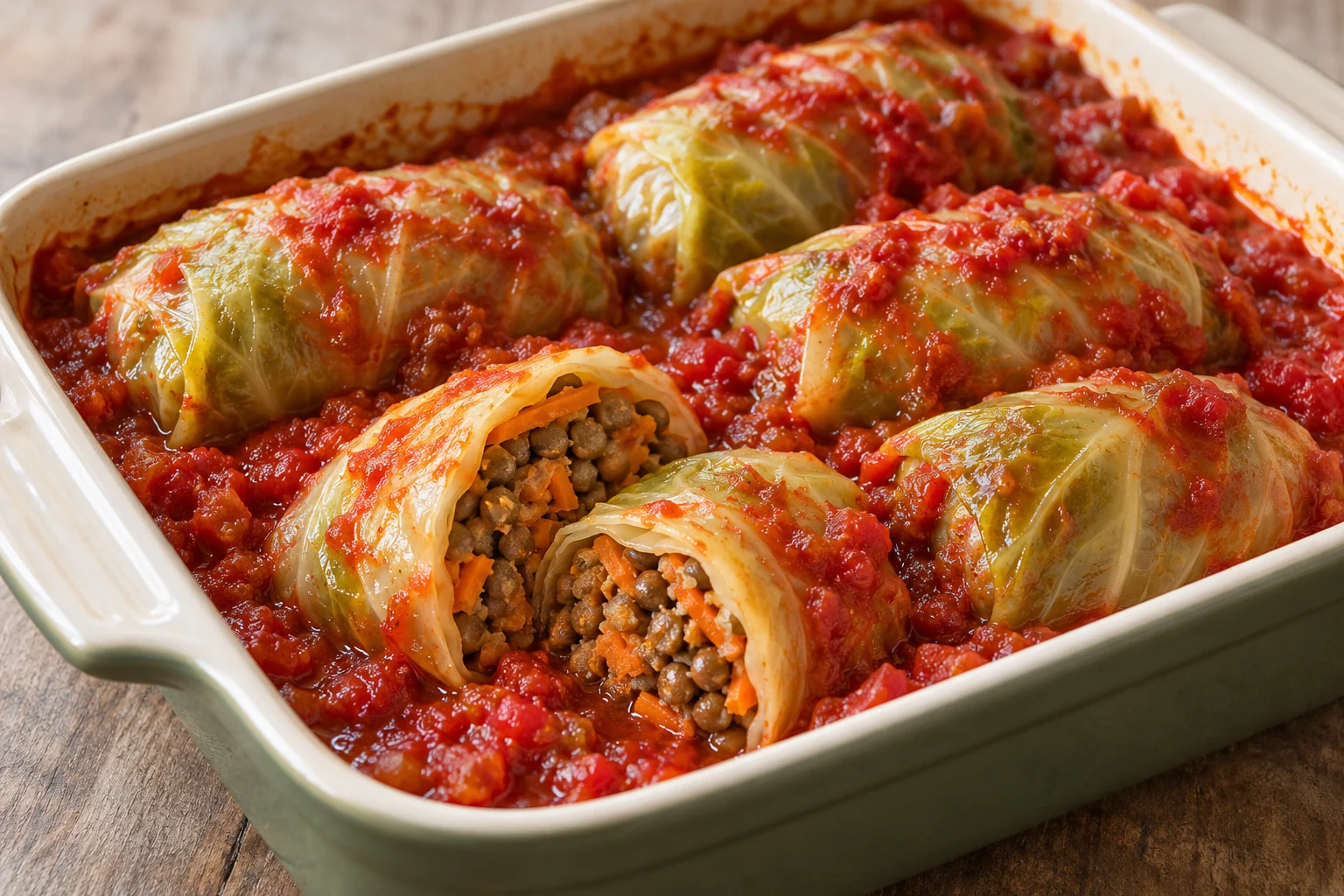
Cabbage rolls need a leaf that bends, a filling that is already tender, and moisture around the rolls while they bake. This version uses lentils and carrot rather than raw meat or rice. The full recipe card specifies eight rolls and four servings. Use the steps below to prevent torn wrappers, crunchy lentils and dry exposed edges without changing the measured ingredients.
Lentil & carrot cabbage rolls makes 4 servings, with 2 hr 10 min estimated total time. View the standalone recipe page.
Select leaves large enough to wrap
Use eight broad outer leaves and weigh the edible leaves with the ribs that will be trimmed. Very small inner leaves cannot enclose the same amount of filling without tearing. Blanch the leaves until they bend around a spoon handle, then drain them. Shave the thick rib down level with the leaf rather than cutting a deep hole through it. The shaved pieces are chopped into the filling base, so the weighed cabbage remains part of the finished recipe.
Cook the lentils before assembly
Use brown or green lentils, not split red lentils that break down differently. Simmer them in the specified portion of water until tender enough to bite without a hard center. Do not expect the covered baking stage to finish a batch of raw or very undercooked lentils inside tightly folded leaves. Keep any remaining cooking liquid for the sauce. This preserves the recipe’s liquid accounting and avoids silently discarding a portion of the listed food mixture.
Make the filling easy to portion
Soften the onion and chopped ribs in the measured oil, then cook the finely grated carrot. Small vegetable pieces blend with lentils and do not poke through the leaf as bulky cubes might. Mix the cooked vegetables and drained lentils thoroughly so seasoning is distributed. Let the filling stop steaming heavily before handling the wrappers. Divide it into eight equal mounds before rolling; that is easier than discovering the last two leaves have too little filling.
Roll snugly without stretching
Lay a leaf with the trimmed stem end nearest you. Place one filling mound near that end, fold the sides inward, and roll forward to enclose it. The leaf should wrap snugly without being pulled taut. Put each roll seam-side down in the sauced dish so its own weight helps keep it closed. If a leaf has a small tear, position the overlap over it. A badly split wrapper can be patched with an edible leaf fragment, with portions still divided evenly.
Cover for a moist bake
Spoon sauce over all the rolls, including exposed edges, and cover the dish tightly. A loose cover can let the sauce reduce before the cabbage becomes tender. Check both leaf texture and center temperature near the end of the range. The filling should reach 165°F (74°C), and a fork should cut the cabbage comfortably. Rest ten minutes before serving two rolls with one-quarter of the sauce. Cool leftovers in shallow containers and refrigerate within two hours.
Common questions
Why are the leaves tough after baking?
They may not have been blanched until flexible, or the dish may have lost too much moisture. Thick ribs also resist softening. Check those steps before extending the bake indefinitely; keep the dish covered while the leaves finish.
Can I omit the sauce?
The sauce supplies much of the moisture needed during baking and is included in the portion calculation. Leaving it out creates a different dish and can dry the wrappers. Serve each portion with its share rather than leaving most of it behind in the pan.
Technique & food-safety references
These primary references support the technique, safety and storage guidance. The recipe and cooking explanations are original Recipe Pinboard content.


