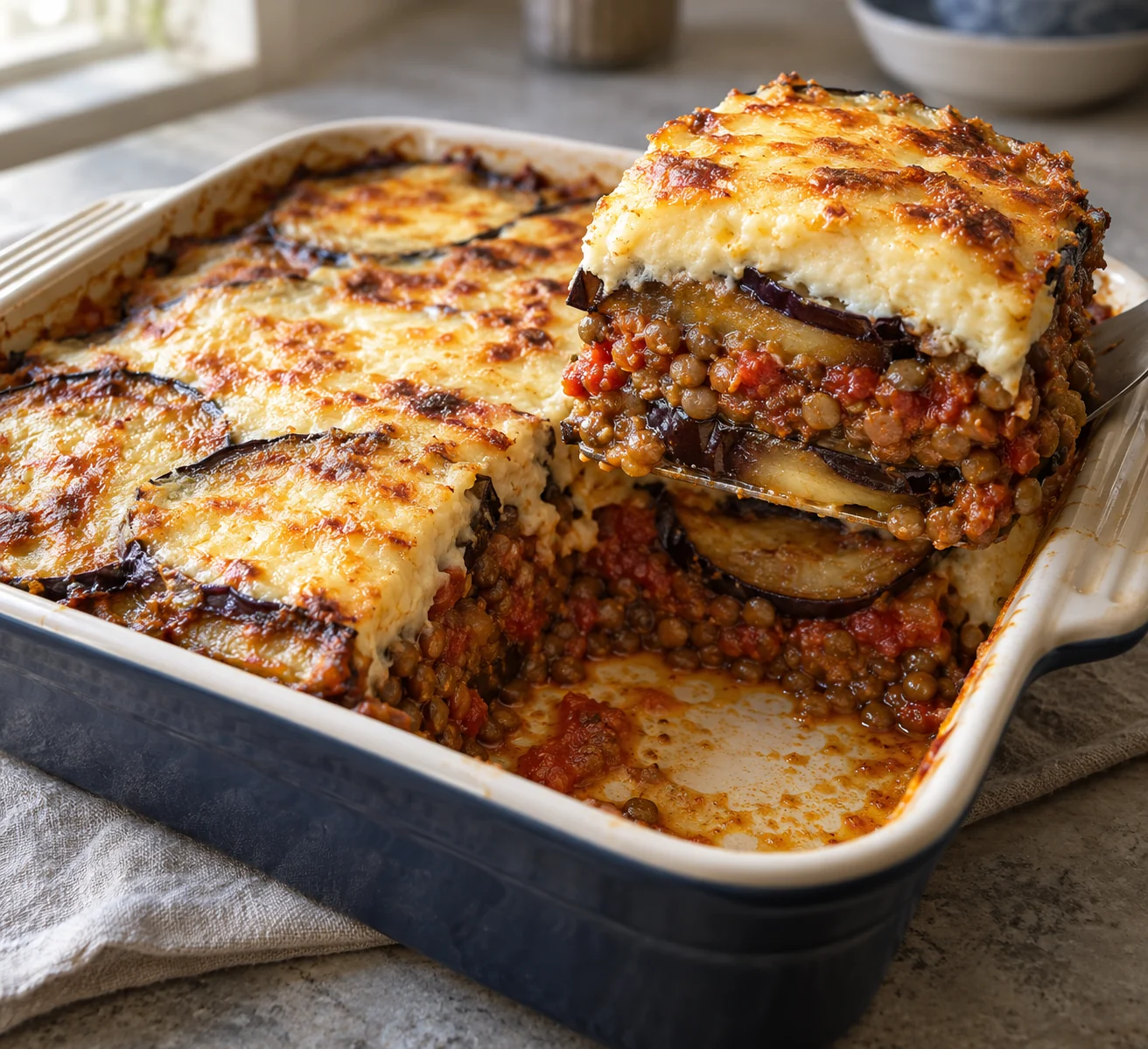
This meatless moussaka uses roasted eggplant, a concentrated lentil-tomato filling and a yogurt-and-egg topping. It is an original variation rather than a claim to one traditional formula. Each component needs the right texture before assembly: tender eggplant, drained lentils and sauce thick enough to stay where it is spread. The final bake sets the topping, while the twenty-minute rest makes serving easier. Expect soft, moist portions rather than rigid cake-like squares. All six servings include the vegetables, filling and topping in equal shares.
Lentil & eggplant moussaka makes 6 servings, with 2 hr 25 min estimated total time. View the standalone recipe page.
Roast the eggplant before building layers
Cut the trimmed, skin-on eggplant into reasonably even rounds. Thin pieces can dry while thick pieces remain spongy, so consistency matters more than making every slice perfectly circular. Brush both faces with the measured oil and spread them across the trays without heavy overlap. Turn once during roasting. The flesh should be tender enough to bend and yield to a fork. Raw or barely softened eggplant would need more cooking than the topping can tolerate, so do not assume the assembled casserole will fix an undercooked first layer.
Cook the entire measured lentil batch
The card specifies dry brown or green lentils. Simmer them until tender, adding plain water if the pan becomes dry before they soften. Drain thoroughly and use all the cooked solids. The nutrient estimate counts the original dry amount and does not invent a precise loss of dissolved nutrients into the cooking water. Replacing that quantity with the same weight of cooked lentils would produce far less filling. Split red lentils also behave differently: they break down more readily and would change the texture of the tomato layer.
Reduce the sauce until it mounds softly
Soften the onion in the separate measured portion of olive oil before briefly cooking garlic and spices. Add all the crushed tomatoes and their liquid, then simmer until the sauce thickens. Stir around the pan's edges, where tomato can catch as water evaporates. Once the lentils are mixed in, a spoonful should mound softly rather than release a watery ring. This is the main defense against a loose casserole. Extra flour or bread crumbs are unnecessary and would change both the ingredient list and the gluten-free conditions.
Spread a smooth topping over the second eggplant layer
Whisk the whole-milk Greek yogurt, eggs and finely grated cheese until evenly combined. Use vegetarian-rennet Parmesan-style cheese as specified; the vegetarian tag depends on that label choice. Spread the topping gently over the upper eggplant layer without stirring it into the lentils. The square dish needs the stated depth so the mixture has room to cook without spilling. There is no separate layer of potato or zucchini in this version. A smooth, even topping cooks more consistently than a thick mound in the center.
Bake through, then give the filling time to settle
Check the center reaches 165°F and that the topping is set, with light browning rather than a liquid wobble. Let the dish stand for the full twenty minutes before serving. Cutting immediately allows steam and loose juices to escape into the first gap, making later portions uneven. Use a broad spatula that supports the bottom eggplant layer. Refrigerate leftovers promptly in shallow containers and reheat to 165°F. The measured oil is used on the eggplant and in the sauce; no extra greasing or finishing drizzle is included.
Common questions
Why is there liquid in the bottom of my moussaka?
The lentils may not have drained fully, the tomato sauce may have been too thin or the dish may have been cut too soon. Address those steps before adding a thickener. A small amount of vegetable juice is normal in a moist casserole.
Can I use ordinary plain yogurt?
The recipe uses thick whole-milk Greek yogurt. A thinner yogurt brings more water and may give a looser topping. Substituting it changes the formulation and nutrition assumptions; do not expect identical results from the same weight.
Technique & food-safety references
These primary references support the technique, safety and storage guidance. The recipe and cooking explanations are original Recipe Pinboard content.


