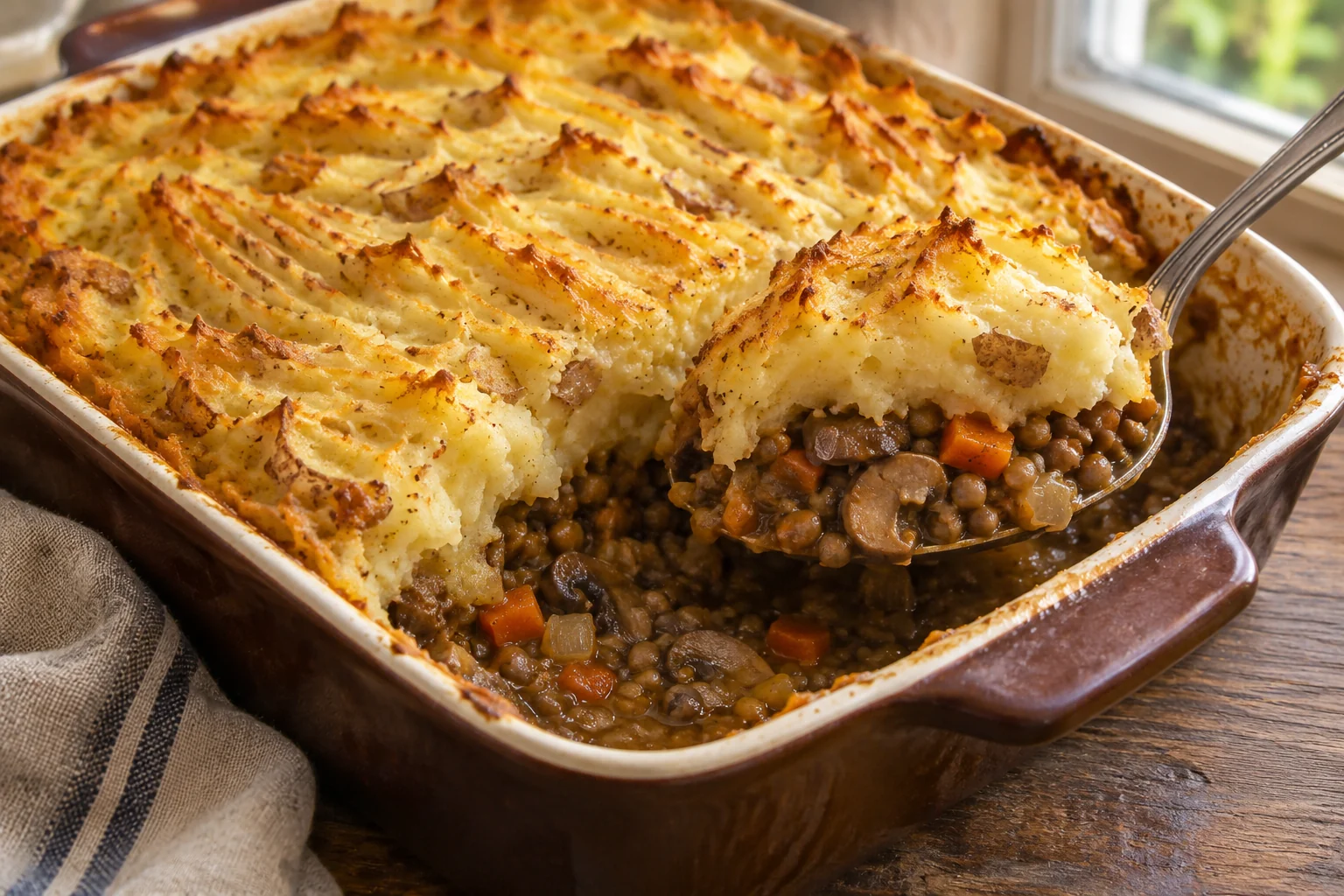
A good lentil shepherd's pie needs a filling that is thick enough to support its potato lid without becoming dry. Here, tender lentils and chopped mushrooms provide contrasting textures beneath a skin-on mash. The vegetables and potatoes can cook while the lentils simmer, making the schedule manageable. The final bake heats the layered dish through and gives the forked potato ridges their golden edges.
Lentil and mushroom shepherd's pie makes 6 servings, with 2 hr 15 min estimated total time. View the standalone recipe page.
Cook the lentils until fully tender
Pick over the dry lentils, rinse them and simmer them gently in the measured water. Brown or green lentils hold enough shape for this filling; split red lentils would behave differently. Test several near the end because older lentils can take longer to soften. There should be no hard center. Keep the remaining liquid with them, then reduce it by simmering if needed. The aim is a cohesive filling rather than drained lentils scattered under mashed potatoes. Stir occasionally as the pot thickens to prevent catching on the bottom.
Let mushroom moisture evaporate
Give the onion and carrot a head start so their small pieces soften before the mushrooms go in. Mushrooms release water as they heat; allow that moisture to mostly evaporate before adding tomato paste. This prevents the filling from becoming diluted later. Stir the paste and thyme briefly through the vegetables, then add the cooked lentils and their liquid. The mixture should sit in a soft mound on a spoon. If it immediately spreads into a thin puddle, simmer it a little longer before assembling the casserole.
Make a mash that spreads without running
Cut potatoes into similar chunks and boil until they crush easily. Drain well and let steam escape before mashing with the measured milk and butter. Water clinging to the potatoes can make the topping loose. The skins stay in this version; finely chop any large pieces and fold them back through the mash so they do not drag long trails when spreading. Use a masher rather than a blender or food processor. Excessive mechanical mixing can make the potato texture sticky instead of light enough to spoon.
Layer in a deep dish and create shallow ridges
Use the specified deep four-quart dish so the filling and topping have adequate headroom. Spread the lentil mixture evenly, then place spoonfuls of mash across the whole surface before joining them. This is easier than pushing one large mound from the center toward the edges. Bring the potato to the sides to limit exposed filling, and draw a fork lightly across the top. Shallow ridges brown attractively; deep furrows can expose the filling and let it bubble through. Set the dish securely on the oven rack.
Check the center and allow the pie to settle
Bake until the topping has golden patches and the middle reaches 165°F. A bubbling edge is useful evidence of heat but does not measure the center. Rest the casserole for fifteen minutes before serving so the filling is less likely to flow out from beneath the mash. Use a wide serving spoon to lift both layers together. Refrigerate leftovers in shallow containers within two hours, use within three to four days and reheat to 165°F. Covering during reheating helps keep the potato from drying out.
Common questions
Why does the potato topping sink into the lentils?
A very loose filling cannot support it well. Reduce the filling until thick and spoonable, then distribute small dollops of mash across the surface before spreading them together gently.
Can I use red lentils instead?
Red lentils break down more readily and produce a softer base. This method uses brown or green lentils for visible texture and structure. Use those varieties for the intended cooking cues and layered result.
Technique & food-safety references
These primary references support the technique, safety and storage guidance. The recipe and cooking explanations are original Recipe Pinboard content.


