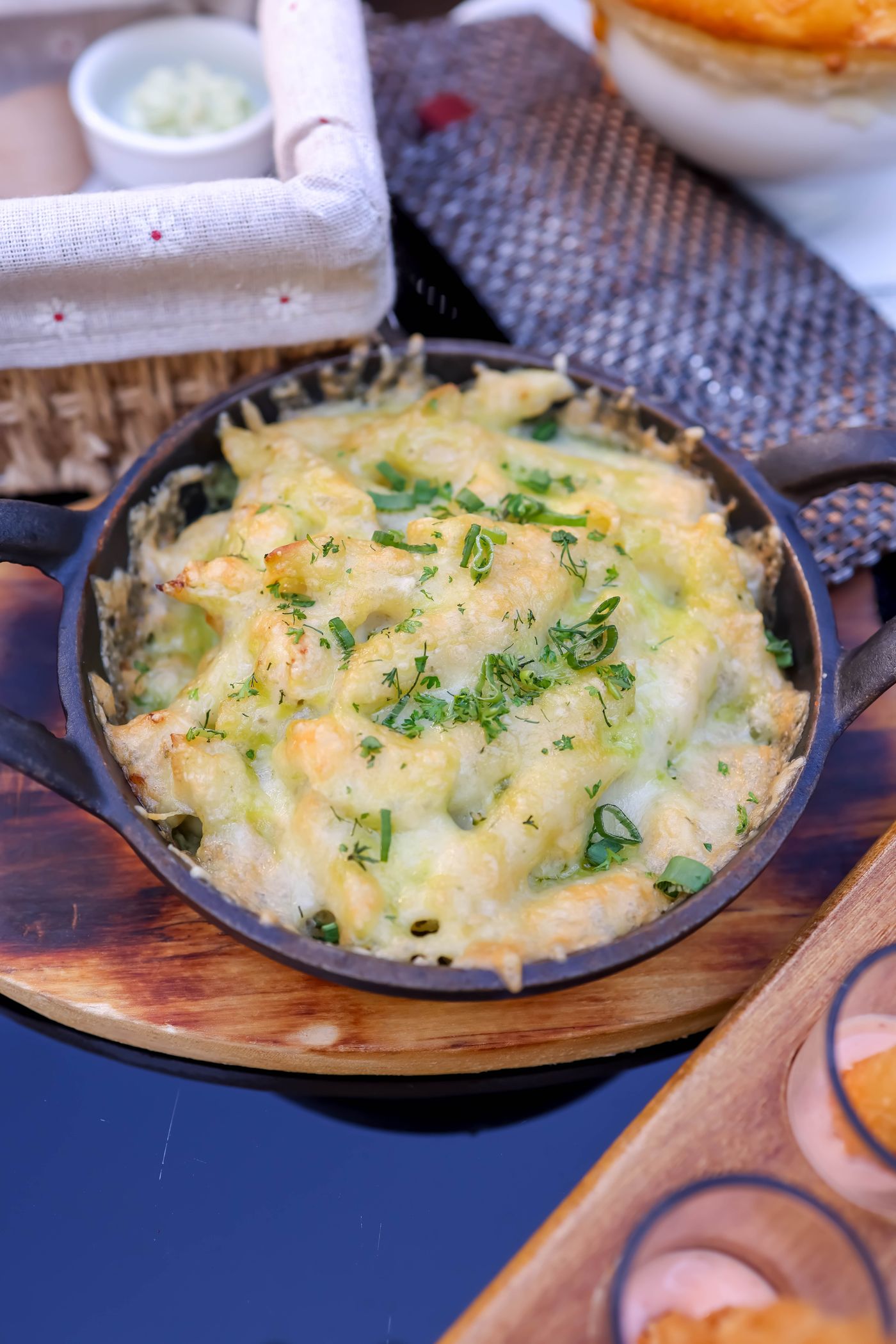
This macaroni and cheese uses a flour-thickened milk sauce rather than cream. Mild cheddar melts into that sauce, while mozzarella forms the top and scallions appear both inside and after baking. The main texture decisions happen before the dish reaches the oven: stop the pasta early, whisk the milk gradually, and remove the sauce from direct heat before adding its cheese.
Baked macaroni & cheese with scallions makes 6 servings, with 45 min estimated total time. View the standalone recipe page.
Set aside the dish butter before building the sauce
Grease the two-and-a-half-quart baking dish with the separate 5 g softened butter. Keep the full 40 g sauce butter for the roux, where it pairs with 40 g flour. Borrowing from that amount to grease the dish would change the planned sauce proportions.
Heat the oven to 375°F and organize the grated cheeses separately: 220 g mild cheddar goes into the sauce, and 80 g mozzarella goes on top. Slice the three scallions and divide them into two roughly equal portions. Having these ready helps you work continuously when the sauce is hot.
Drain the macaroni before it is fully finished
Cook the 350 g dry macaroni for two minutes less than its package time. This deliberate shortfall allows for further cooking in the sauce during baking. The pasta should not spend an extra few minutes in the water while you finish grating cheese.
Drain and keep it ready for the sauce. Avoid letting a deep pile of cooked pasta sit untouched for a long time, when it can cling together. Coordinate the stages so the macaroni is drained near the end of the sauce preparation rather than finishing it well before any other component is underway.
Build a smooth milk sauce before adding cheese
Melt the 40 g butter over medium heat, stir in the flour and cook for one minute. Work the flour into the butter evenly instead of leaving dry clumps around the saucepan. This is a short roux stage, not a direction to develop a dark brown roux.
Whisk in the 600 ml whole milk gradually. The mixture may initially look thick; smooth that portion before adding more milk. Sweep the whisk into the corners and across the bottom during the four-to-five-minute simmer. It should thicken evenly, without a scorched layer underneath or separate floury lumps.
Melt cheddar off the burner, then assemble
Remove the thickened sauce from the heat before stirring in the cheddar, Dijon mustard, salt and pepper. Stir until the cheese is distributed through the hot sauce. Continuing a vigorous boil after adding cheese is unnecessary and makes the texture harder to control.
Fold the sauce and half the scallions through the macaroni, reaching the bottom of the bowl or pot. Transfer to the prepared dish and distribute the mozzarella over the surface. Spread the pasta evenly so one deep mound does not remain cooler while the shallow edges become dry.
Judge the center, not only the browned top
Bake for twenty to twenty-five minutes until hot and lightly golden, with the center at 165°F. Check in the pasta mixture without touching the baking dish with the thermometer tip. Scatter the remaining scallions after baking for a fresh contrast to those softened inside.
Refrigerate leftovers promptly in shallow covered containers within two hours, or one hour above 90°F. Use within three to four days and reheat to 165°F. A little water can help loosen a refrigerated portion, but prolonged heating will not restore the original sauce if it has already dried around the edges.
Common questions
Why is the cheese sauce lumpy?
Flour pockets can persist if milk is added too quickly without whisking. Smooth each addition during the milk stage, then add cheddar after removing the saucepan from the heat.
Do both cheeses go into the sauce?
No. The 220 g cheddar is stirred into the sauce; the 80 g mozzarella is the topping. This separation gives a creamy interior and a distinct melted surface.
Technique & food-safety references
These primary references support the technique, safety and storage guidance. The recipe and cooking explanations are original Recipe Pinboard content.