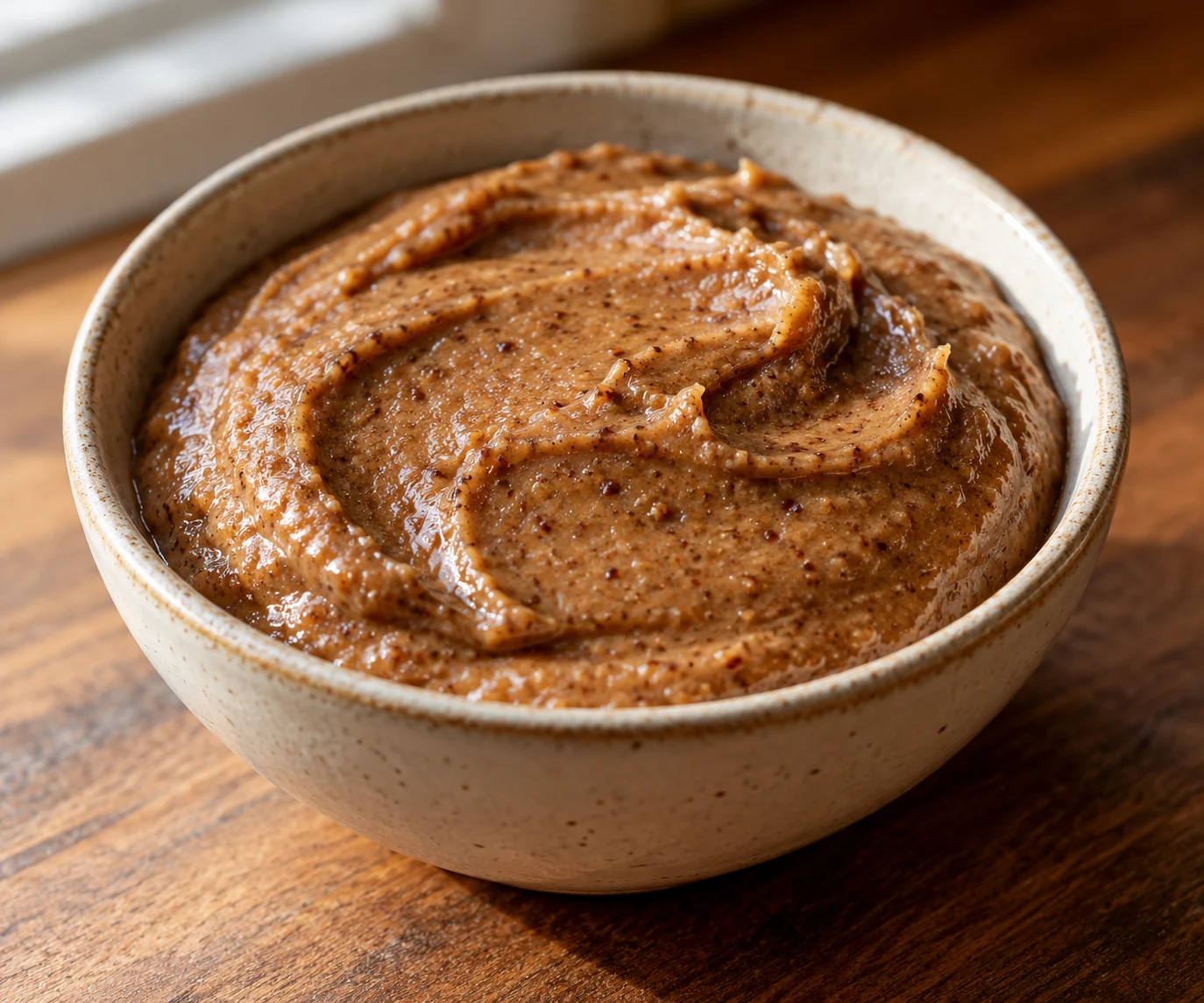
The word butter here means ground nuts, not a mixture of pecans and dairy butter. Toasting brings out the pecan flavor, and processing releases enough of the nuts' own oil to form a spread. Maple syrup is added only after that transformation. Its moisture can make the finished mixture thicker, so the intended result is a spoonable spread rather than a glossy sauce that pours freely from a jar.
Maple pecan butter makes 12 servings, with 1 hr estimated total time. View the standalone recipe page.
Start with plain fresh pecans
Use shelled, unsalted raw pecans for the measured starting weight. Candied nuts, salted cocktail mixes and already sweetened pieces are not equivalent ingredients. Smell the nuts before starting; an unpleasant stale-oil smell will not disappear during toasting. Pieces and halves both work because the processor will break them down, but spread them evenly on the tray. Small fragments can darken sooner than large halves, so watch a mixed-size batch carefully rather than relying only on the upper time limit.
Toast without chasing dark color
The pecans should become fragrant and slightly deeper in color. Very dark patches can bring bitterness into the entire spread, since there is no later step that removes the toasted surface. Stir halfway through and keep the tray within view near the end. Let the nuts cool for the scheduled pause before processing. They need not be refrigerator-cold, but sending a steaming-hot batch into a running machine makes it harder to distinguish normal blending warmth from excessive heat.
Allow the processor to do its work safely
The mixture normally passes through coarse crumbs and clumps before becoming a cohesive nut butter. Stop the machine before scraping, then redistribute material from the walls toward the blade. Use equipment intended for this job and respect its operating limits. A hot bowl or struggling motor is a reason to pause, not to run faster. Cooling breaks can extend the total time. Do not insert a utensil while the blade is moving or pour in water to make the machine work more easily.
Add the syrup after the butter forms
Once the nuts have become a spread, add the measured syrup, cinnamon and salt with brief pulses. The syrup may tighten the texture; that does not automatically mean the batch has failed. Long continued processing after this addition is unnecessary if the ingredients are already evenly distributed. Scrape out the full batch, including the denser mixture around the blade housing with the machine safely disconnected. Adding oil to restore a flowing appearance would change the recipe and its nutrition calculation.
Portion and refrigerate the finished spread
Divide the batch into twelve equal shares without assuming an exact tablespoon yield. Its final density depends on how finely the nuts are processed, and some may cling to equipment. The estimate counts all nuts and natural oils rather than trying to guess those small losses. Store covered in the refrigerator and use within the stated short window. Stir gently if oil separates. Use a clean utensil, and remember that toast, fruit or yogurt served with it adds ingredients outside this spread.
Common questions
Why did maple syrup make the nut butter firmer?
Liquid sweeteners introduce moisture into the ground-nut mixture and can change its texture. This recipe expects that effect. Add syrup only after a nut butter has formed, mix briefly, and judge it as a thick spread rather than trying to make it resemble a bottled drizzle.
Is this suitable for someone avoiding dairy or gluten?
The listed ingredients contain no dairy or gluten ingredients, but labels and cross-contact still matter. It contains pecans and is not nut-free. Use plain nuts and pure maple syrup; flavored syrups or coated nuts may add ingredients outside the documented criteria.
Technique & food-safety references
These primary references support the technique, safety and storage guidance. The recipe and cooking explanations are original Recipe Pinboard content.


