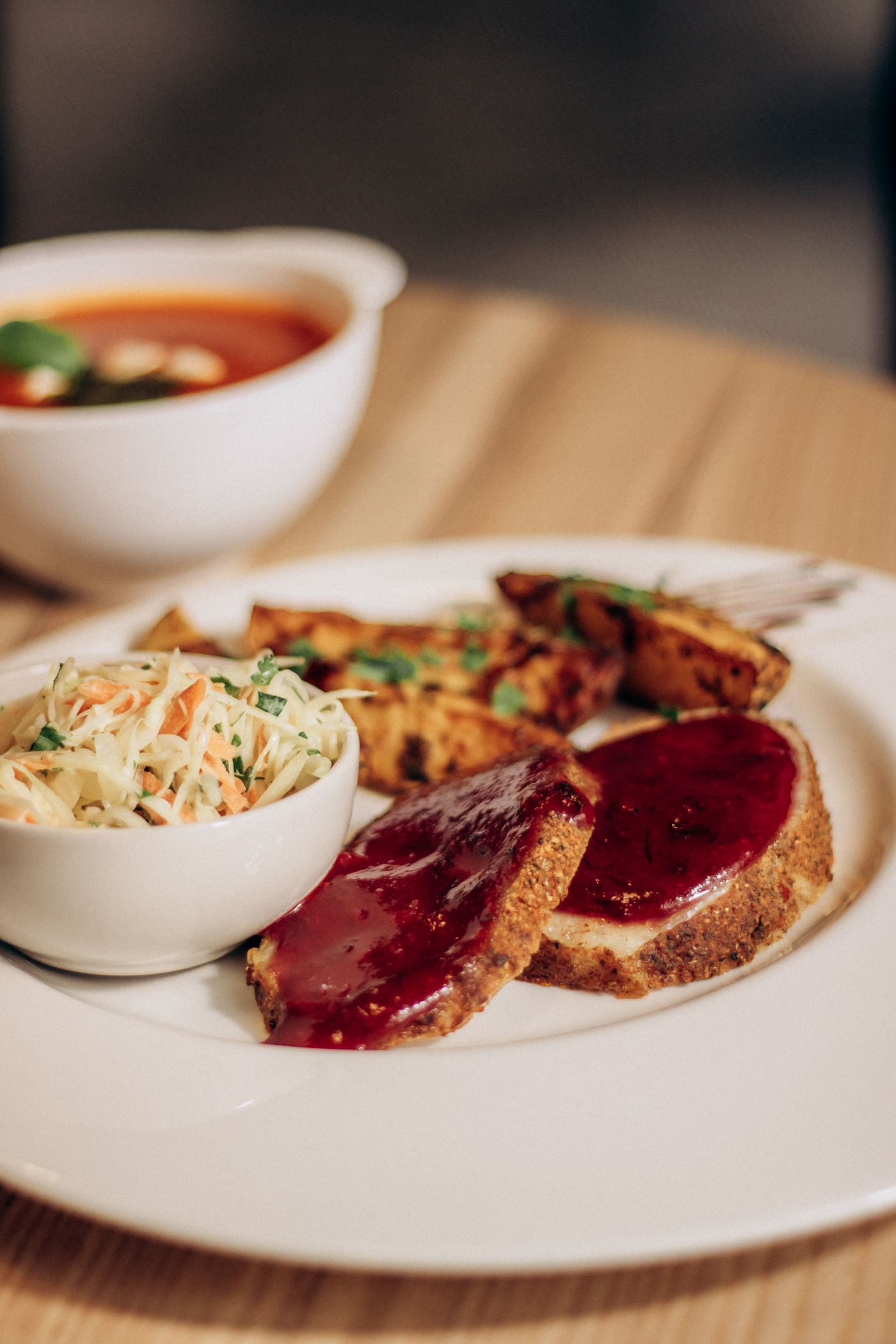
Meatloaf with wedges and slaw is a full meal with a useful division of labor: the oven handles two trays while the slaw waits in the refrigerator. This six-serving recipe takes about 95 minutes and starts with 900 g ground beef. Its trickiest parts are shaping a consistent loaf, keeping the two glaze applications separate and giving the potatoes enough space to roast.
Glazed Beef Meatloaf with Wedges and Slaw makes 6 servings, with 1 hr 35 min estimated total time. View the standalone recipe page.
Soak the crumbs before mixing the beef
Heat the oven to 400°F / 200°C. Mix 80 g breadcrumbs with 100 ml milk and leave for 5 minutes. That soak gives the crumbs a chance to soften before they are distributed through the meat. Very finely chop the onion; large raw pieces create uneven pockets and make neat slices harder to cut.
Add beef, onion, egg, Worcestershire sauce, Dijon, 5 g salt and pepper. Combine gently until ingredients are spread throughout. Repeated squeezing and kneading are unnecessary once there are no distinct clumps of soaked crumbs. Use a large bowl that lets you turn the mixture without compressing it into a tight ball at every movement.
Shape the loaf and split the glaze safely
On a foil-lined rimmed tray, form a loaf about 25 cm long and 8 cm high. Aim for similar thickness from end to end instead of a high middle and thin tails. The dimensions guide the cooking schedule; a compact taller loaf will not necessarily reach its center temperature at the same time.
Mix ketchup, brown sugar and 15 ml vinegar, then divide the glaze before brushing. Apply half and begin baking. Keep the second half and a clean utensil separate from the raw-meat brush. After 25 minutes of baking, use that reserved portion for the second coating. This avoids carrying raw-meat contact into sauce you intended to keep clean.
Put the wedges in ten minutes after the loaf
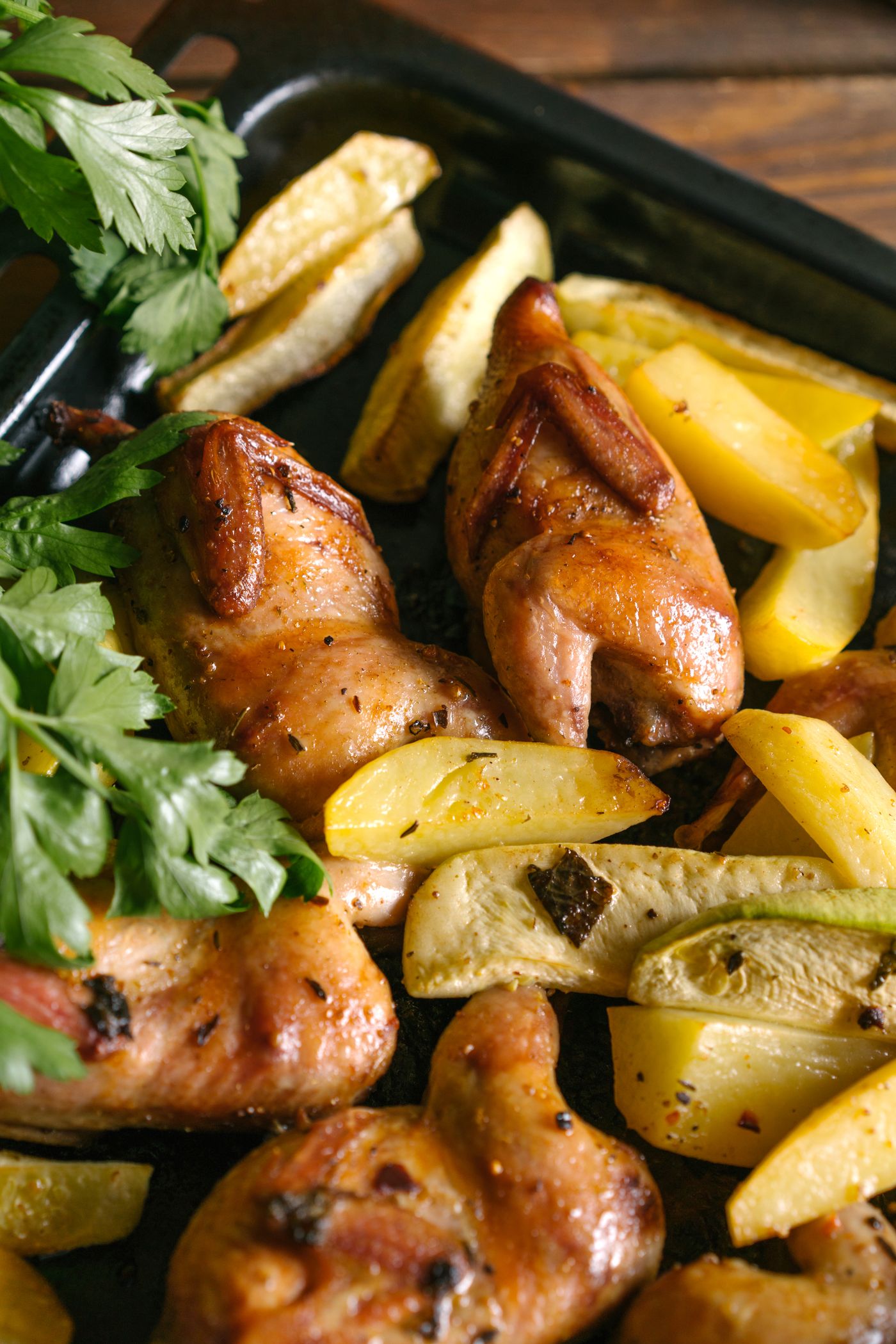
Toss the 900 g potato wedges with 30 g olive oil, paprika and 3 g salt on a second tray. Spread them so their cut surfaces can contact the metal. Put the tray into the oven when the meatloaf has cooked for 10 minutes, then roast the potatoes for 45–50 minutes, turning once.
This offset makes the two trays easier to finish together. Potatoes piled deeply will steam against one another instead of browning readily. When turning them, assess whether one side of the oven colors faster. Keep enough clearance around both trays for hot air to circulate, and handle the loaf tray carefully because it can hold hot fat and juices.
Mix the slaw while the trays cook
Whisk the commercial mayonnaise with the remaining 15 ml vinegar and 1 g salt. Toss with shredded cabbage, grated carrot and chopped parsley, then refrigerate until serving. Thinly shredded cabbage is easier to coat evenly and sits beside a meatloaf slice without becoming a large, unwieldy forkful.
Use clean salad utensils and a cleaned work surface after handling ground beef. There is no cooking step for the slaw that could correct raw-meat cross-contact. Keep it cold while you check the oven rather than setting the finished bowl beside the stove for the remainder of the roast.
Check the center and rest before slicing
After the first 25 minutes and second glazing, bake the loaf for another 25–35 minutes, continuing if necessary until its center reaches 160°F / 71°C. Insert the thermometer into the actual middle of the loaf rather than a shallow area under the glaze. A browned exterior cannot tell you whether ground beef is safely cooked.
Rest for 10 minutes, then cut twelve slices and serve two per person with wedges and slaw. Use a sharp knife and support each slice with a broad server. If the potatoes finish first, let the loaf finish safely rather than cutting early to match the tray; its rest is part of the planned meal timeline.
Common questions
Why does meatloaf fall apart when I slice it?
Check that the soaked crumbs and egg were evenly incorporated, then allow the full 10-minute rest. Cutting straight from the oven or leaving large onion pieces can make slices more fragile.
Can I decide doneness from the glaze color?
No. The glaze browns on the surface while the center heats more slowly. Use a thermometer and continue until the middle reaches 160°F / 71°C.
Technique & food-safety references
These primary references support the technique, safety and storage guidance. The recipe and cooking explanations are original Recipe Pinboard content.